Welcome August’s Artists-in-Residence! (Family session)
Meet this Month’s artists-in-residence!
Residency session: August 7 — 24, 2026
Sandra Erbacher
Pawtucket, Rhode Island
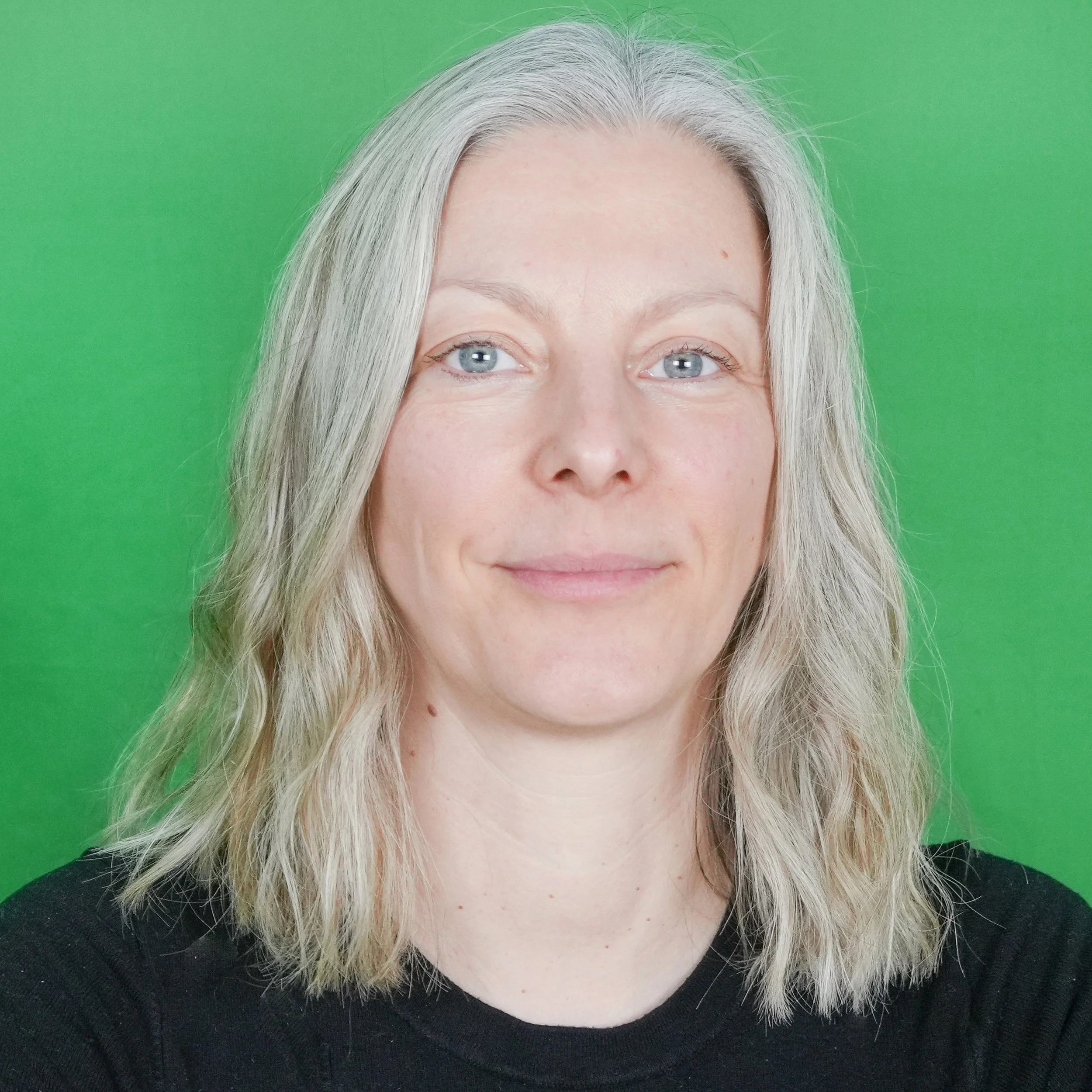
Sandra Erbacher is a German interdisciplinary artist living and working in Providence, RI. Working across collage, photography, installation, performance, and artist books, her practice examines how historical belief systems are sustained through institutional structures, bureaucratic rule, and technologies of evaluation. Her current research traces the fraught history and enduring impact of intelligence testing—from its roots in the early Eugenics movement and its role in immigration restriction and sterilization policies to its contemporary forms in educational assessment, self-optimization culture, and surveillance technologies. Engaging historical archives and material culture through montage, Erbacher employs an embodied method that unsettles inherited narratives and opens space for forms of knowledge that exceed institutional logics. She earned her MFA from the University of Wisconsin–Madison (2014), a BFA from Camberwell College of Art, London (2009), and also holds a BA and MA in Sociology from Goldsmiths College, University of London.
Erbacher has exhibited and performed nationally and internationally at venues including the Penumbra Foundation, Cuchifritos, International Studio & Curatorial Program, Atlanta Contemporary, Chazen Museum of Art, Parisian Laundry, and the Vera List Center for Art and Politics. Recent presentations include the screening Testing, testing at e-flux (2026) and the choreographic lecture performance (question–repeat–failure–record), developed in collaboration with Ruth Estévez and presented at the Vera List Center Forum 2025. She recently participated in the Penumbra Foundation Risograph Residency (2025) and the Skowhegan School of Painting & Sculpture Residency (2024), and has previously held residencies and awards through the Center for Book Arts, Manhattan Graphics Center, LMCC Workspace, NARS Foundation, and Foundation for Contemporary Arts.
Aimee Koran
Philadelphia, Pennsylvania
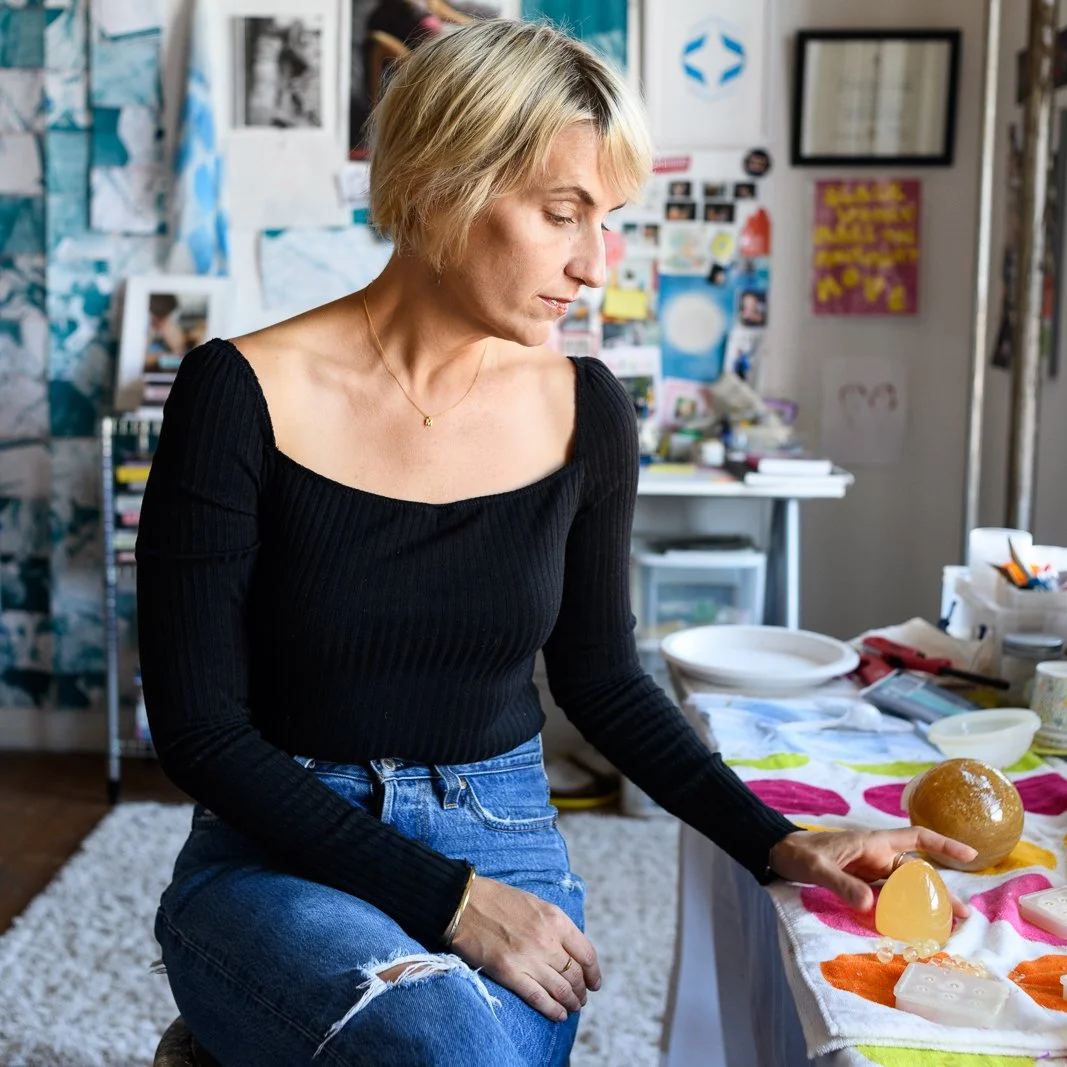
Aimee Koran is a Philadelphia-based visual artist whose practice examines invisible labor—particularly reproductive, emotional, and caregiving work—and its relationship to systems of value, power, and recognition. Working across sculpture, photography, textiles, and installation, she transforms materials drawn from domestic life, medical technologies, and institutional production to reveal the labor embedded within everyday objects. Her work situates personal materials within broader feminist, economic, and labor histories, using lived experience as evidence rather than autobiography.
Koran’s practice is deeply informed by Philadelphia’s legacy of women’s labor, textile production, and union organizing, as well as intergenerational histories of making. Through shifts in scale, repetition, and material manipulation, her work challenges the cultural separation between private and public labor, insisting that care and maintenance function as political infrastructure. Her projects engage feminist art histories and contemporary debates around reproductive labor, bodily autonomy, and the care economy, contributing to a sustained, research-driven inquiry into how labor is made visible—or erased—within cultural and institutional frameworks.
Scott R Horsley
NEW LONDON, NEW HAMPSHIRE
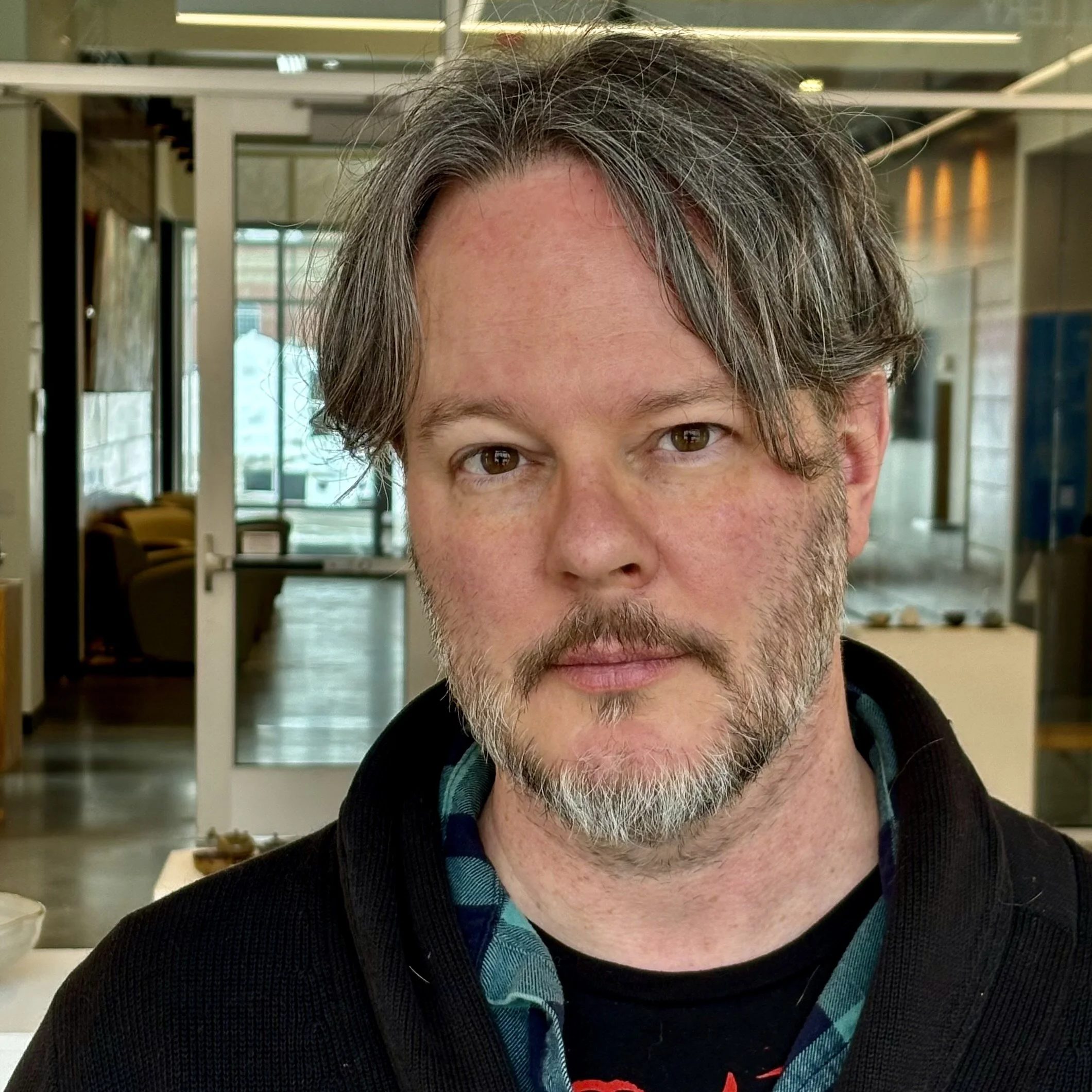
Scott Horsley’s (b. 1977, New York) painting and drawing-based research practice looks at the different ways that information technologies affect our contemporary media and political landscapes. Right now, misinformation, disinformation, outright lies, stewing conspiracies, and technology-based emergent social behaviors collude to write and rewrite history in real time, producing a series of overlapping, contradictory narratives.
In response to conspiracy theories, originally spread through obscure online message boards, but now a major part of the public discourse, Scott employs gestural abstraction—an honest record of the painting process—reproduced as layered fictions, and deceptive translations. In his work, gestures and marks that appear first in paint, repeat themselves in graphite, in colored pencil, in paint again. Sometimes the handmade reproductions are fastidious, only changing mediums or color. Other times, iterations mirror and mutate in intentionally deceptive ways, duplicating, disappearing, or distorting elements.
Horsley holds an MFA from UC San Diego, and a BFA in painting from the Rhode Island School of Design. He has shown nationally, with gallery exhibitions in Los Angeles, Chicago, Salt Lake City, and San Diego, and in museum exhibitions at the Utah Museum of Contemporary Art and the Harn Museum of Art in Florida. The recipient of a year-long fellowship at UMoCA, Scott Horsley is currently an associate professor of art at Colby-Sawyer College in New Hampshire.
Jenny lion
Durham, North Carolina
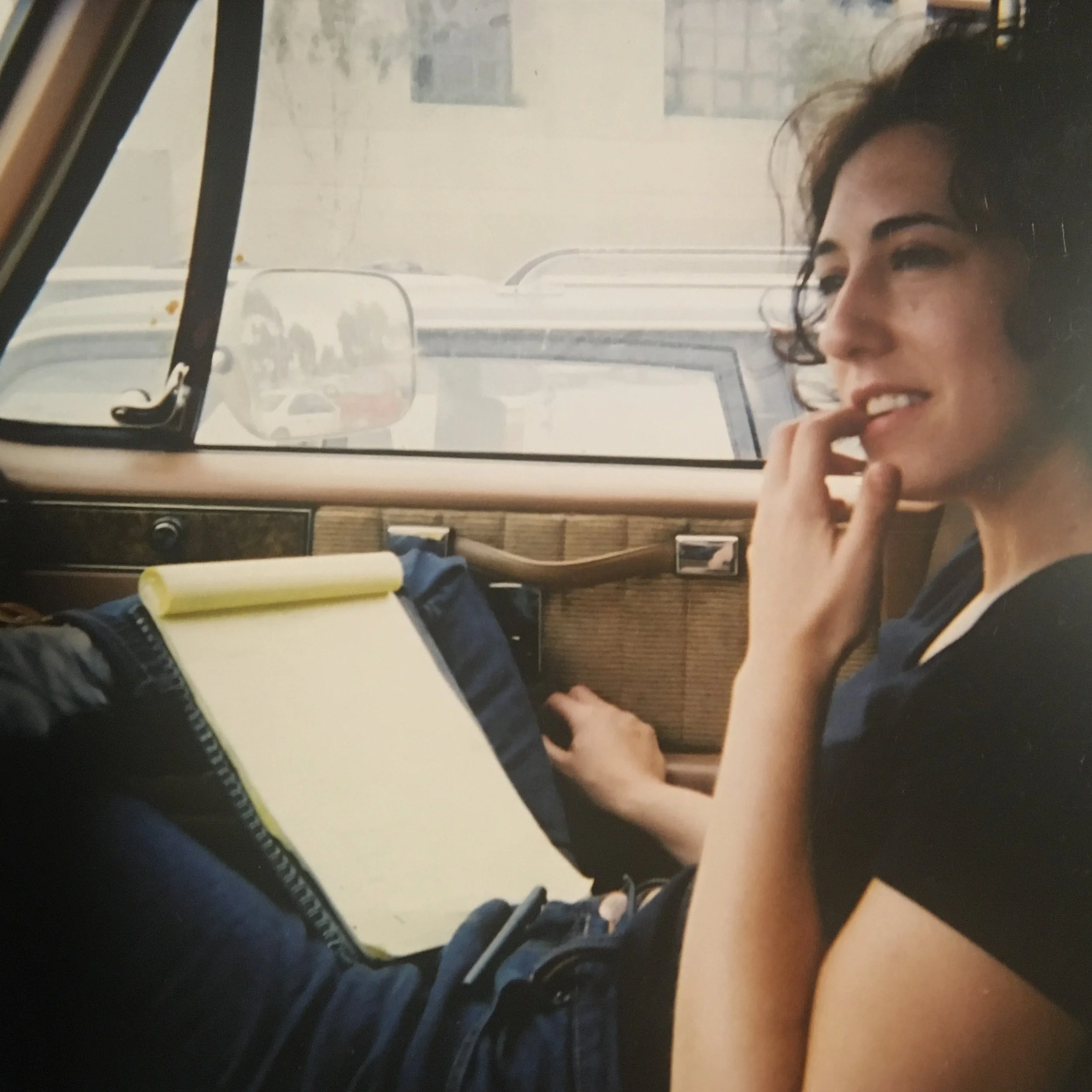
Jenny Lion works with video in cinematic, participatory, activist, and installation contexts. She frequently collaborates, with groups and individuals, and over long periods of time. She has reenacted works of early video including Wendy Clarke’s pioneering The Love Tapes, and her curatorial projects have focused on investigations of race in experimental film/video, expanded documentary practices, and Canadian artists’ video.
She has worked with the Center for Land-Use interpretation, been a resident at the Wexner Center Film/Video Studio, is a 2021 Creative Capital Awardee, 2022 Guggenheim Fellow, and 2023 McKnight Media Art Fellow. She teaches at Duke University.
Her current body of work explores landscape, militarism, and sustained observation at contested military, settler, indigenous, and industrial sites in the U.S. West.