January 2026 Cohort Recap
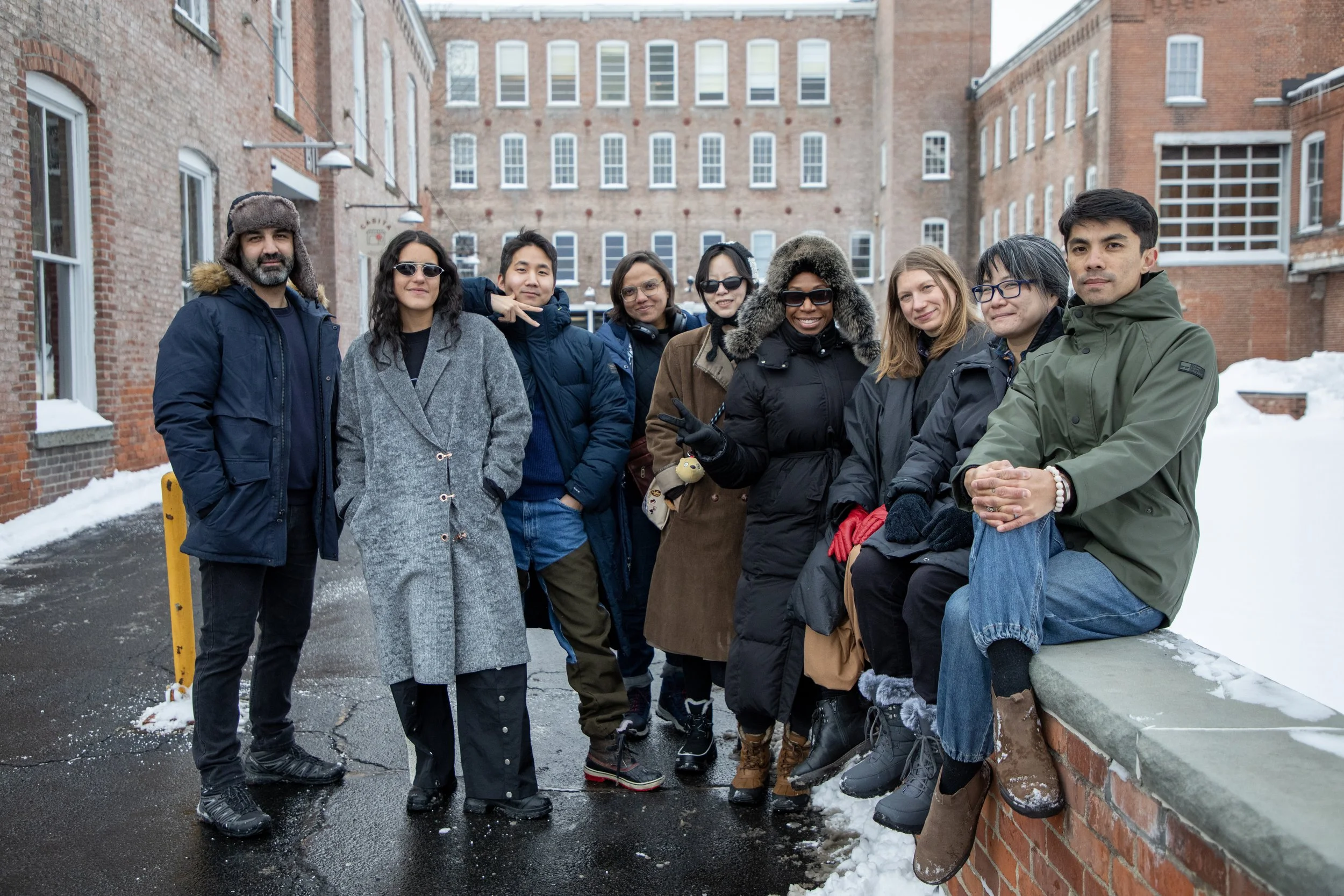
2026.01.15 Cohort
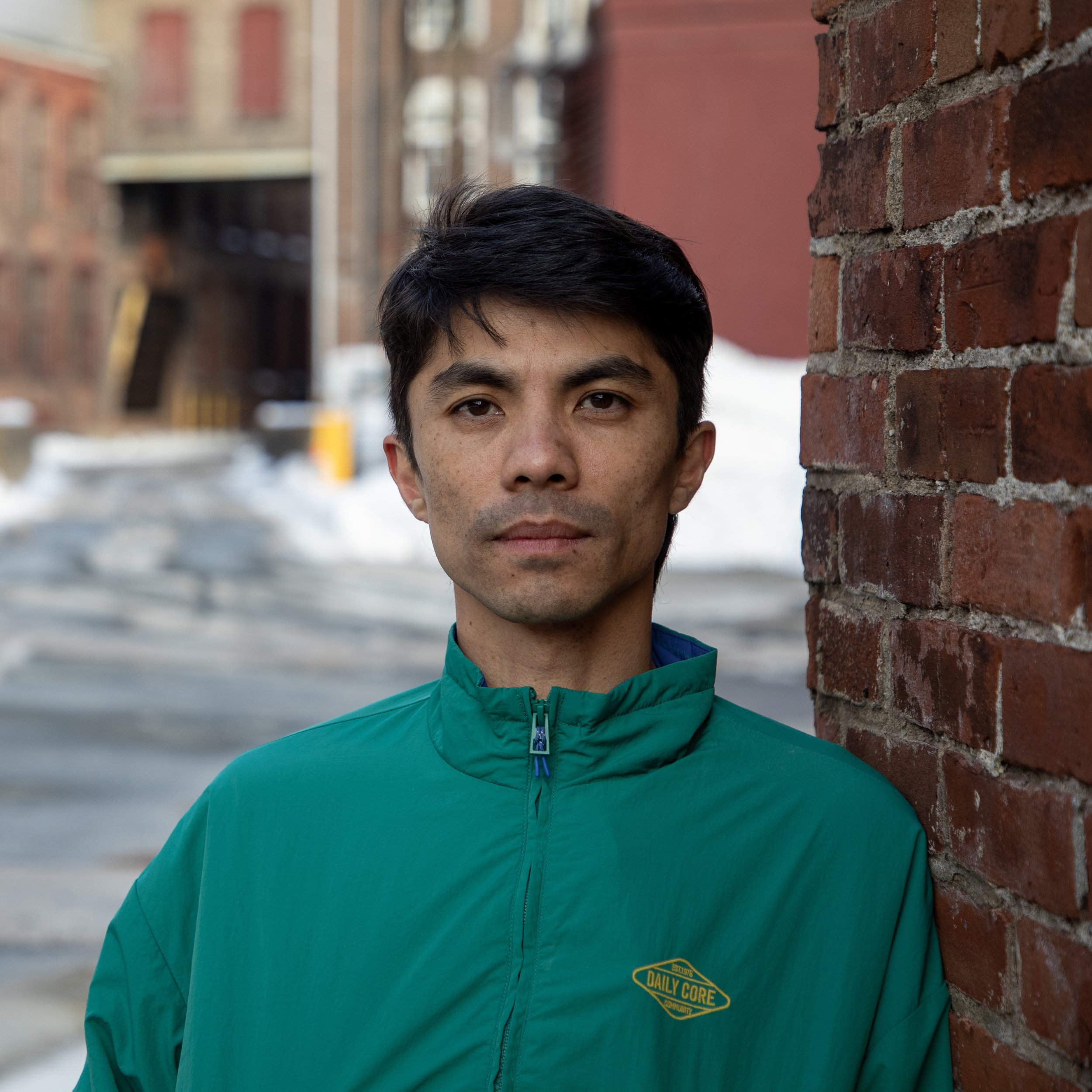
From left to right: Mehdi Darvishi, Camila Buxeda, Woohee Cho, Shrimanti Saha, Lulu Hou, Melissa Sutherland Moss, Anna Hawkins, Yuki Maruyama, Felipe Shibuya (Not Pictured: Dusty Levesque)
Photo by Thomas J. Logan.
Residency Session: January 15 — February 10, 2026
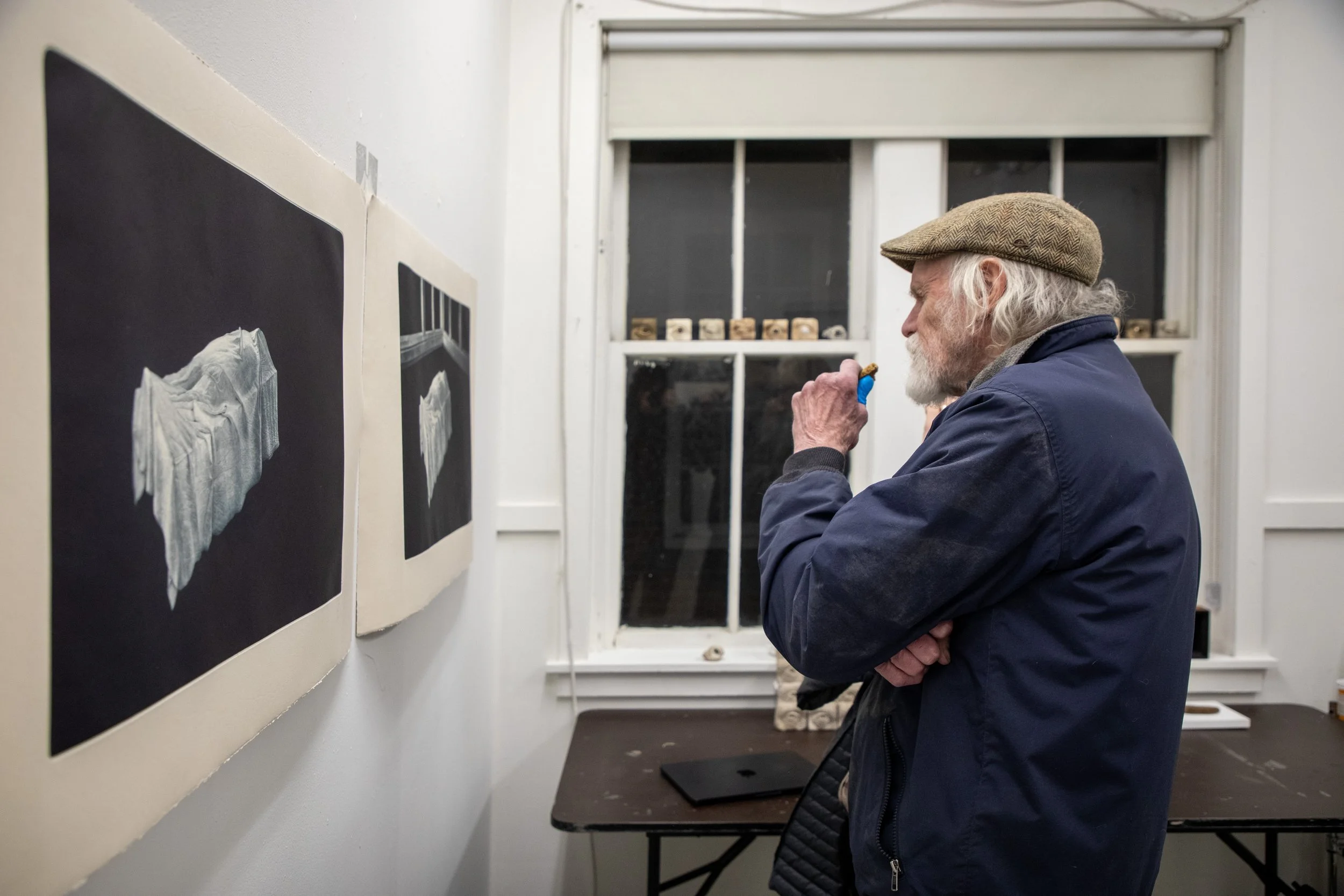
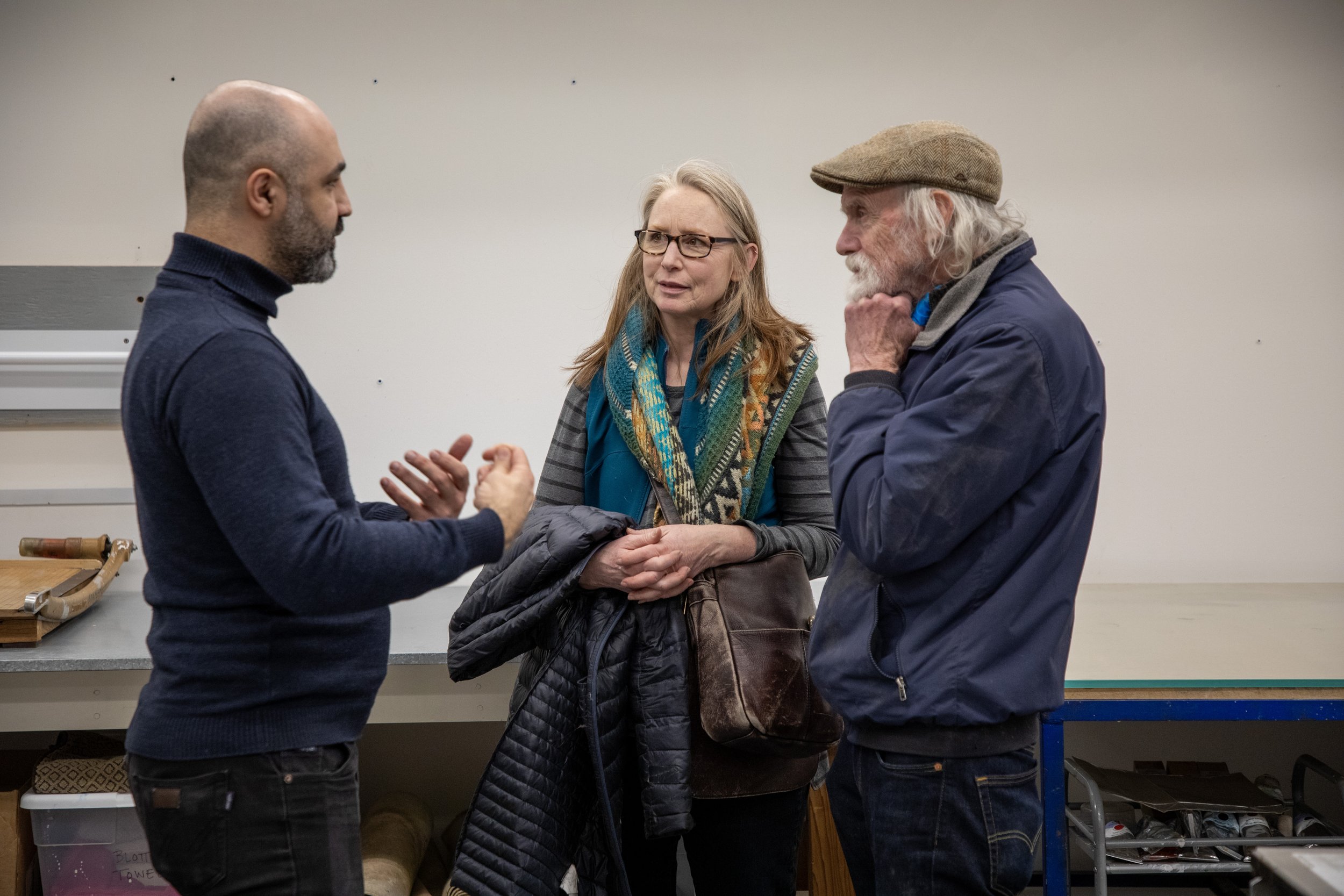
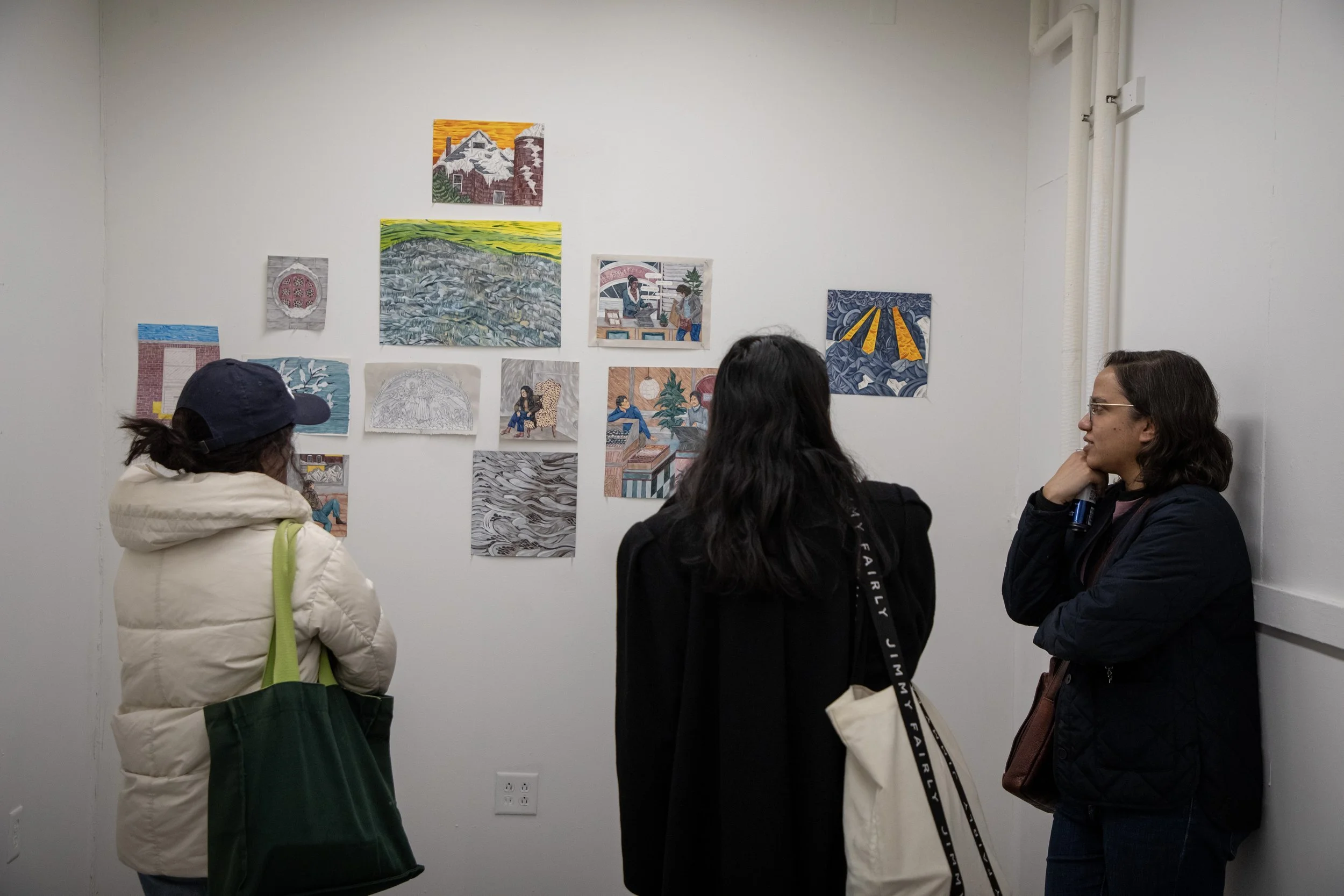
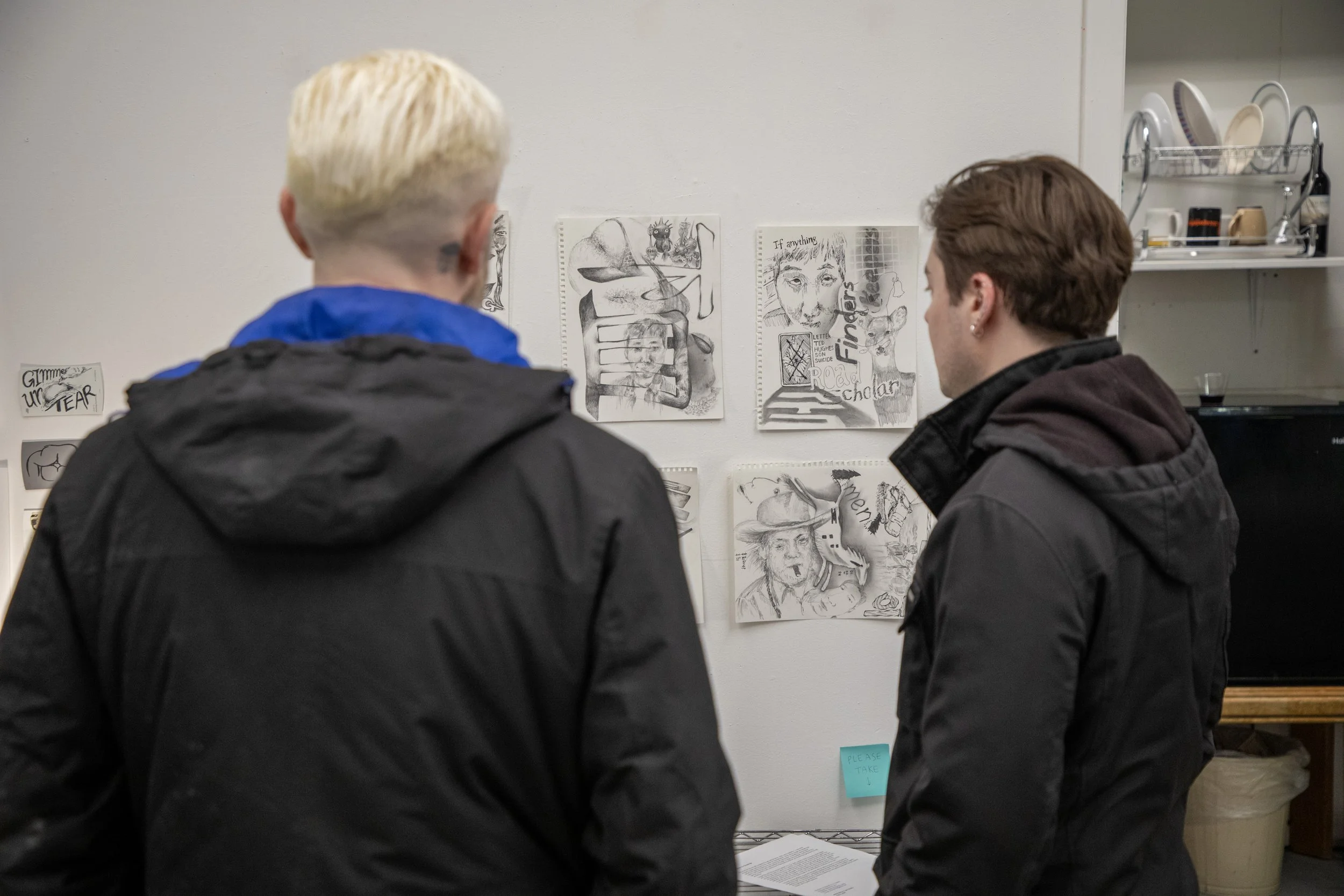
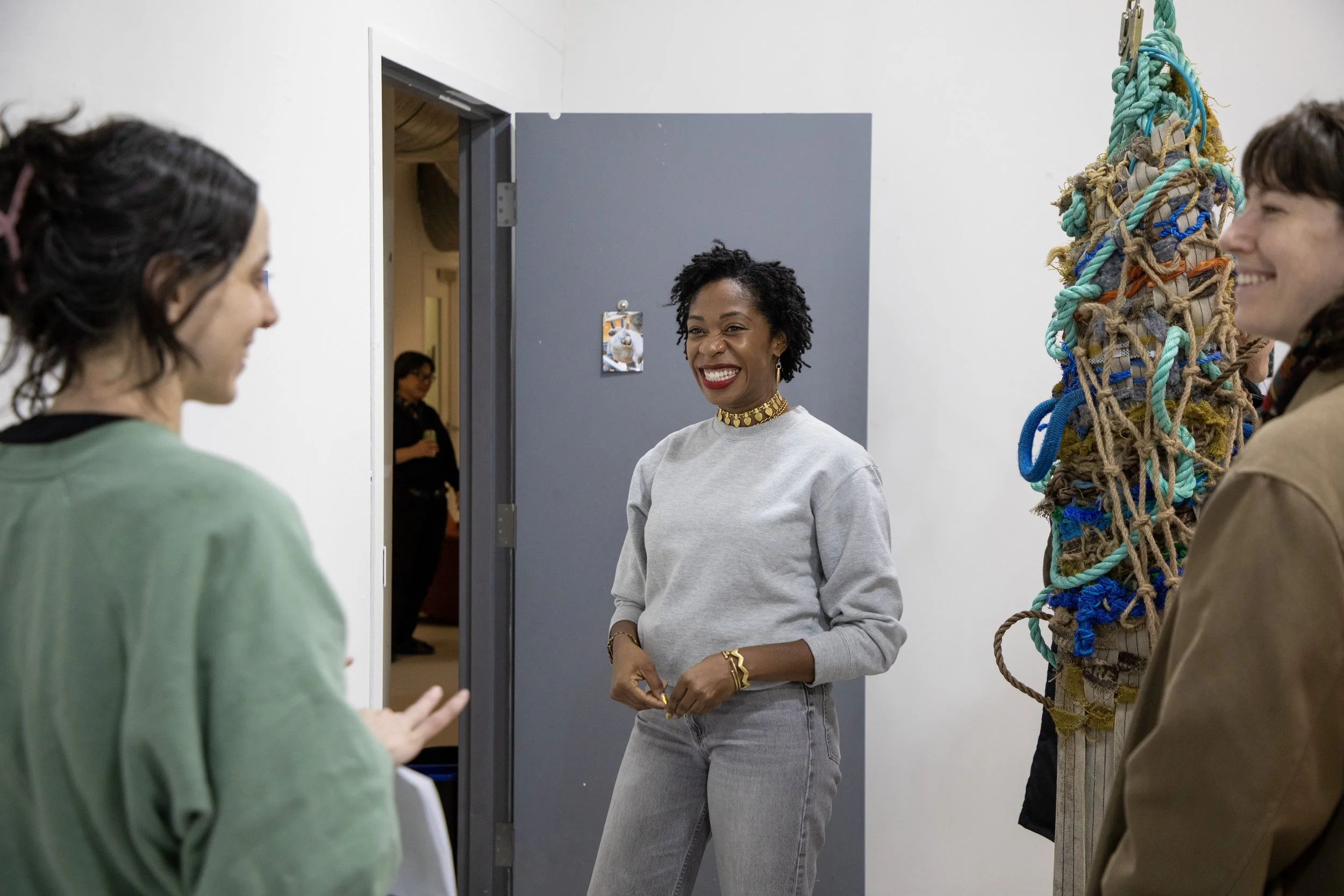
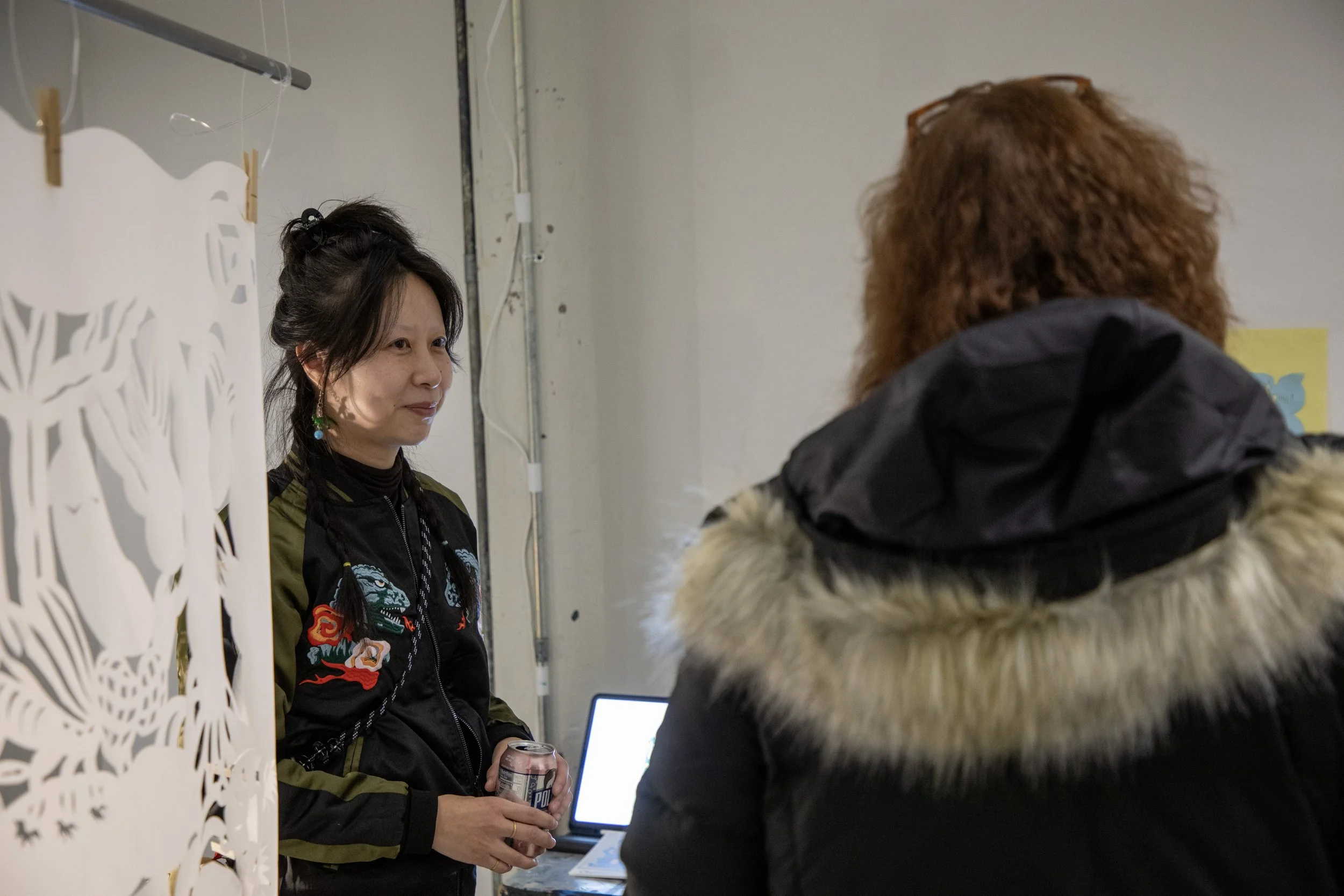
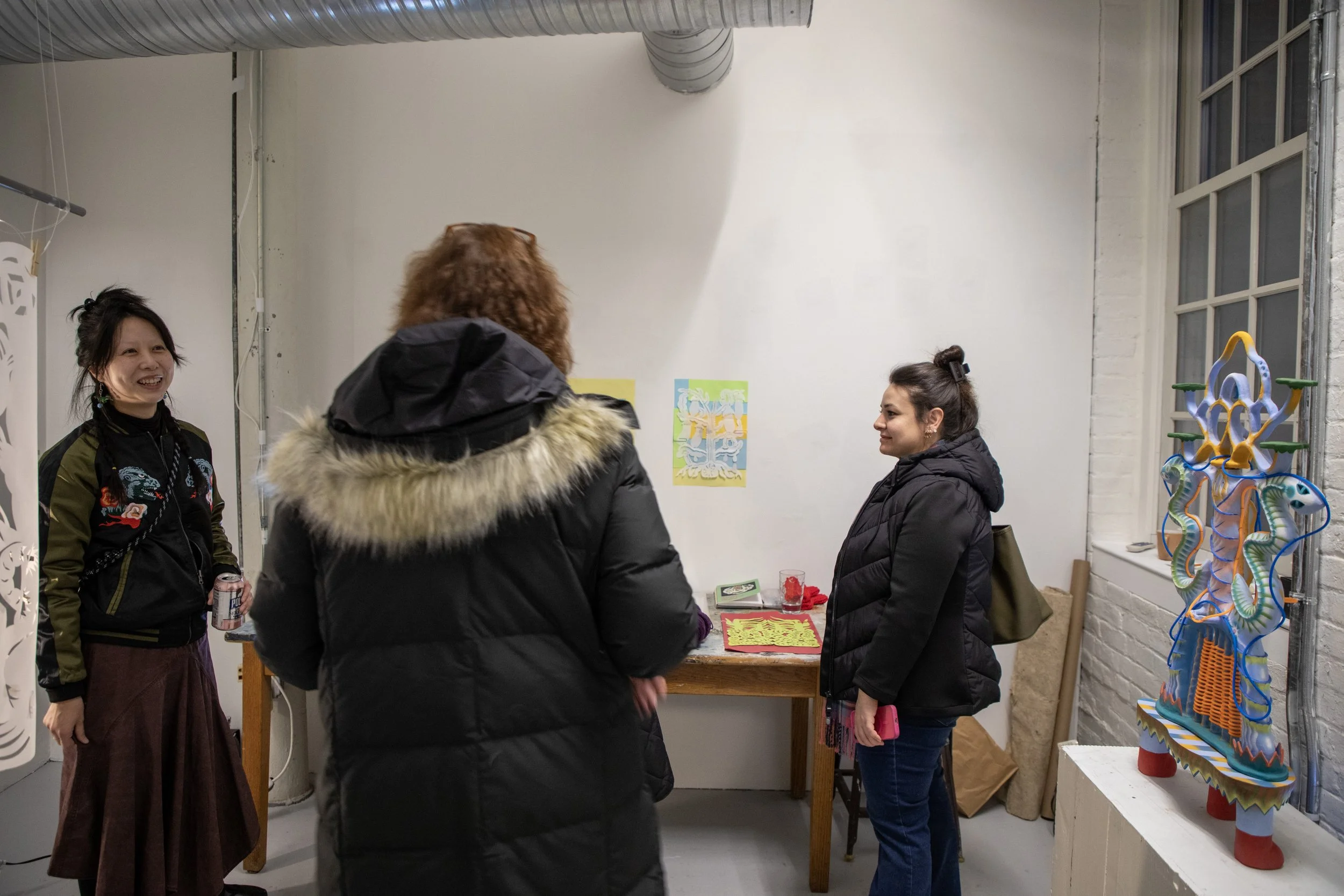
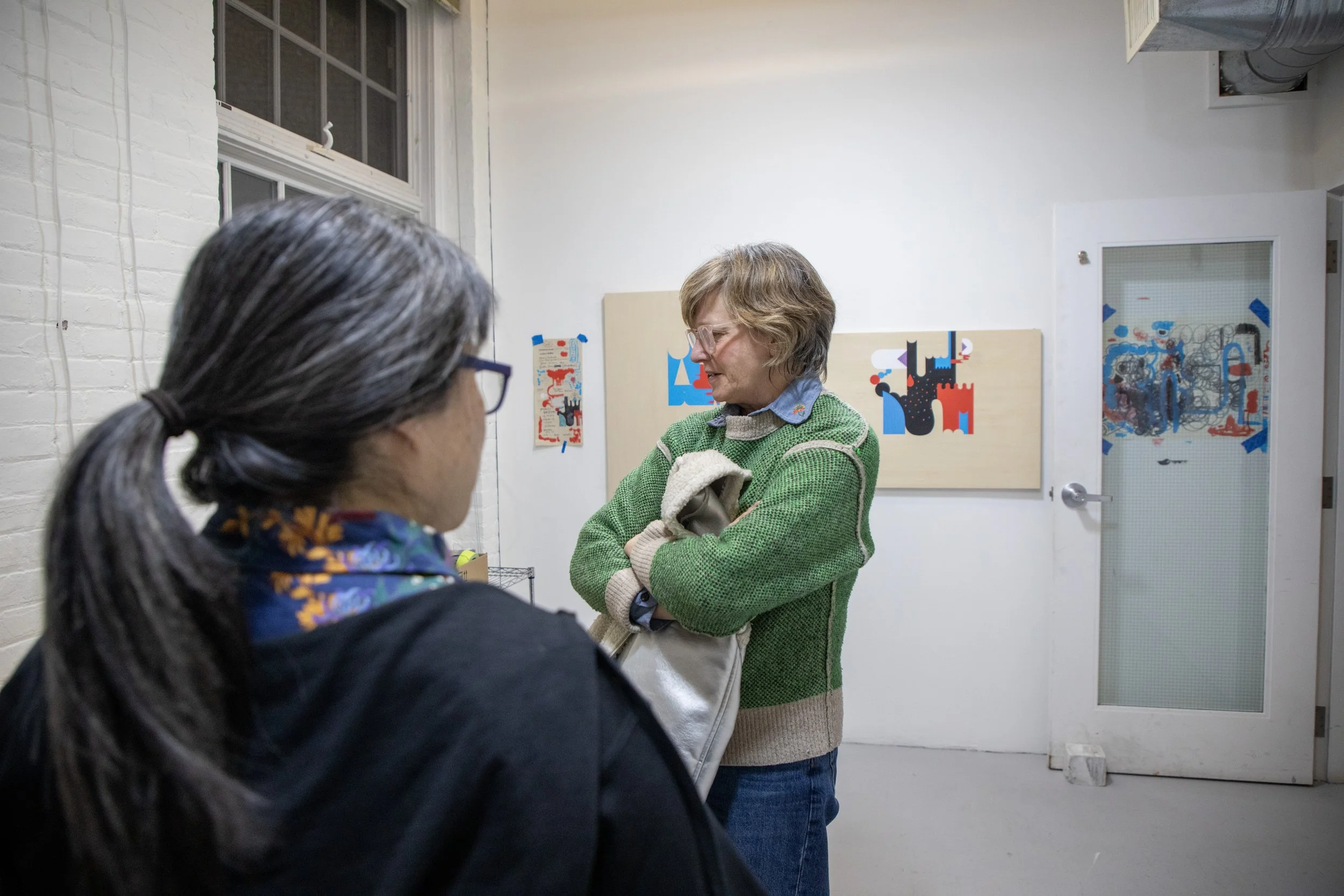
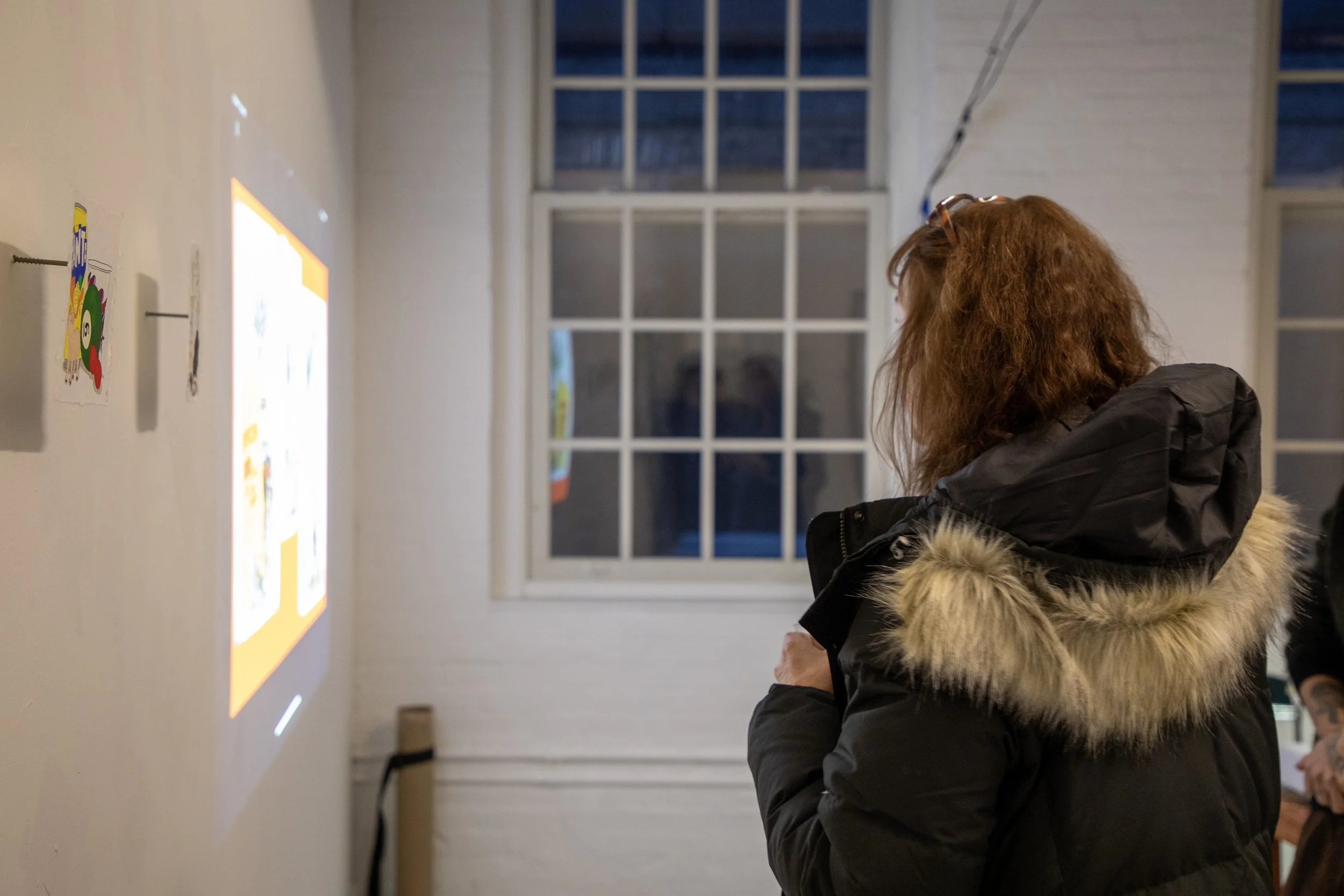
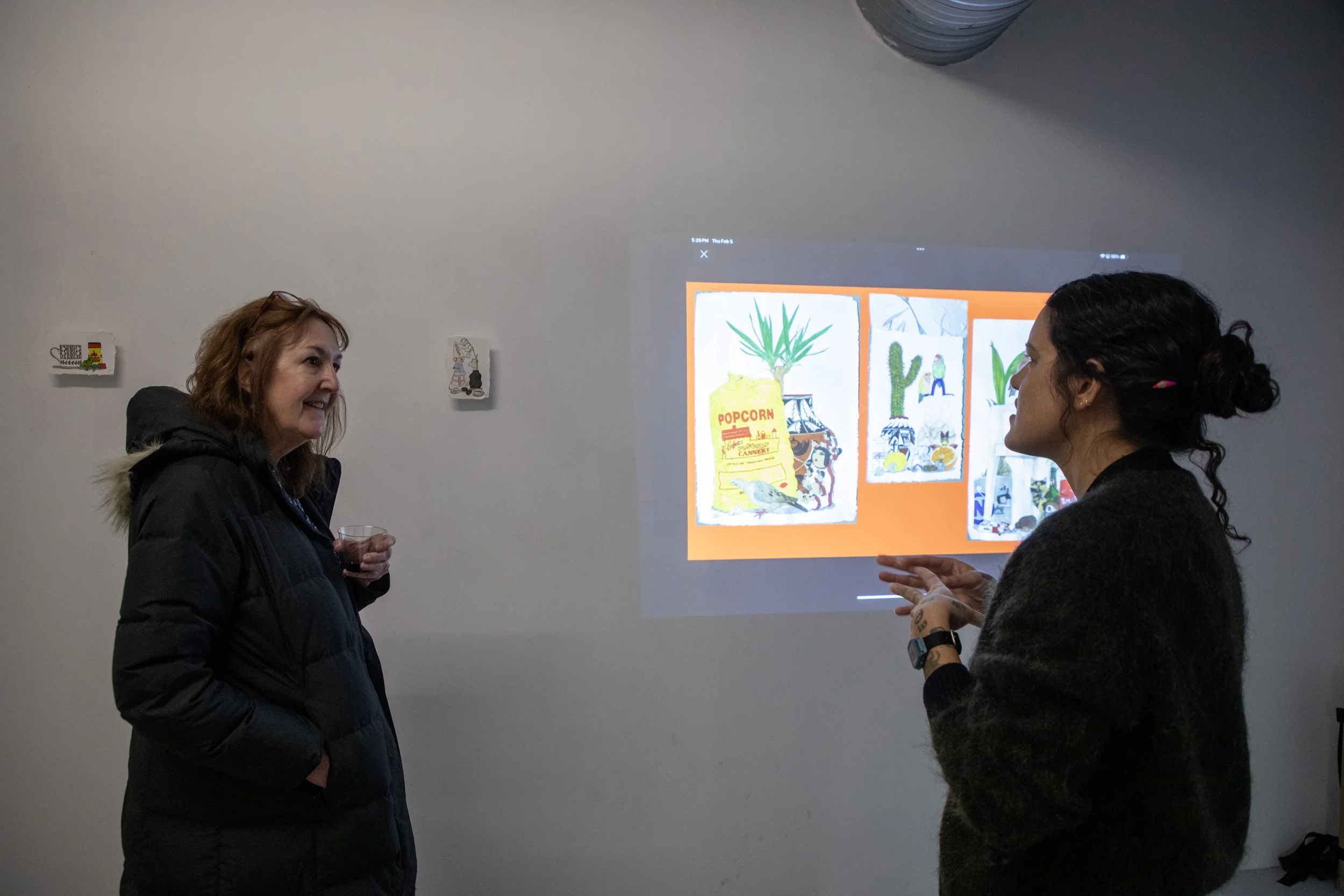
As part of their four-week residency, the January 2026 Cohort presented an Open Studios event on February 5, 2026. Visitors were invited to explore the artists’ workspaces, engage with works in progress, and learn more about the projects developed during their time at the Studios at MASS MoCA.
Artists-in-residence
Studio 1
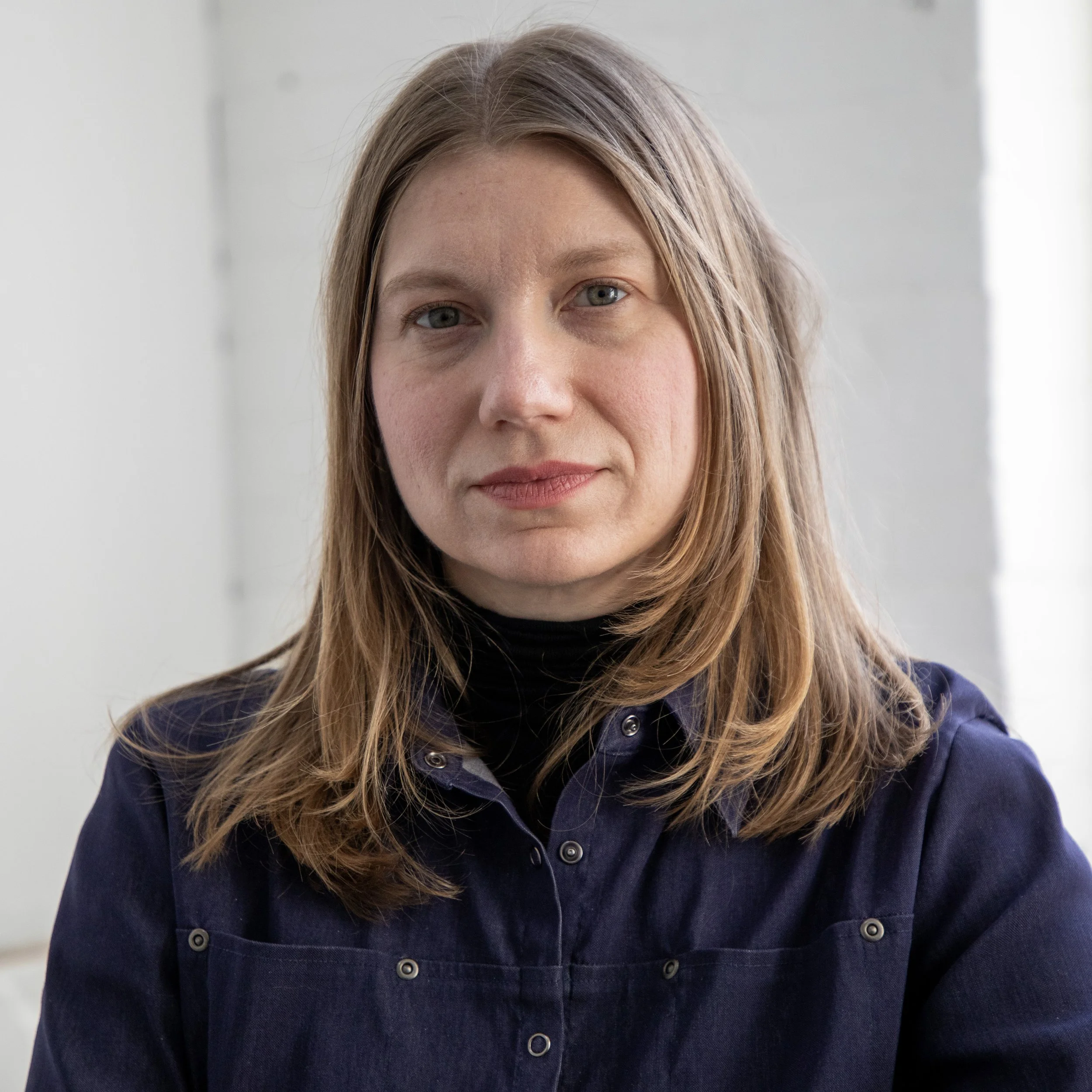
Anna Hawkins
Anna Hawkins is an artist who works primarily in moving image and installation with an interest in the ways that images, gestures and language are circulated and transformed online and the impacts of technology on the intimate spheres of daily life. Her works have recently been exhibited and screened at transmediale (Berlin, DE), CCCB (Center of Contemporary Culture of Barcelona (Barcelona, ES), the Istanbul International Experimental Film Festival (Istanbul, TR), Dazibao (Montréal, CA), Images Festival (Toronto, CA), and The Art Gallery of Alberta (Edmonton, CA). She has recently participated in artist residency programs at Villa Ruffieux (Sierre, CH), Fondation Napoule (Mandelieu-la-Napoule, FR), and Est-Nord-Est (St-Jean-Port-Joli, CA). In 2022, she was longlisted for the Sobey Art Award, Canada’s preeminent award for Contemporary Art. She is currently an Associate Professor in Studio Arts at MacEwan University on Treaty 6 Territory ᐊᒥᐢᑿᒌᐚᐢᑲᐦᐃᑲᐣ (Amiskwacîwâskahikan), Edmonton, Canada.
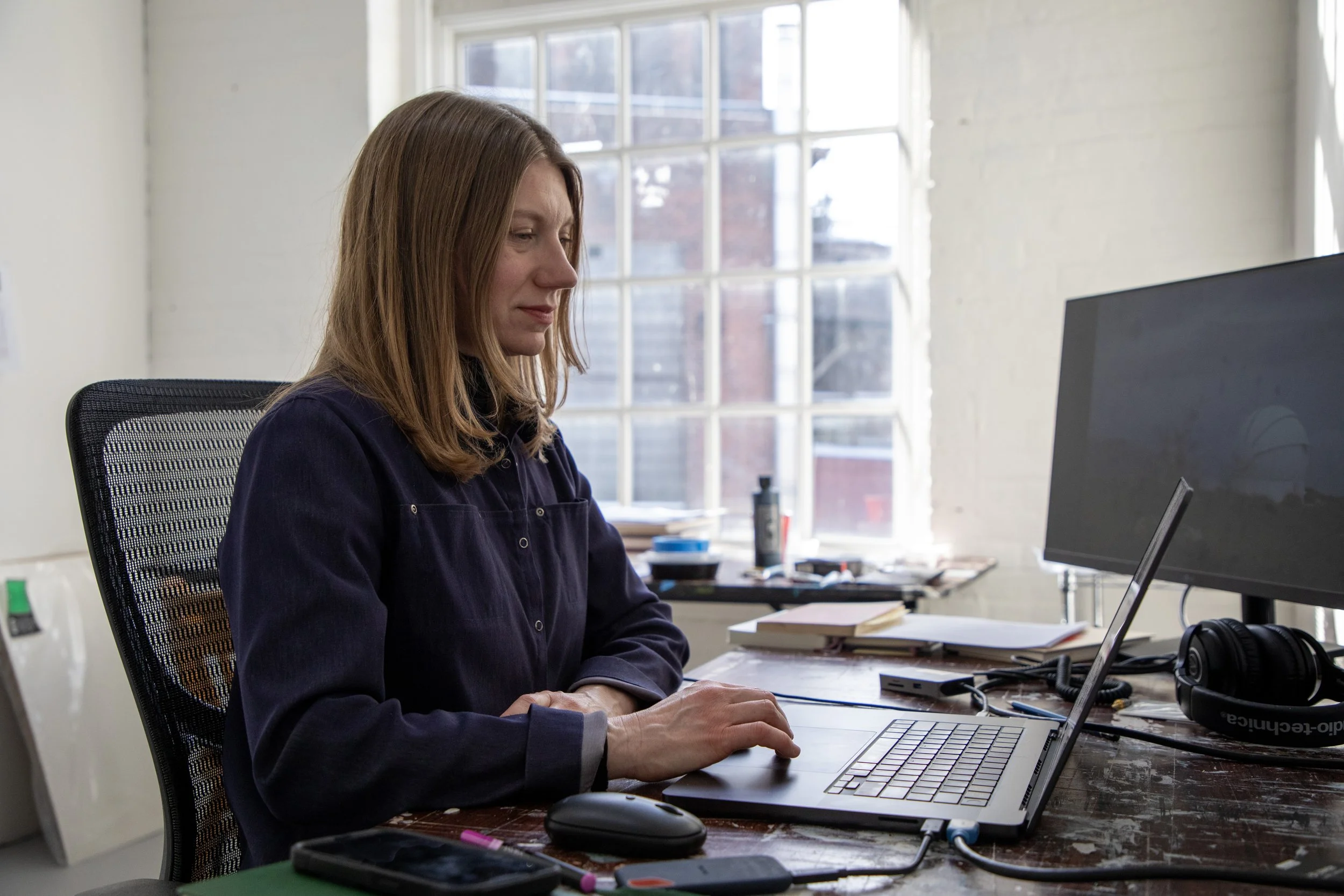
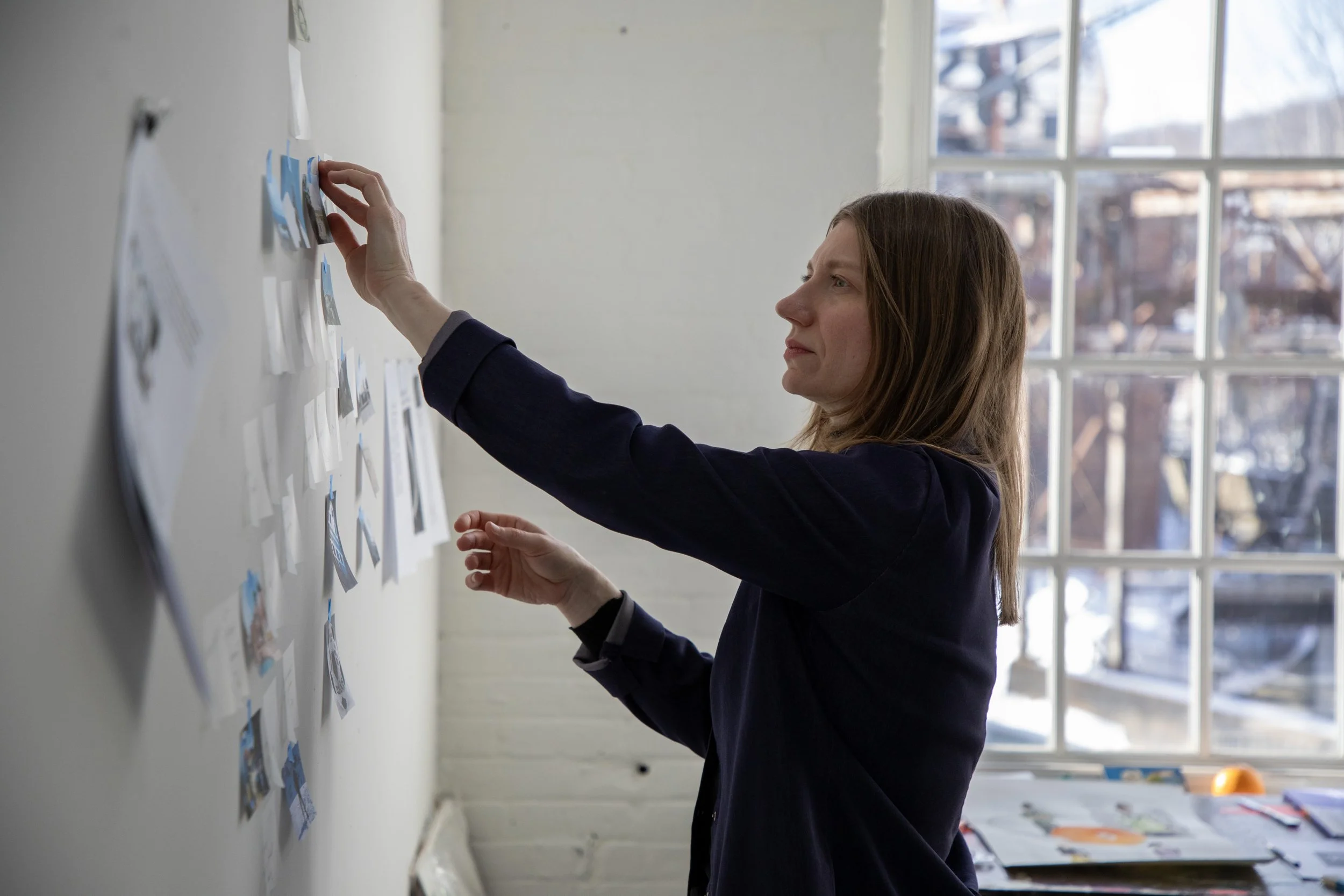
“My time at MASS MoCA was spent progressing my ongoing film series Constellations which draws a relationship between the cosmos and the internet, and examines how, in the face of that which is vast and unknowable, we look to see a reflection of ourselves. I worked on reviewing footage, scripting a voiceover, and mapping out the second video in the series which is titled Observations. I became interested in the history of MASS MoCA’s site, particularly the Sprague Electric Company and their involvement in the manufacture of components for the first telecommunications satellite: Telstar 1. Alongside this, I worked on a series of small watercolours and ink drawings, explored the museum on many afternoons, and spent time with the exceptional artists in my cohort.”
Constellations Part 1: Projections,
16mm transferred to digital and 4K Video, 00:16:13, 2026
Studio 2
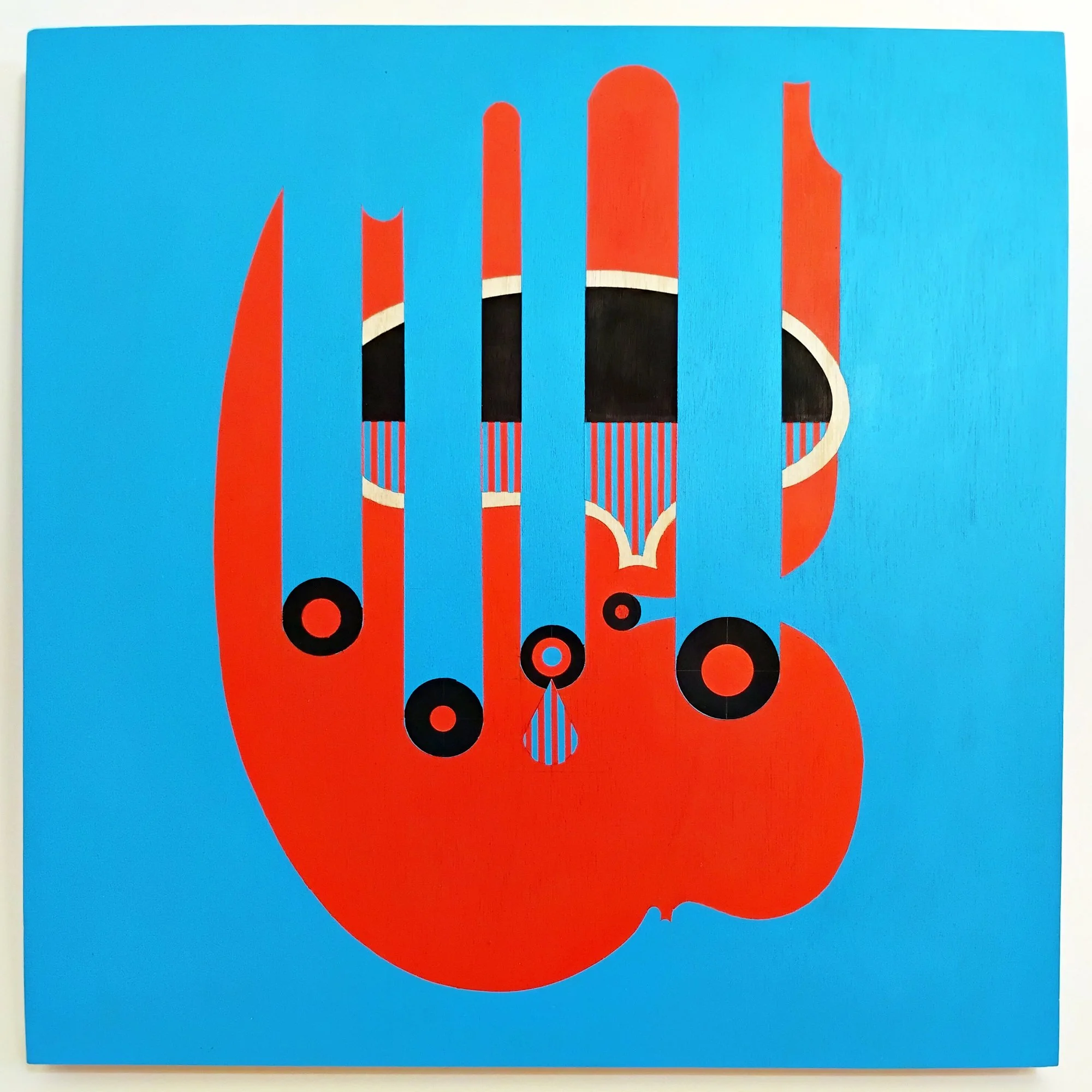
Yuki Maruyama
Yuki Maruyama is a drawing-based visual artist living and working in Oakland, California. She holds an M.F.A. from California College of the Arts. She is a recipient of the Pollock-Krasner Foundation Grant (2015, 2025), the Ucross Foundation Fellowship (2023), the Meta Open Arts residency (formerly Facebook Artist-in-Residence), the Kala Art Institute Fellowship (2017-2018), the Anderson Ranch Arts Center residency (2017), and the Vermont Studio Center Fellowship (2016). She has exhibited in numerous galleries and project spaces in the Bay Area, New York City, and in Ibaraki, Japan.
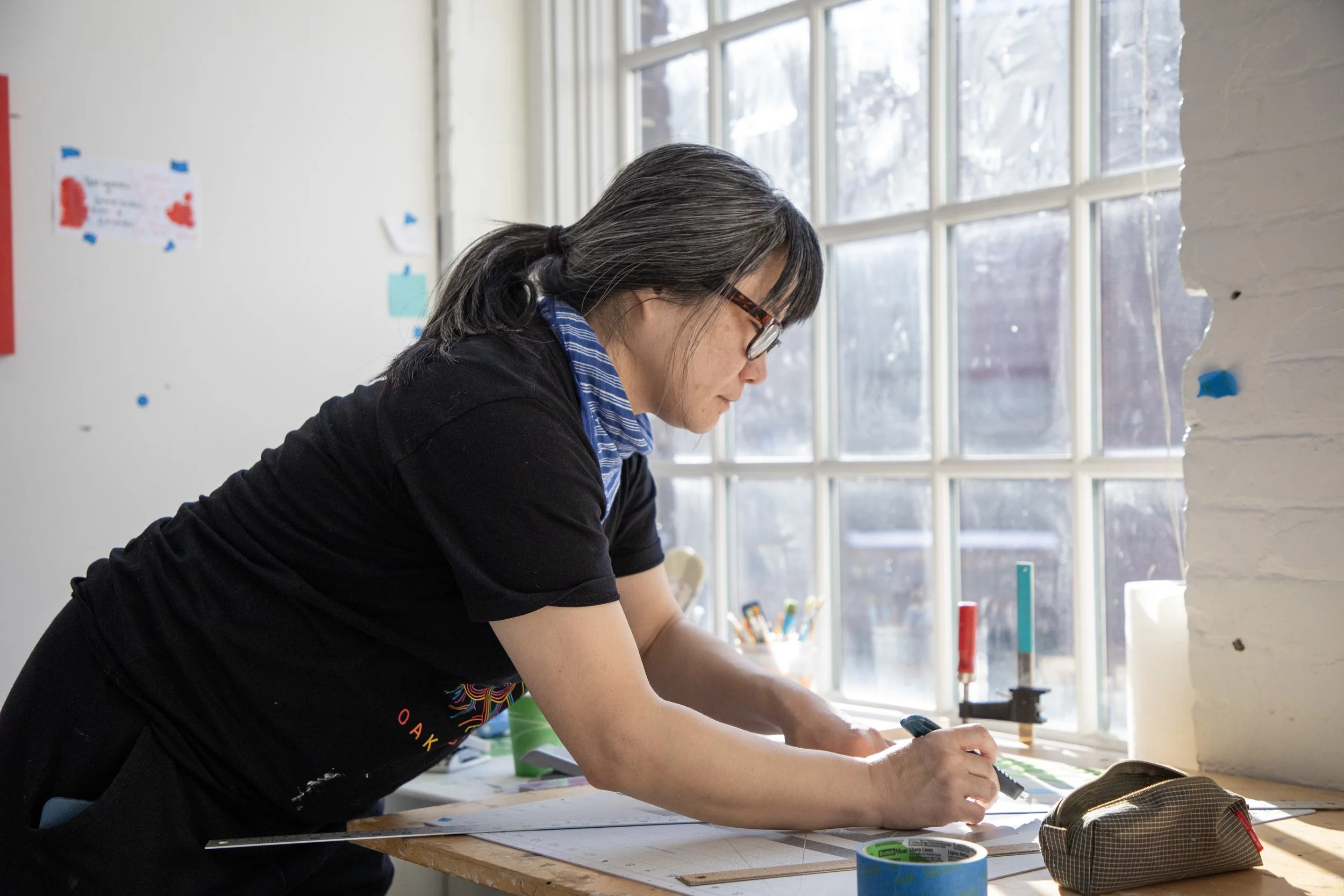
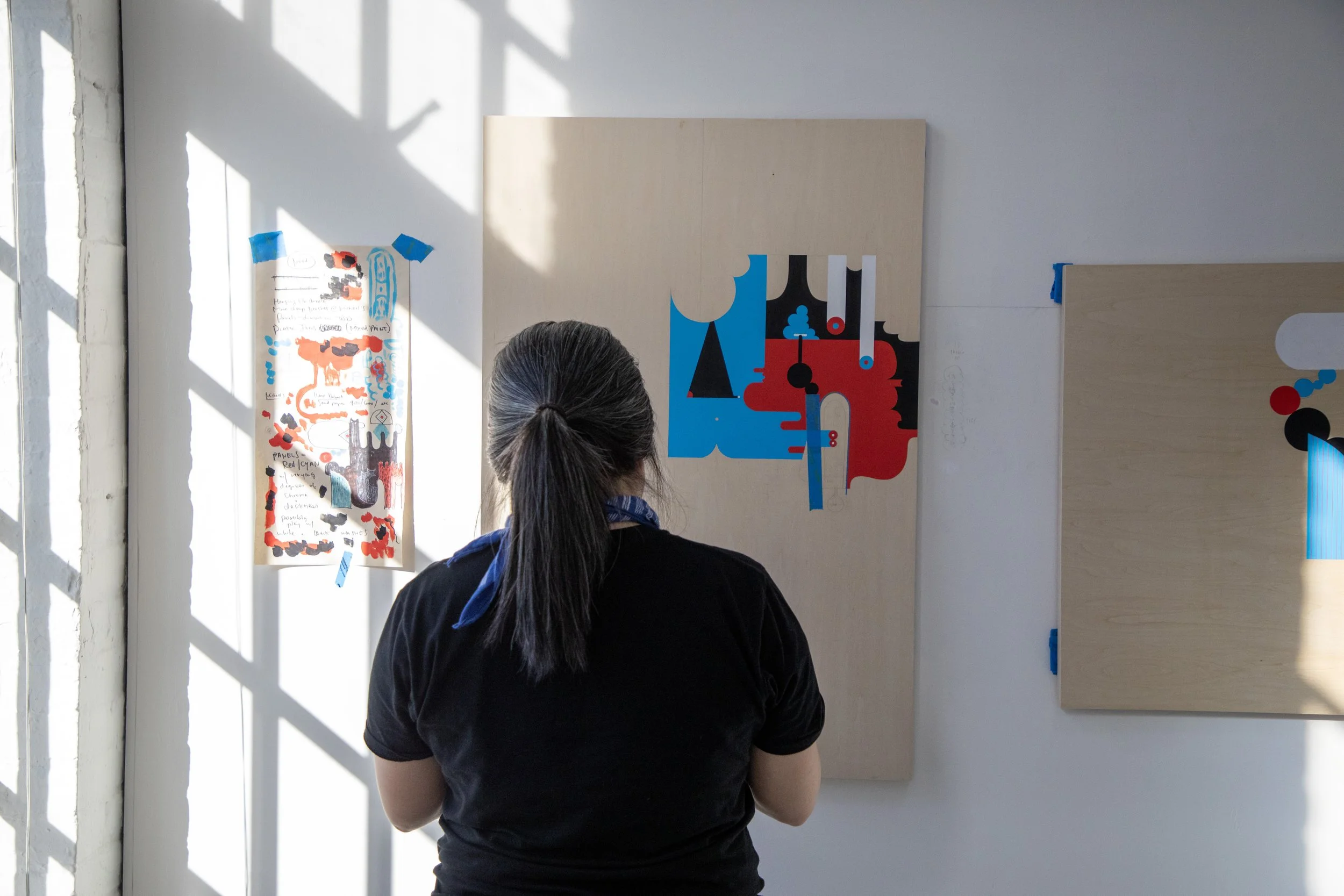
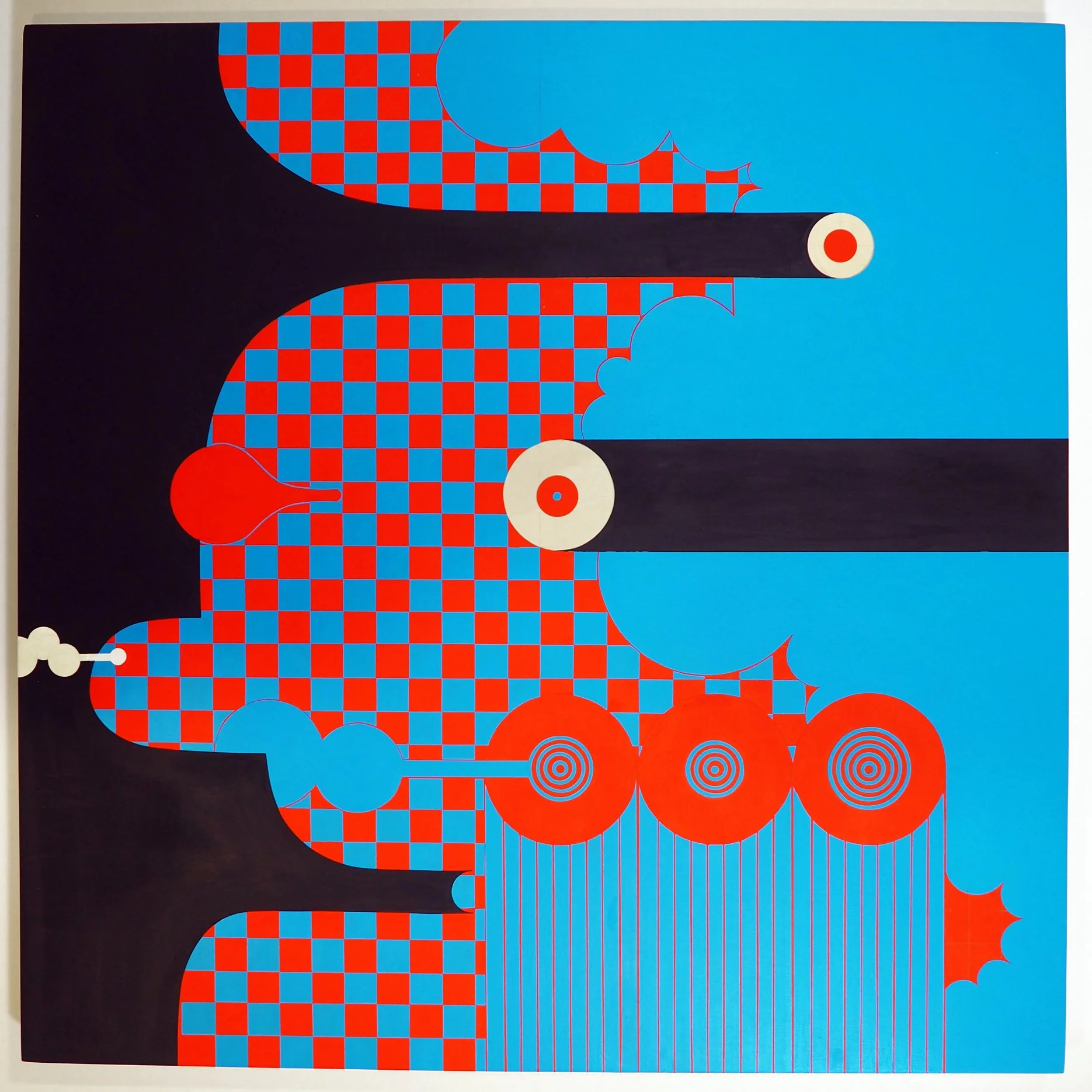
Maruyama's practice is driven by the ever-expanding potential of drawing and by the elasticity of perception. Committed to the in-person viewing experience and to low-tech modes of seeing and making, she aims to produce singular works whose full effect can only be witnessed first-hand. In her latest project, Maruyama engages the effect of anaglyph 3D glasses through red-and-cyan drawing installations and smaller works on panel. The contrasting high-chroma hues clash and collide, generating a potent vibration to the bare eye. When seen through 3D glasses, the image now flickers relentlessly between background and foreground, positive and negative space, and flatness and volume. As each lens masks its corresponding color, the brain fails to integrate the picture as a complete whole. The resulting effect, disorienting both in the physical and psychological sense, is compounded by the spatially ambiguous compositions.
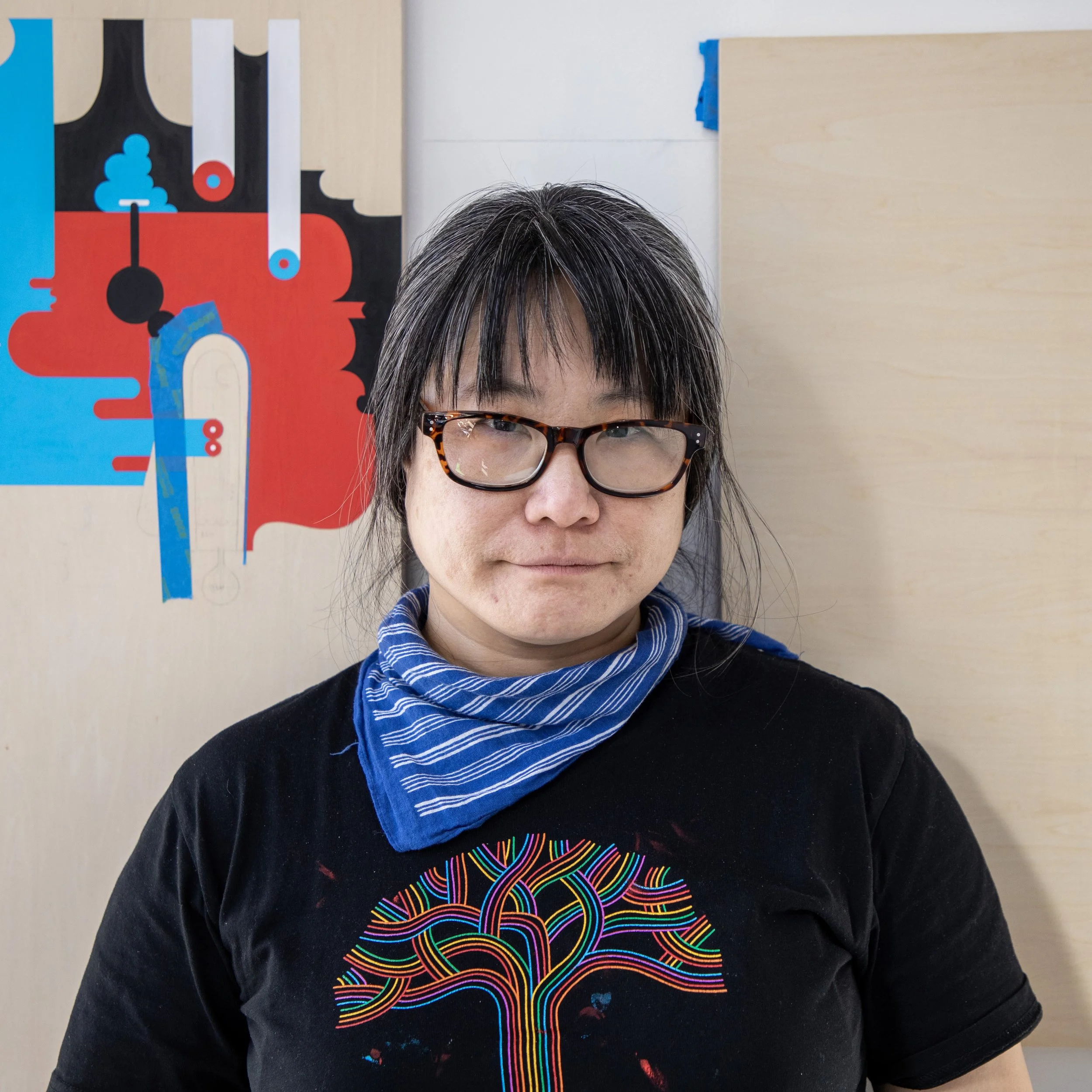
“During my residency I spent endless hours wandering the museum, getting lost in its many glorious and challenging exhibitions, thinking about light, space, shifting vantage points, disorientation, grief, empathy, and so much more. In the studio I began a series of drawing-based paintings on panel and also completed multiple works on paper, all intended for viewing both with and without 3D glasses. The explorations I initiated during the residency will continue to unfold over the coming months, if not years.”
Studio 3
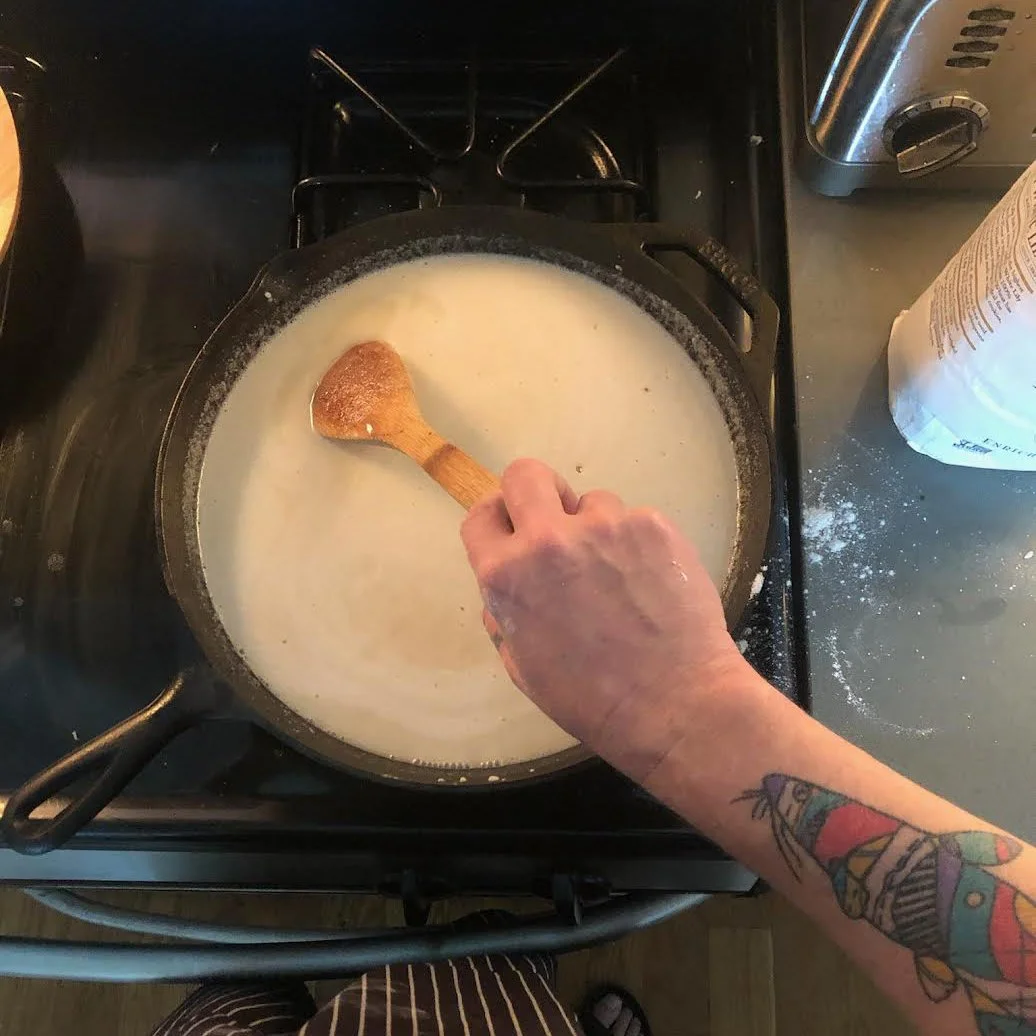
Dusty Levesque
I'm a writer, historian, and cook. You may have met me along the way as Faron Levesque. I grew up roaming the southern wilds and found my holy calling on the shores of the Mississippi River. These days I live on another river’s edge in NYC.
Mobilizing history in service of community care, revolutionary learning, and collective memory keeping is a practice I've spent years refining. With 15+ years working as an educator and historian, I've helped build living archives across fields, within and without academia and other institutions. I specialize in labor and working-class history, the public humanities, agroecology, food, land, & water justice, and farming and beecharming.
Radical storytelling traditions born out of the flames of queer + trans liberation, southern mysticism, and anti-fascist art energize my creative praxis. My lens is photographic, fragmentary, other-than-human, profane and sacred. Bottom-up histories of revolutionary imagination and desire are my thing. The project I'm working on now is another living archive, a catfish cosmographia, a meditation on the limits and possibilities of struggle. Nothing to weigh you down, though; I believe in moveable feasts.
I seek solidarity in the work. I believe in revolt. What am I resisting? Fascist erasure, for sure. Lest we forget that SILENCE=DEATH. But, the future isn’t inevitable if you find other ways to connect the revolutionary present to the revolutionary past, our understanding of change over time rendered bright, elastic, and electric through a prism of hot pink triangles.
Studio 4
Melissa Sutherland Moss
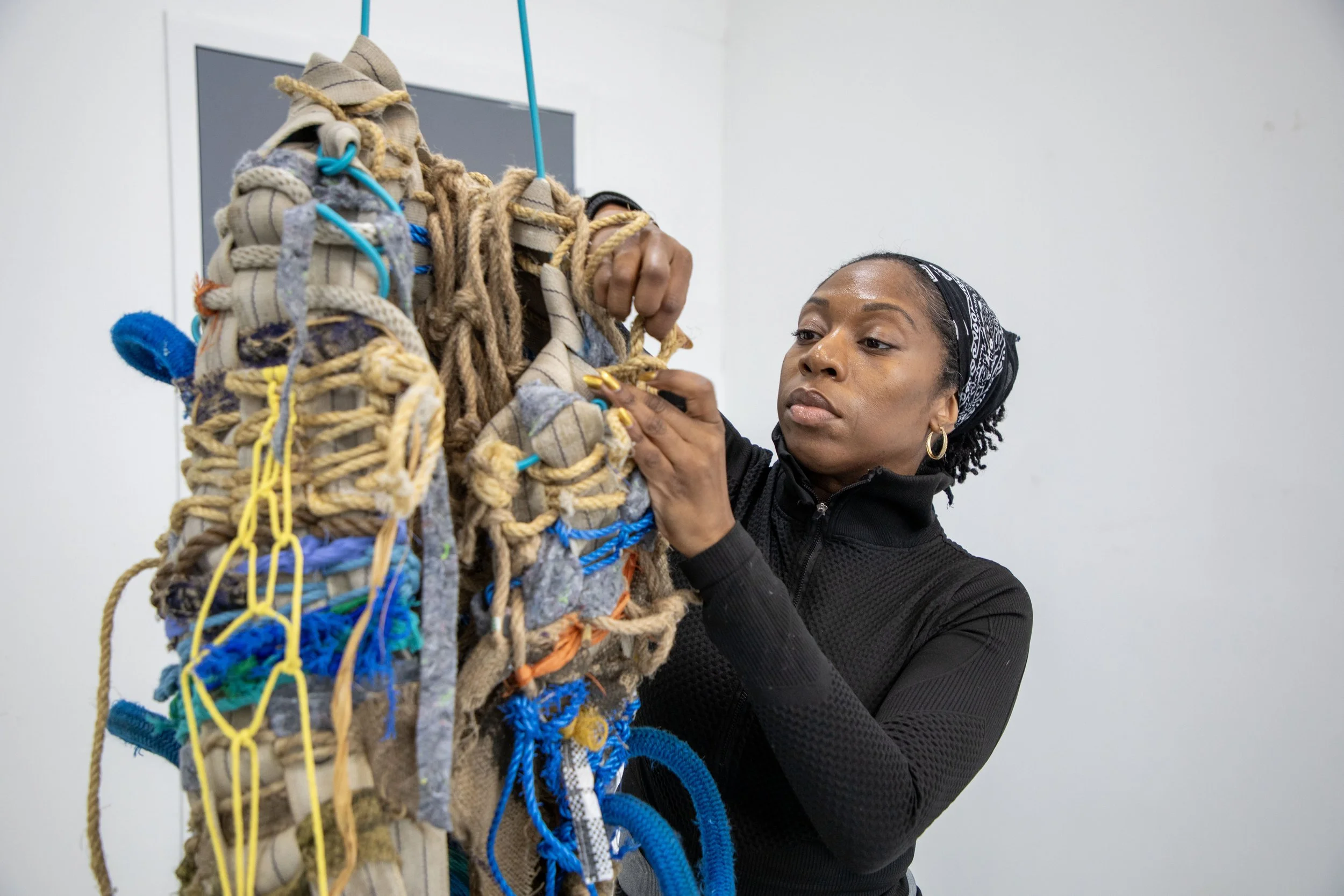
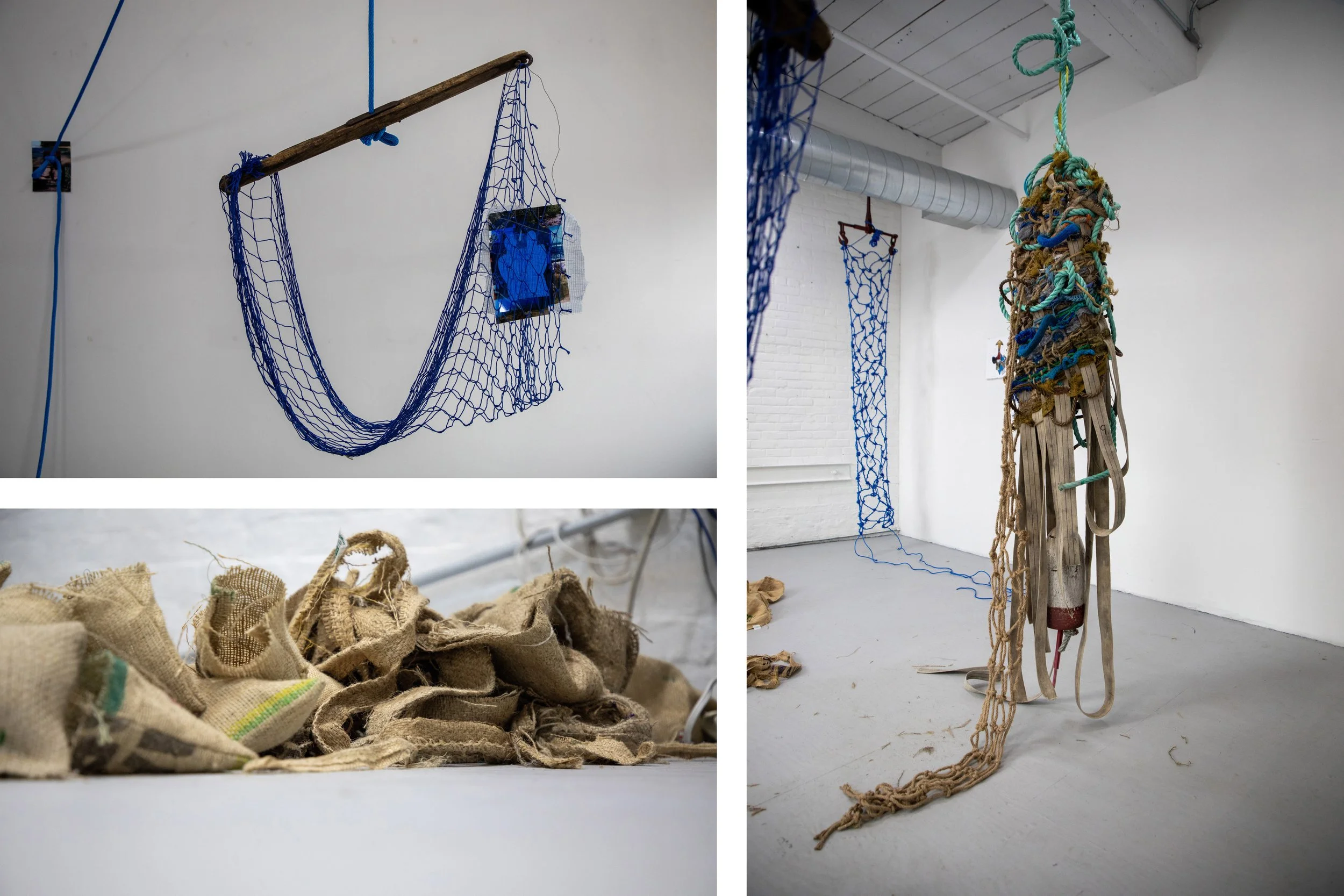
Melissa Sutherland Moss (b. Brooklyn, NY) is a Costa Rican American interdisciplinary artist and adjunct professor at the Maryland Institute College of Art (MICA). Her work spans collage, painting, video, sound, text, performance, and installation. Grounded in research and personal history, her practice explores the intersections of landscape, identity, and migration—particularly through the lens of Afro-Caribbean and diasporic narratives. She considers landscape not only as geography, but also as a cultural and historical archive shaped by memory, dislocation, and transformation.
Through layered processes of accumulation, erasure, and excavation, Moss creates work that navigates the tension between visibility and concealment, drawing on archival materials, inherited stories, and speculative reconstructions. She engages the body as both subject and site—interrogating how it holds and performs history, especially in relation to themes of colonialism, access, gender, and belonging. Her work has been exhibited at institutions including the Biggs Museum of American Art and the National Afro-American Museum and Cultural Center. She has been awarded residencies and fellowships with MASS MoCA (2025), ArtCrawl Harlem, the Chrysalis Institute for Emerging Artists, the Alliance of Artist Communities, and Zea Mays Printmaking. Her practice and perspective have been featured in publications such as Forbes, Black Enterprise, Essence, Modern Luxury, and Refinery29. Moss lives and works in Baltimore and NY.
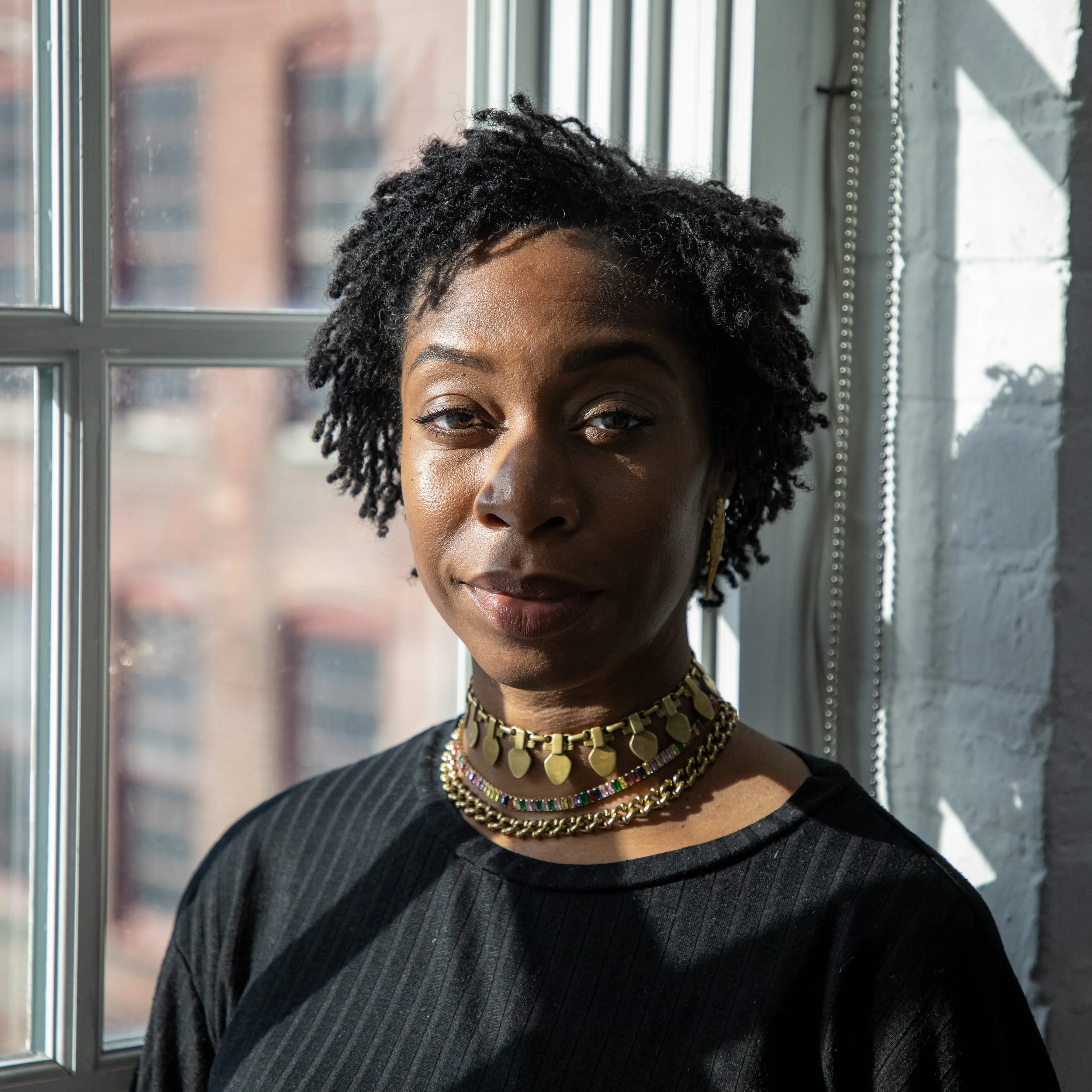
“During my time at MASS MoCA, I spent much of my time thinking about my relationship with color as it relates to Caribbean landscapes.”
Studio 5
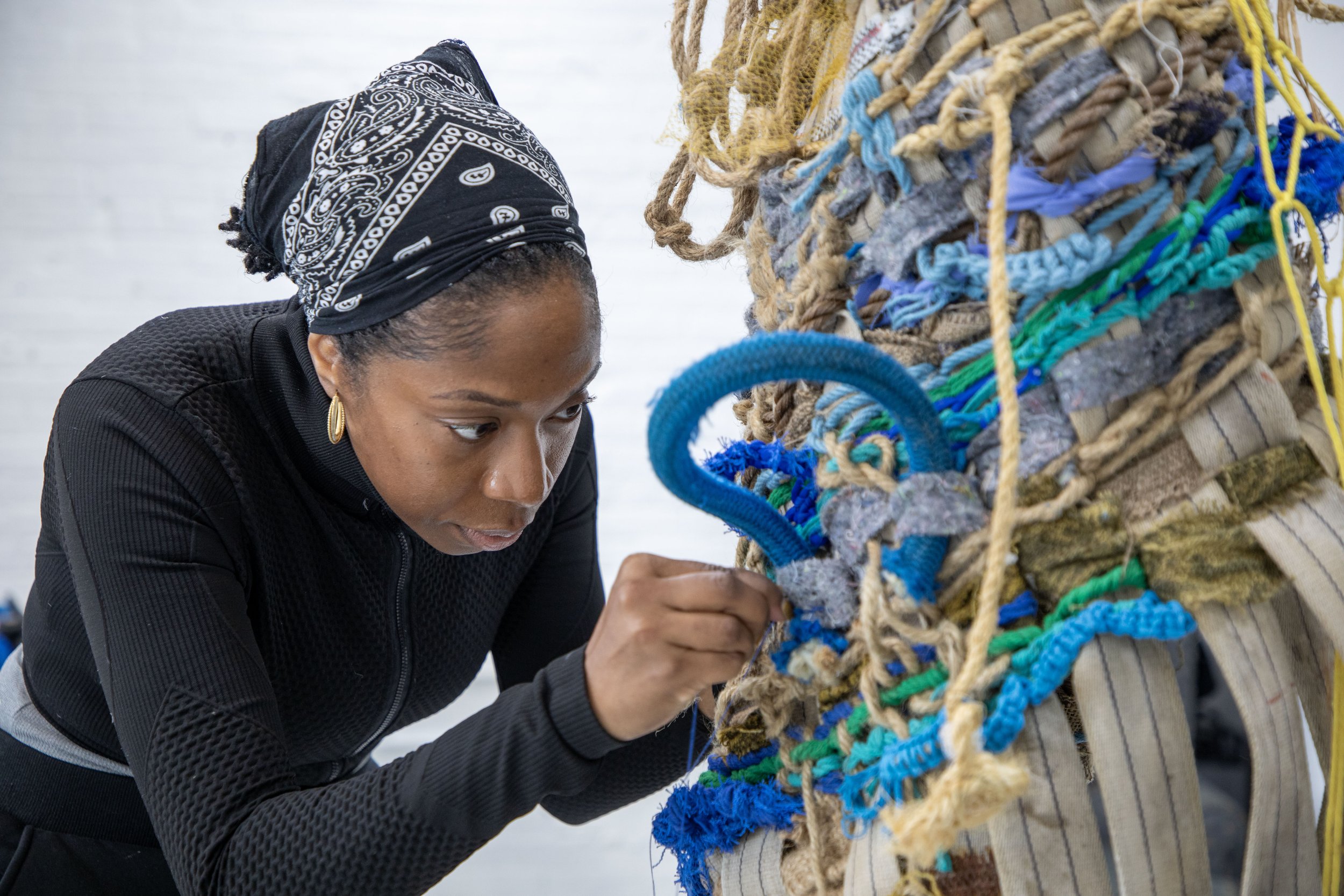
Chenlu Hou
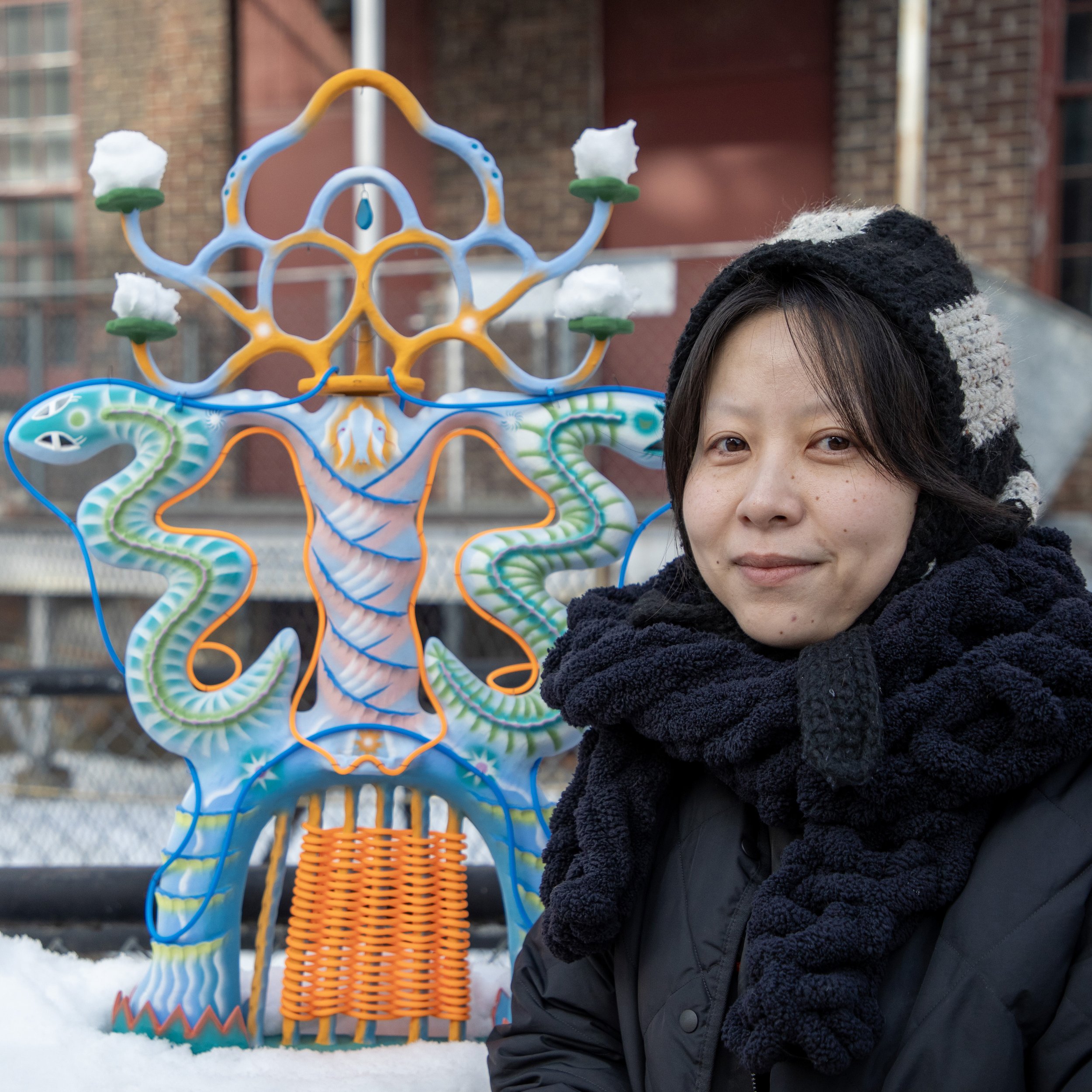
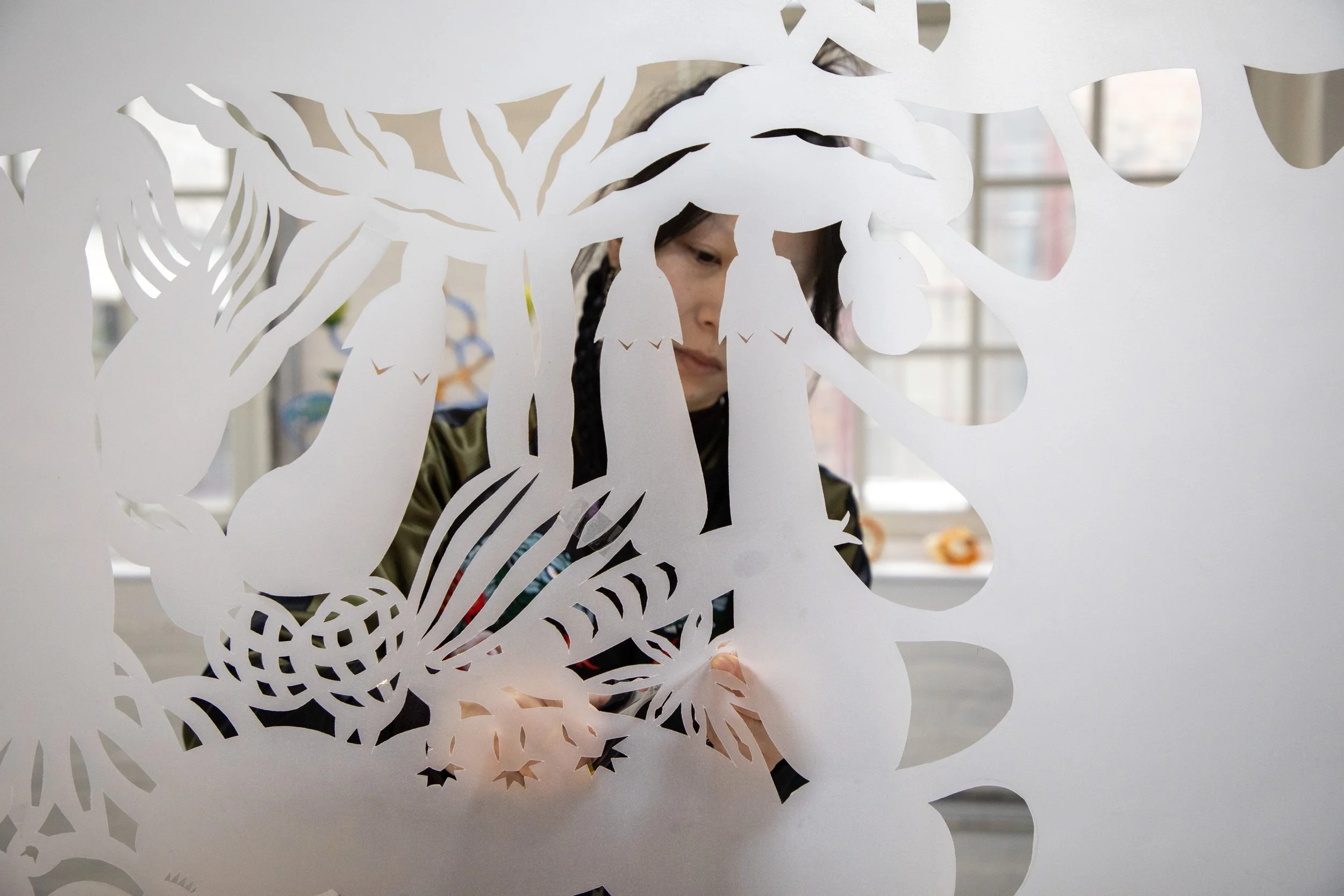
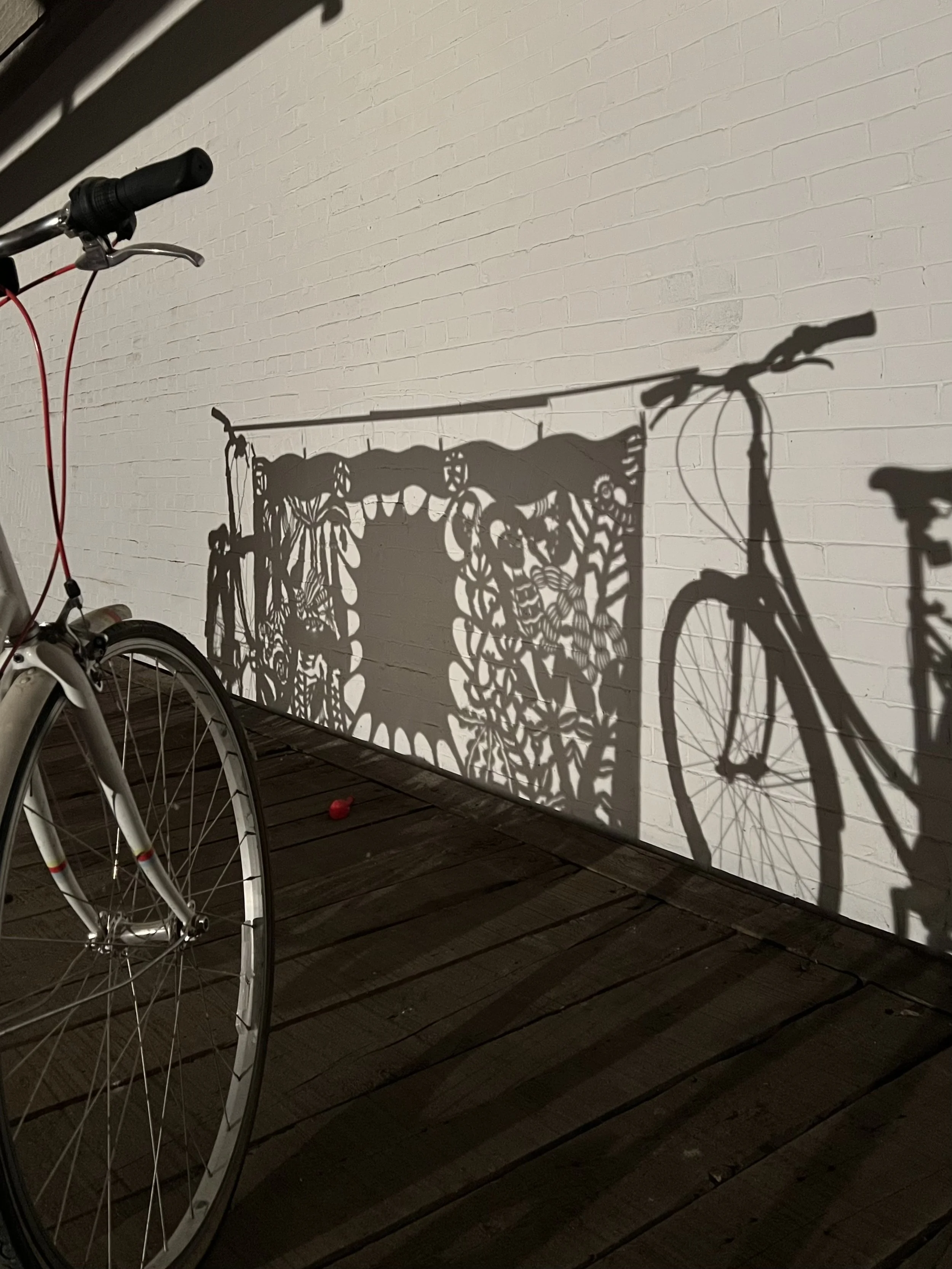
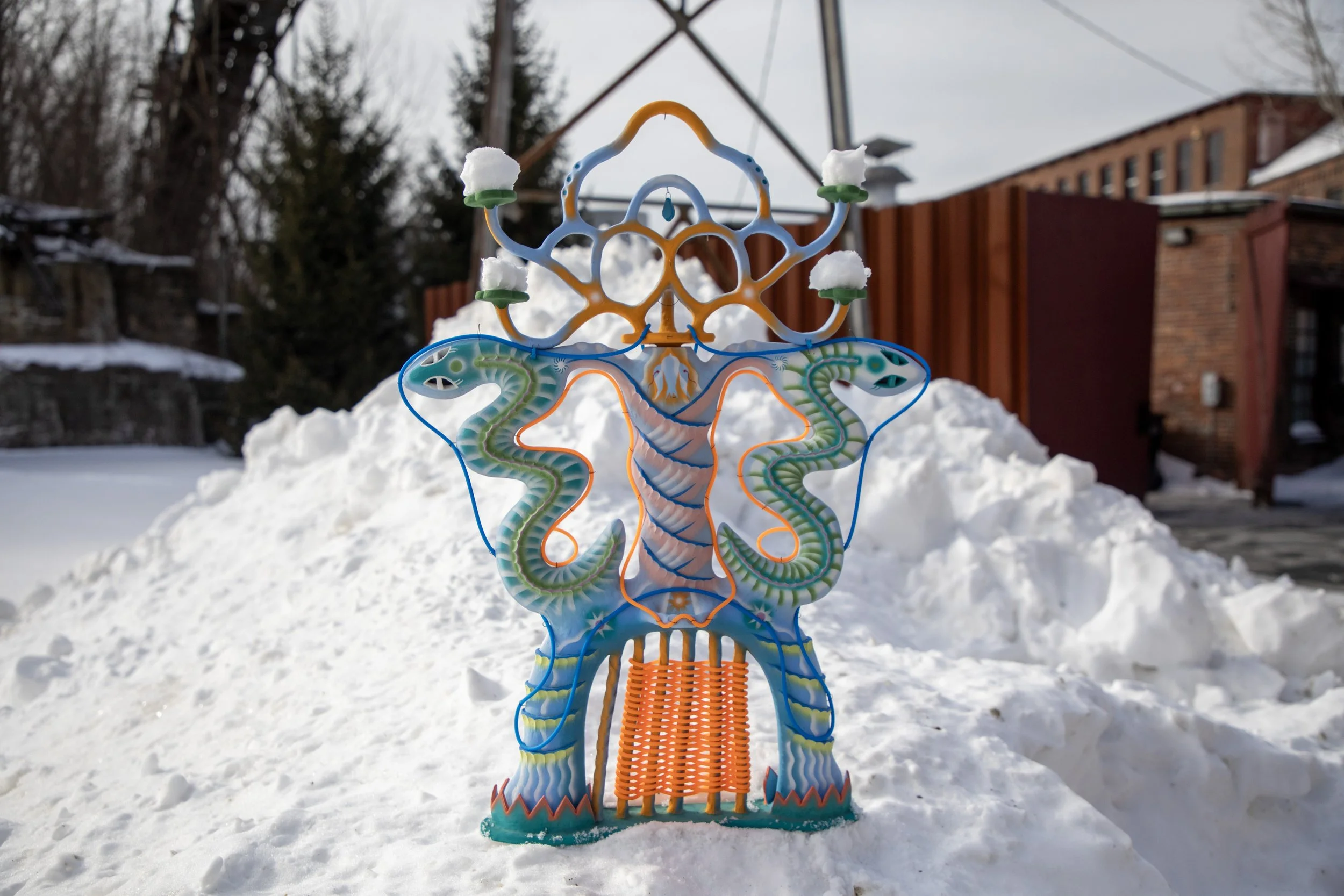
Chenlu Hou is an artist whose imaginative sculptures draw from Chinese folk art, ceremonial objects, and moments from daily life. Blending personal memory with reinterpretations of traditional storytelling, she has developed a unique visual language that combines intricate surface detail with layered narrative suggestion. Her hand-built ceramic works explore the complex relationships between human, animal, and plant forms, creating spaces where myth, memory, and lived experience merge.
Hou’s practice is grounded in a deep engagement with material and form. Drawing from her background as a new immigrant and her connection to Chinese culture, she often works with symbolic objects and motifs that carry emotional resonance. Her surfaces—rich with airbrushed underglazes and vibrant colors—offer both ornament and meaning, revealing subtle shifts in tone and texture that encourage close, sustained looking.
Her sculptures frequently suggest theatrical, using arrangements that feel both familiar and surreal. These compositions leave room for ambiguity, allowing viewers to bring their own associations into the work. Rather than offering fixed narratives, Hou’s installations open up possibilities—about cultural identity, adaptation, and the ways objects can hold and transmit memory.
Born in Shandong, China, Hou is currently based in Providence, RI. She earned her MFA in Ceramics from the Rhode Island School of Design in 2019. Since then, she has completed residencies at the Museum of Arts and Design in New York, the Penland School of Craft, the Houston Center for Contemporary Craft, and the Archie Bray Foundation. Hou is currently a resident artist at Harvard Ceramics and a Visiting Critic in Ceramics at the Rhode Island School of Design.
“During my time at Studios at MASS MoCA, I focused on research and material experimentation to expand my ongoing Garden series. The project explores migration and adaptation through food and agriculture, tracing how crops move across continents and how taste carries memory and survival. I also studied the seventy-five Chinese immigrant shoe factory workers in 19th-century North Adams, examining what sustained them and how labor, displacement, and exploitation shaped their lives within the specific industrial history of the site.”
Studio 6
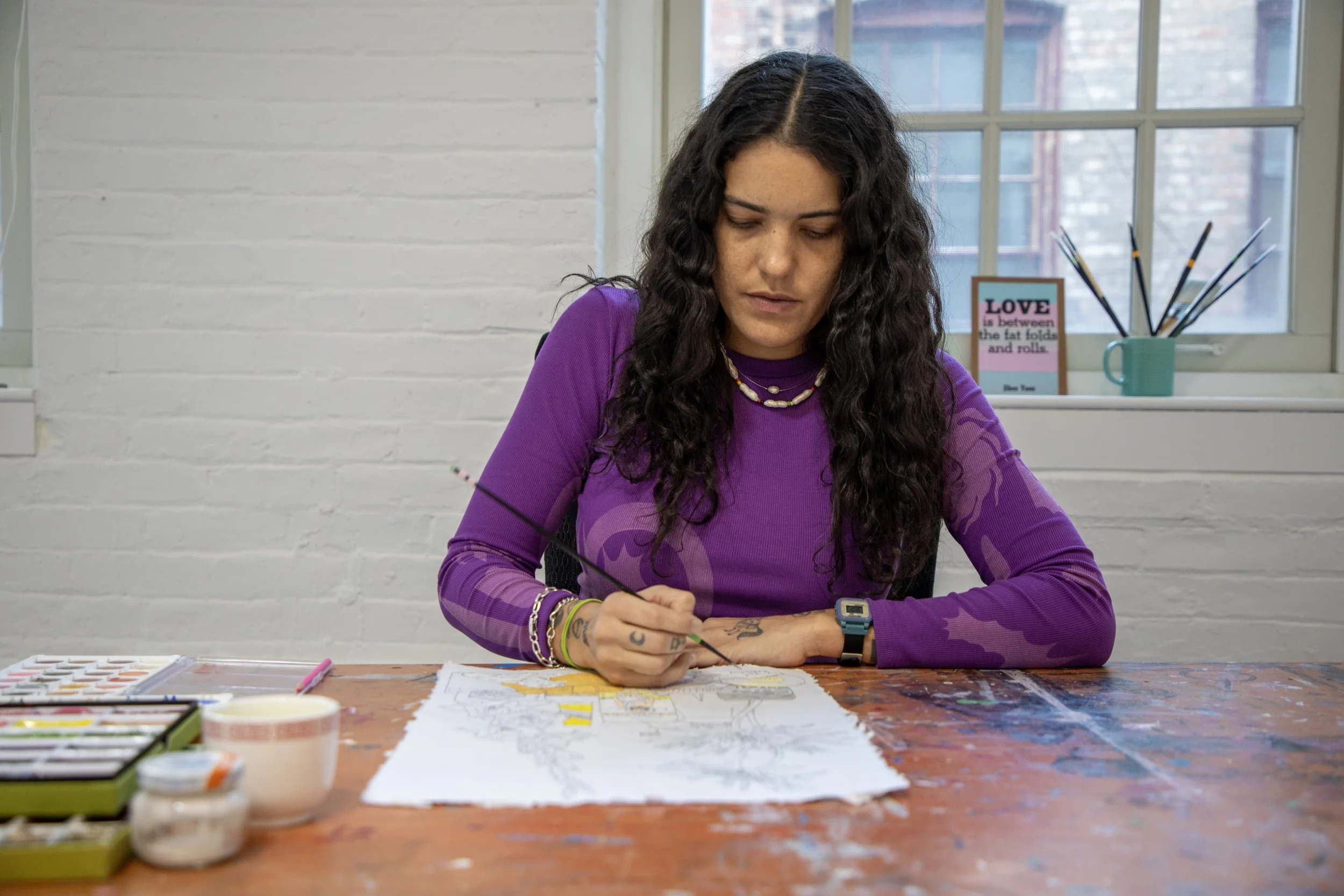
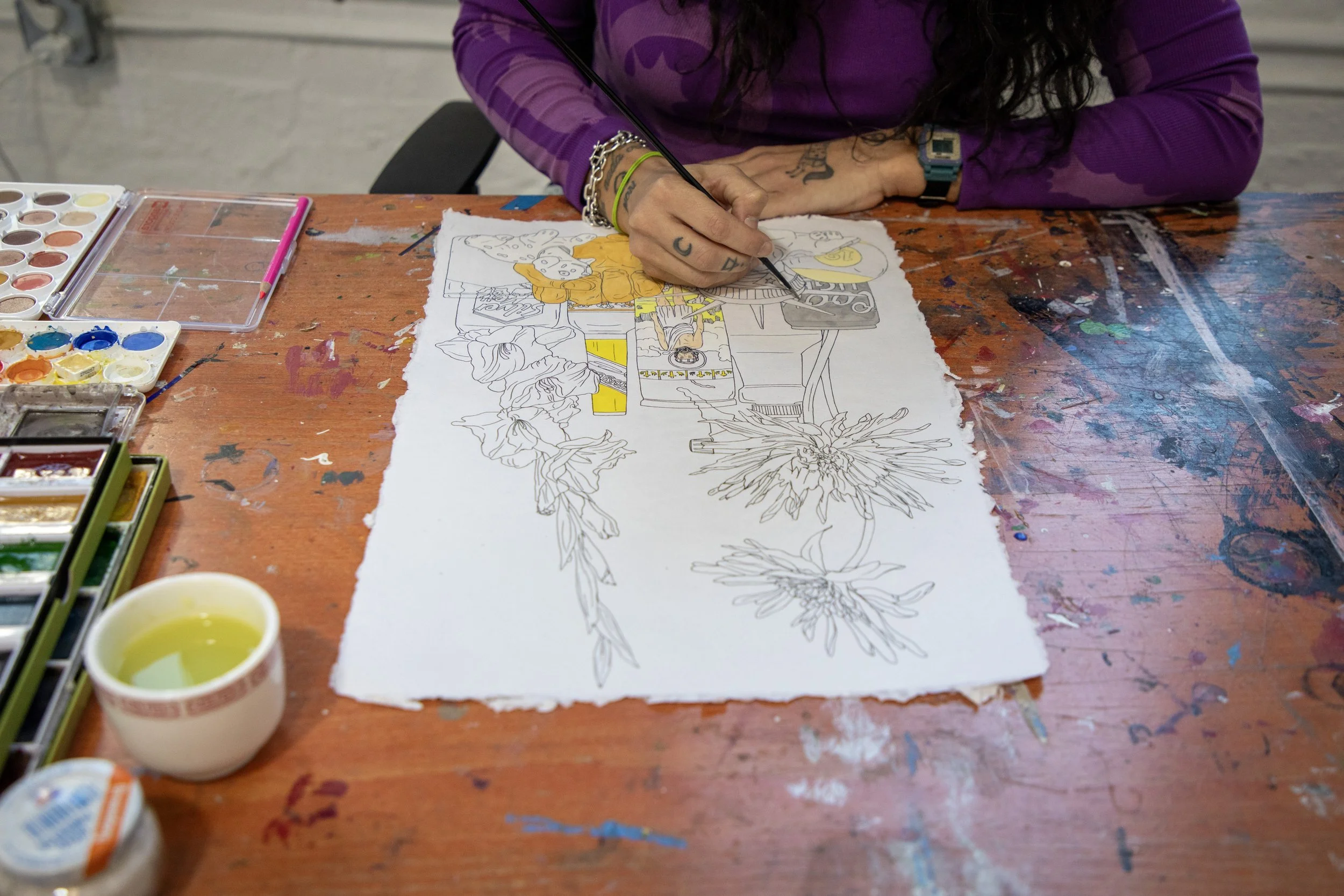
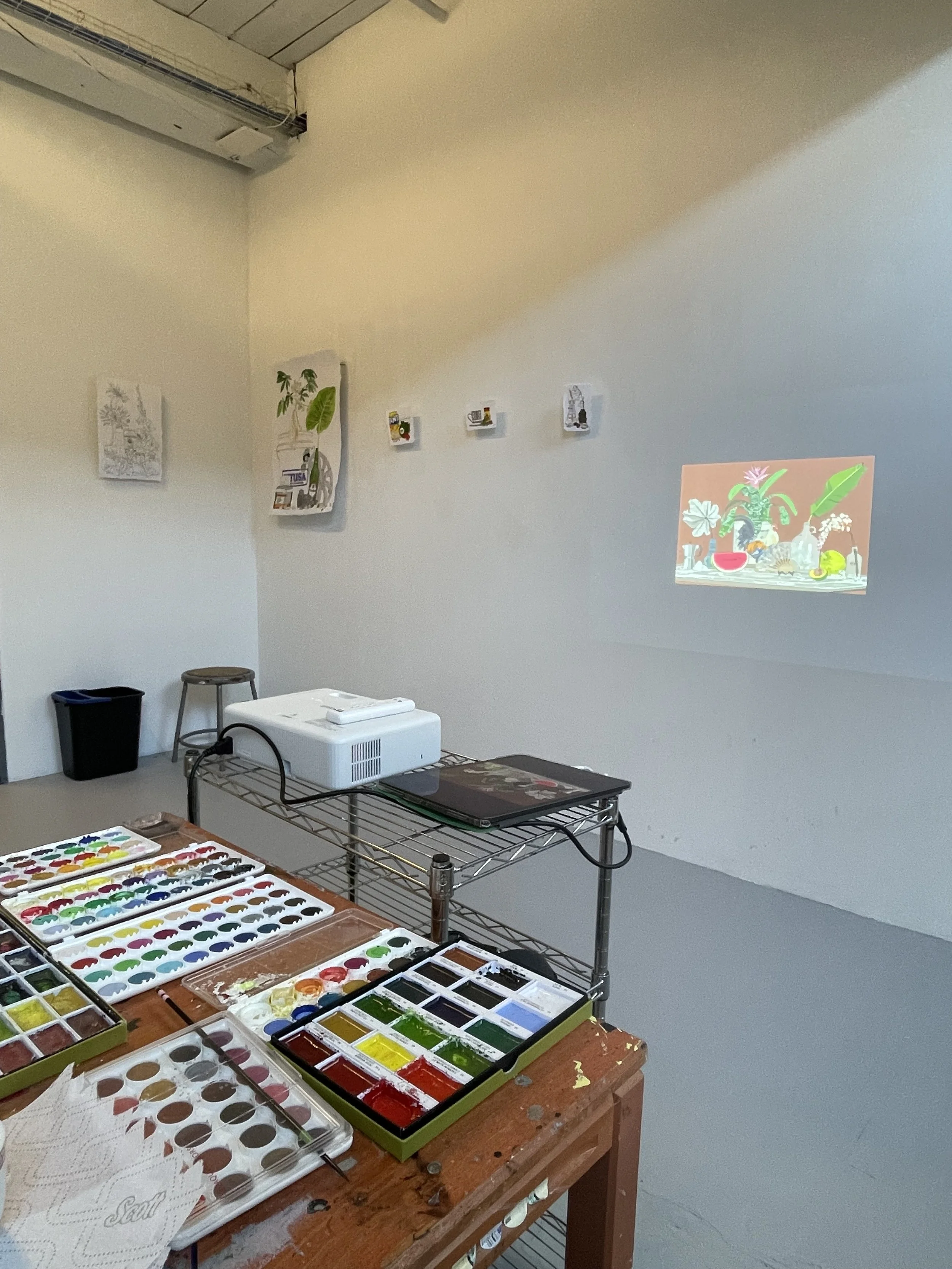
Camila Buxeda
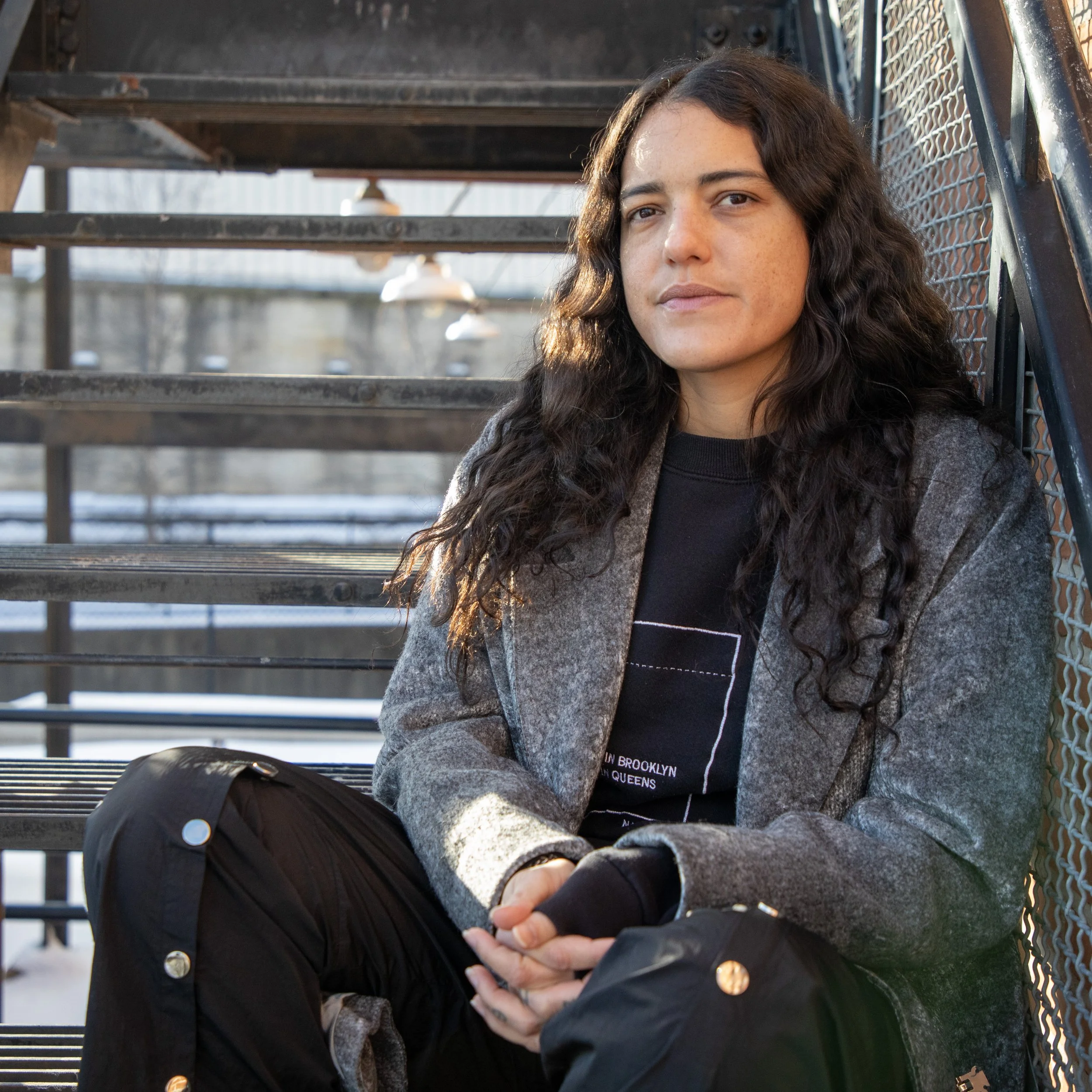
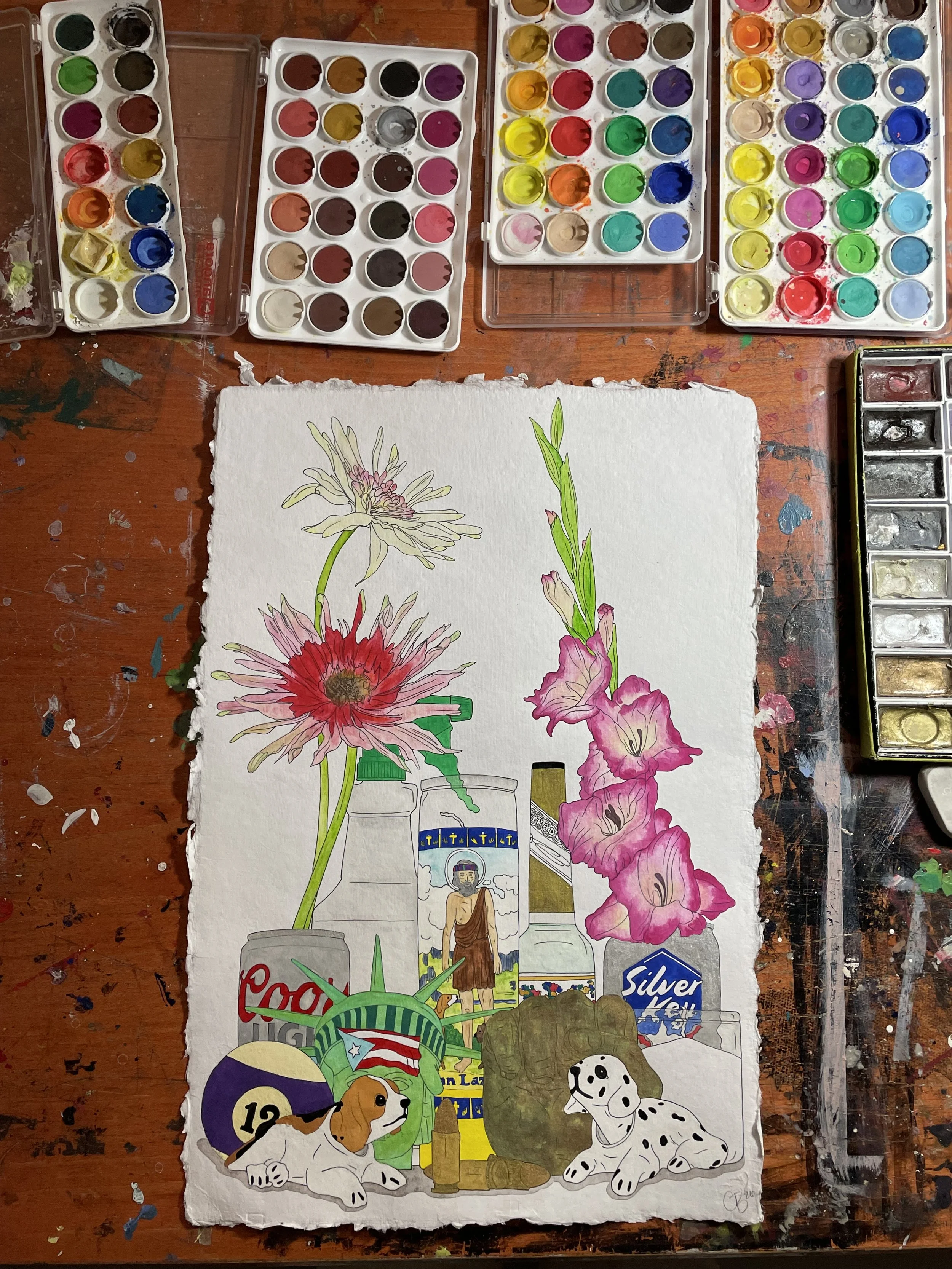
Camila Buxeda, born and raised in San Juan, Puerto Rico, lived and worked as a full time illustrator in Brooklyn, New York for about 8 years and recently was on a 2 year long road trip through the United States painting full time before settling in La Quinta, California. Her work is mostly watercolor still life paintings on paper, and some digital art work.
Camila's art is an exploration of memory and identity, inspired by her experience growing up in a colonial context. By using familiar objects and everyday scenes she aims to evoke a feeling of nostalgia and contemplation. By providing the cultural and historical significance to these seemingly ordinary objects, she looks into the complexities of personal and collective memory. Her still life paintings are not mere representations of physical objects, but portals to a world of emotions, memories and shared experiences.
Studio 9
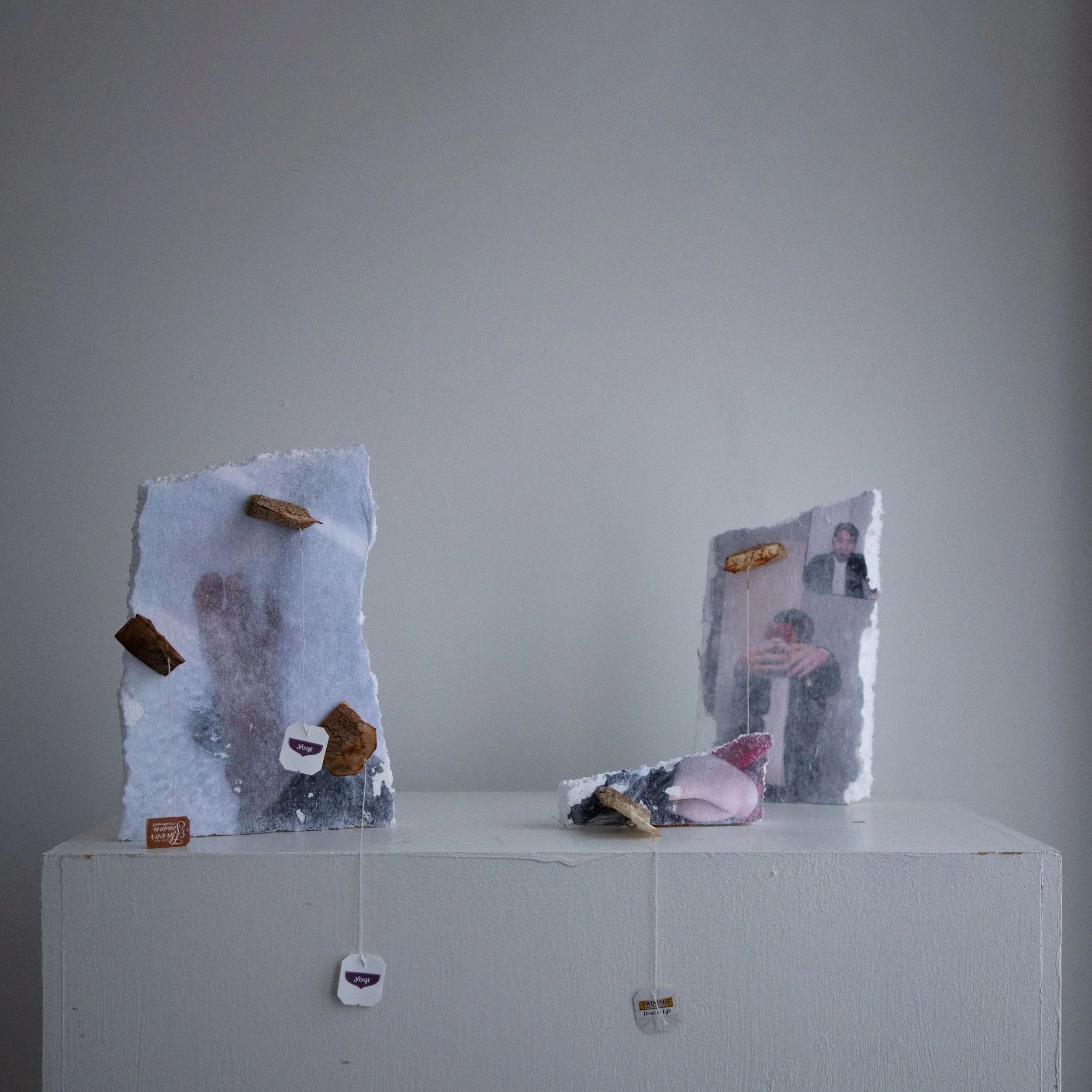
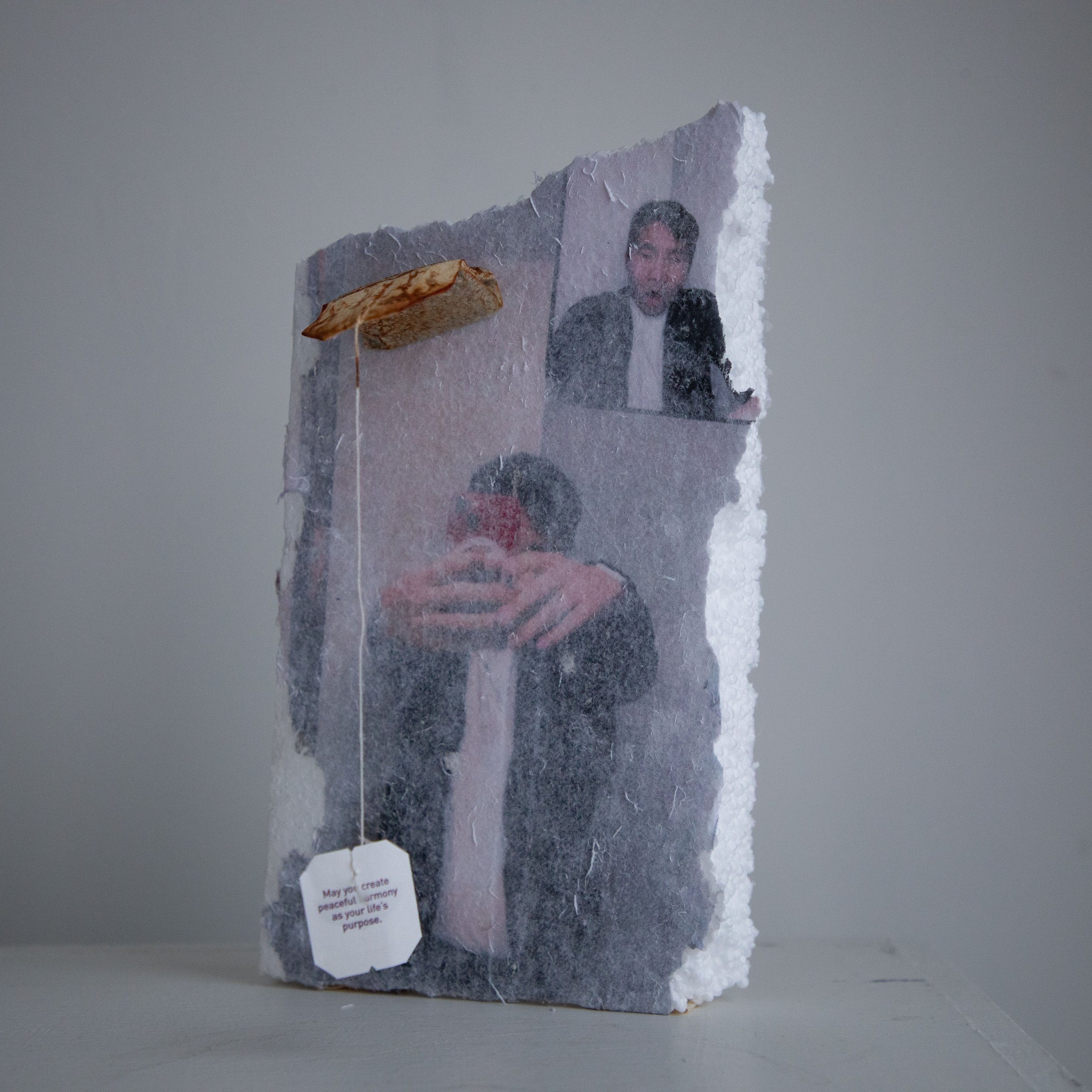
Woohee Cho
Woohee Cho is a visual artist based in Los Angeles and Seoul. His work focuses on moments in everyday life where individual identity collides with or is subsumed by society, queering these experiences through installations, videos, and performances. Gathering, personalizing, and laughing are the primary methodologies of his practice.
He received an MFA from California Institute of the Arts (2020), and BFA from Seoul National University (2014). Solo exhibitions have been held at Vox Populi, PA (2025); Post Territory Ujeongguk, Seoul (2023). His works have been shown at Los Angeles Nomadic Division (2025); Torrance Art Museum, CA (2025); Human Resources LA, CA (2024); Brussels Independent Film Festival, Belgium (2022); Ann Arbor Film Festival, MI (2021); Cork International Film Festival, Ireland (2021); OUTFEST Film Festival LA (2021); UCLA New Wight Biennial (2020); Los Angeles Municipal Art Gallery (2020); and REDCAT (2019), among others. He is a recipient of LAND MOHN grant (2025); Visual Arts Fellowship (interdisciplinary field) from the Seoul Foundation for Arts and Culture (2023); and Body and Tech Fellowship from School of Dance at CalArts (2019). He has participated in residencies at UCross Foundation, WY (2025); Alex Brown Foundation, IA (2024); NARS Foundation, NY (2023); The REEF LA, CA (2020-2021); and Saas-Fee Summer Institute of Art, NY (2019).
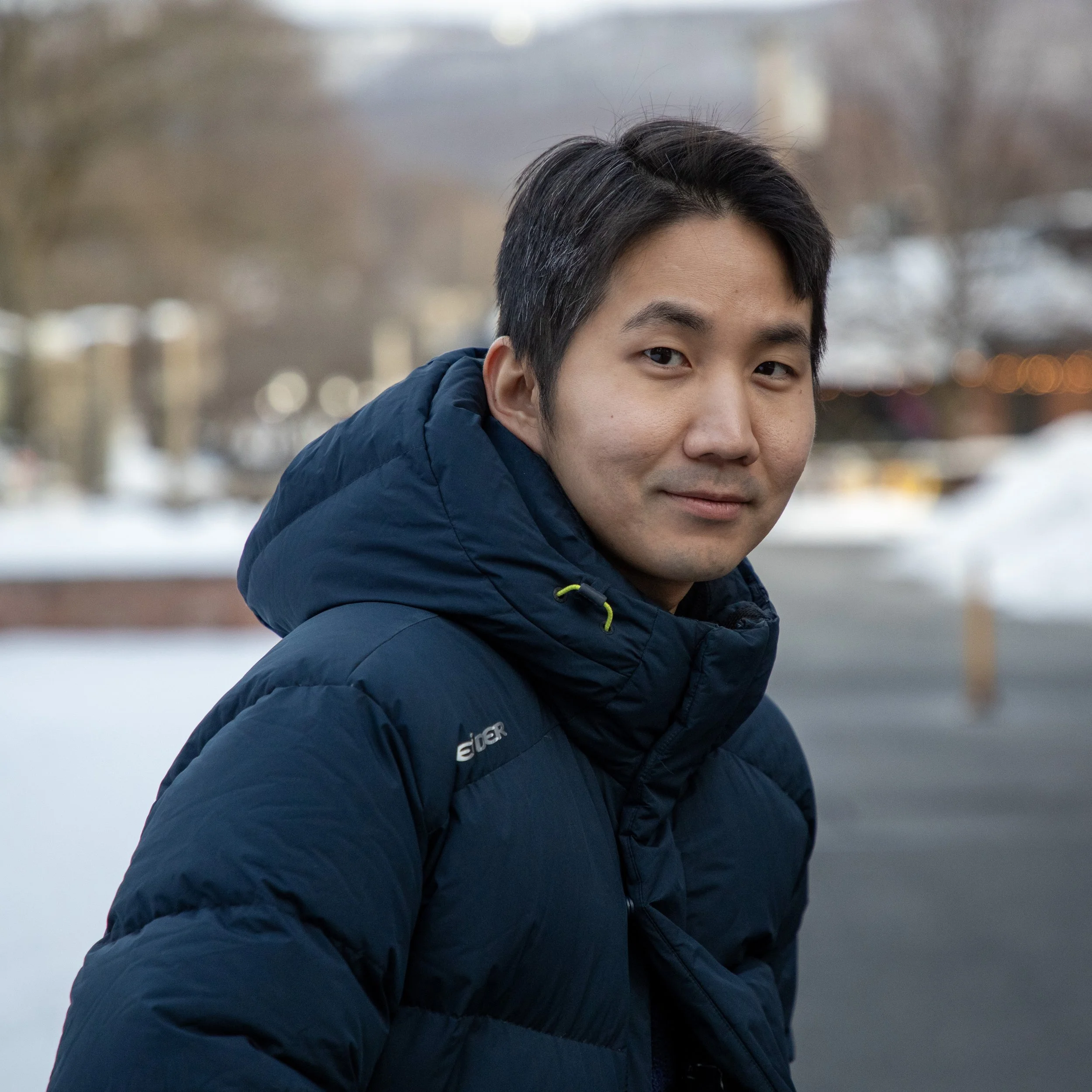
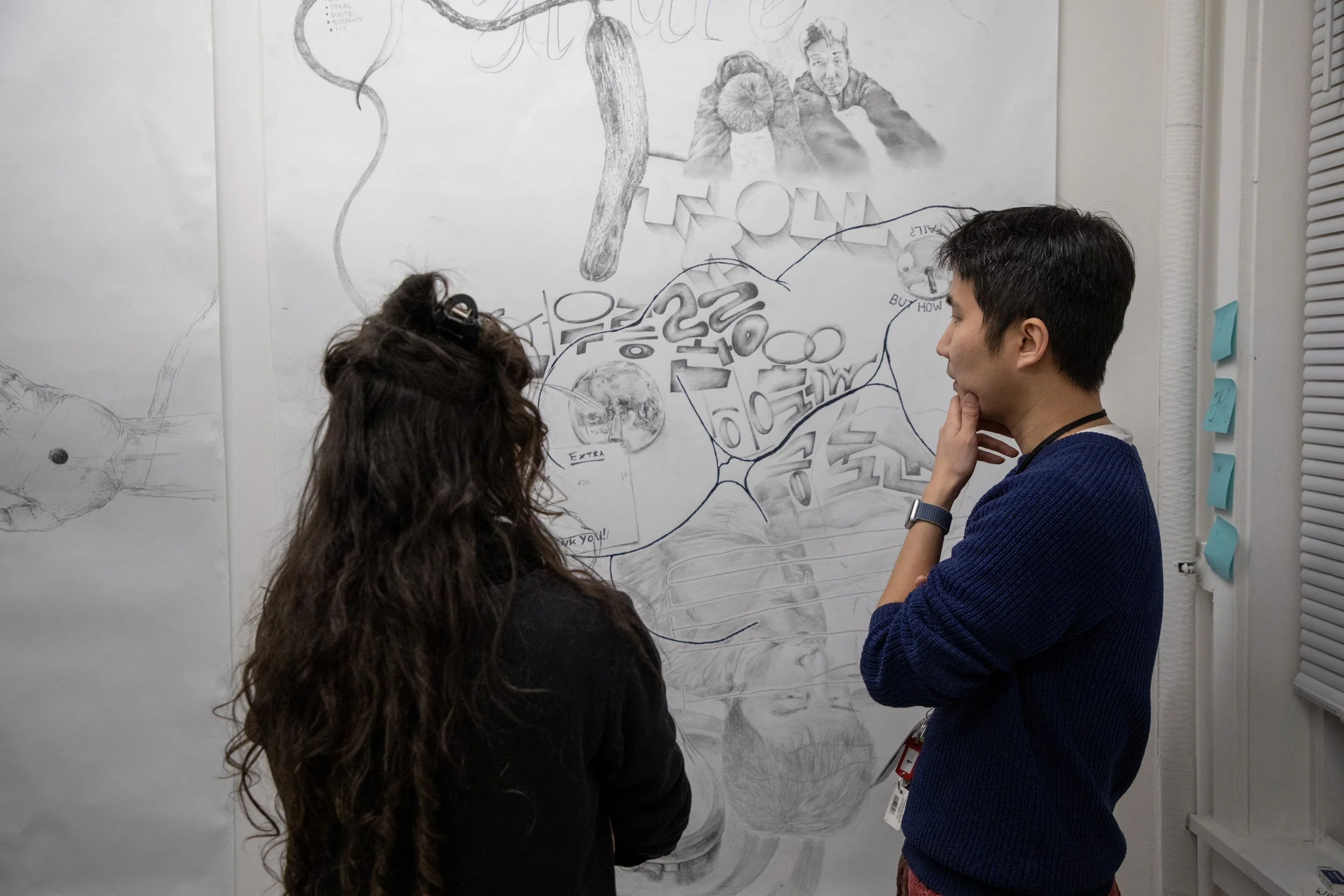
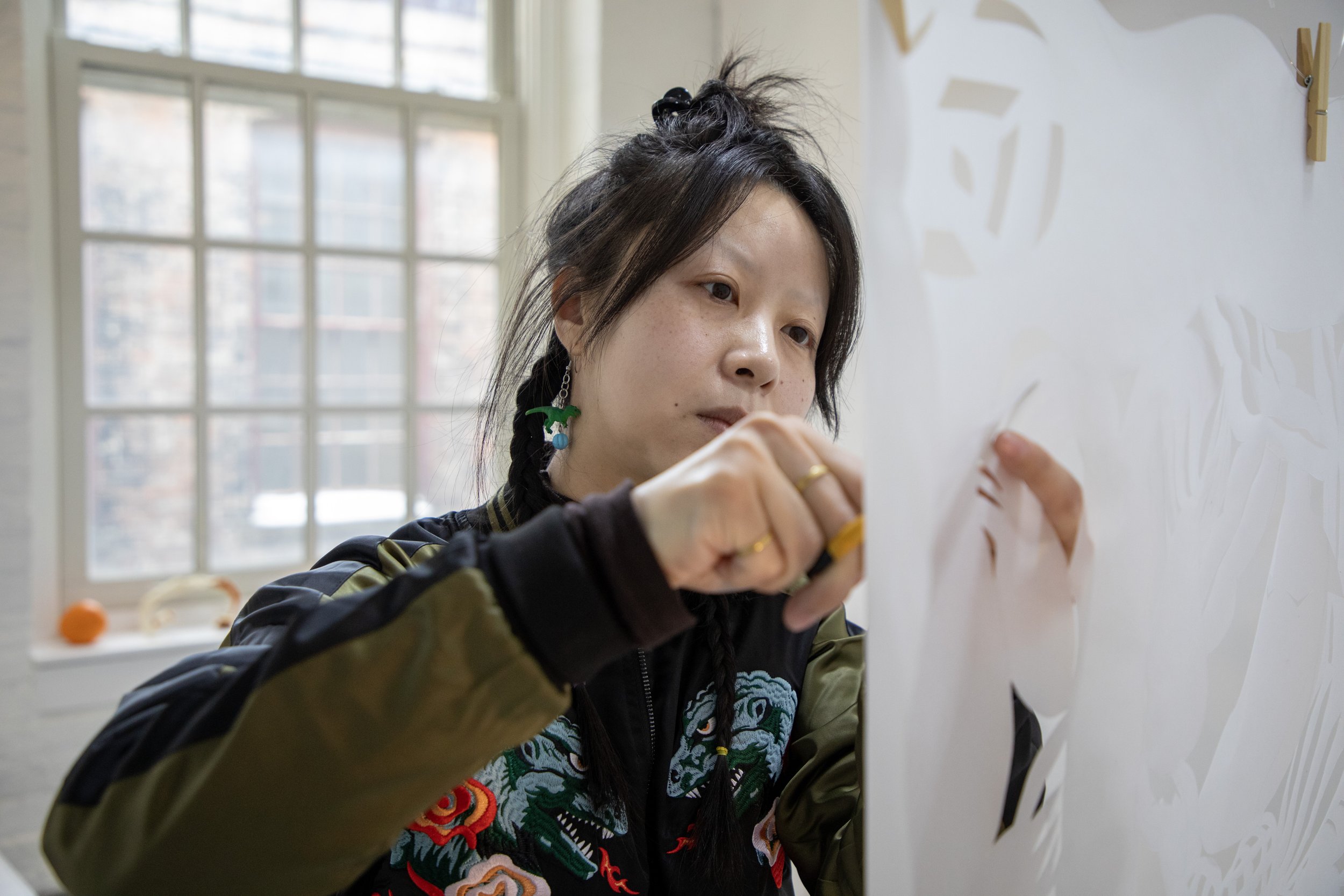
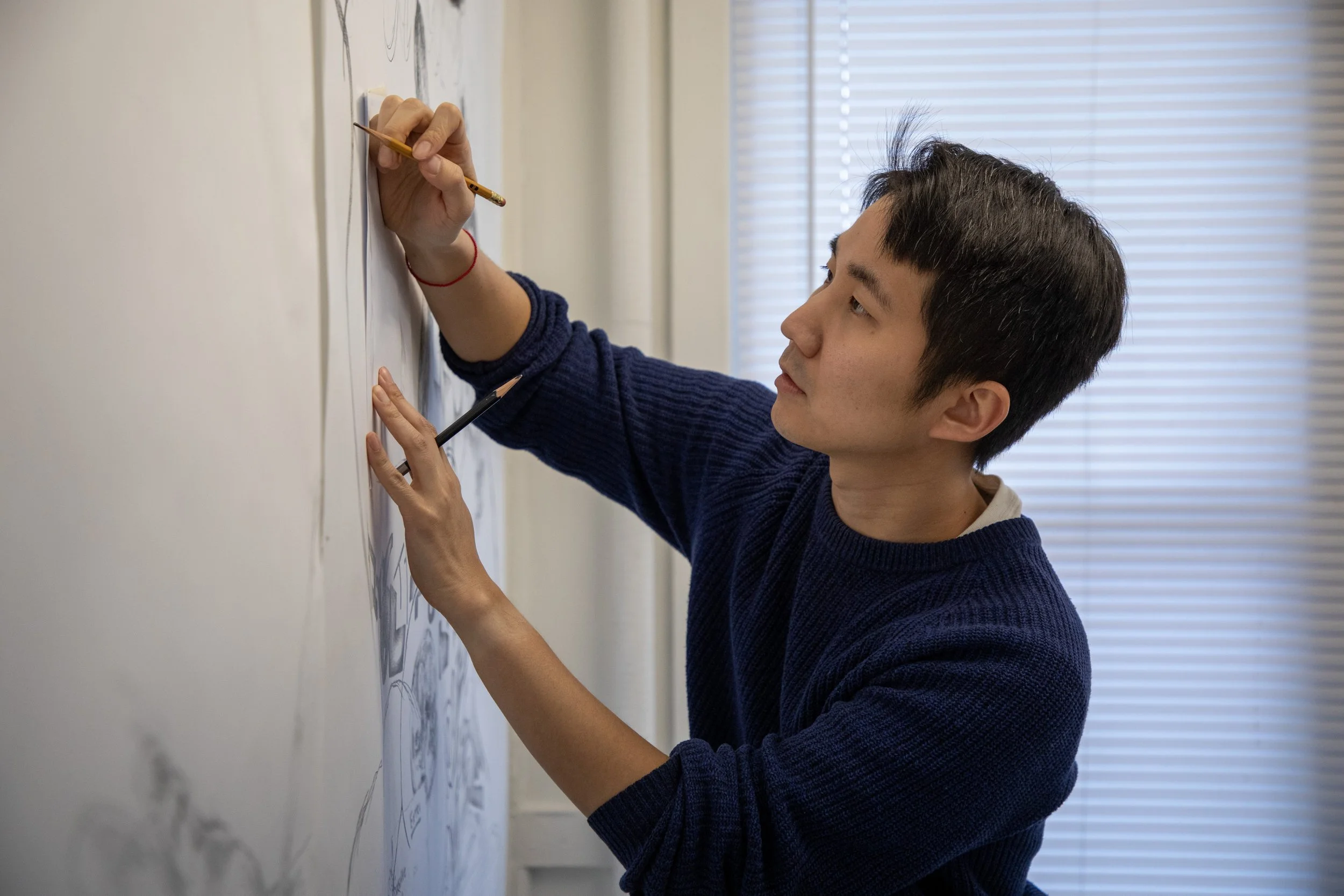
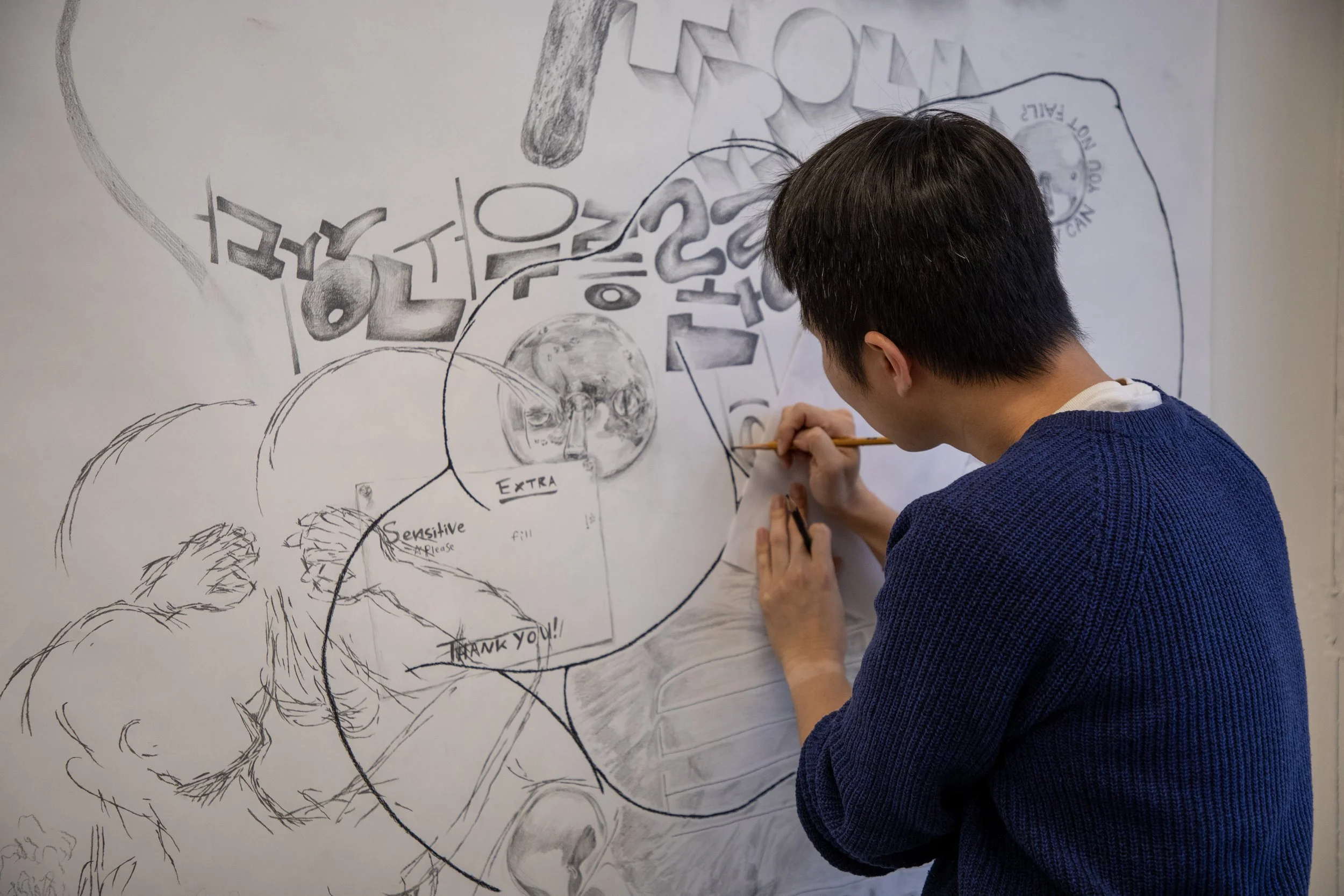
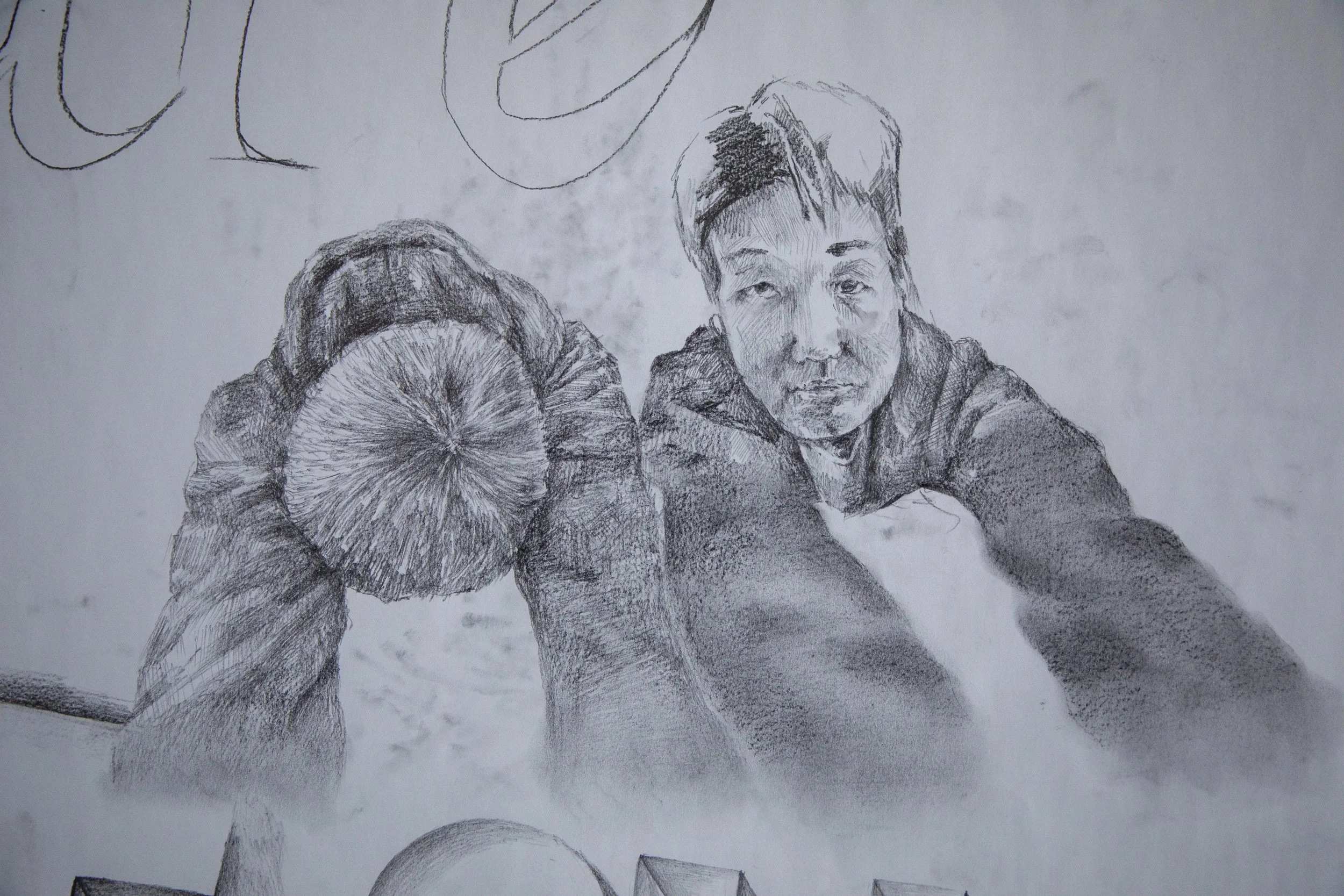
“At MASS MoCA, I started a new drawing series on 5’ 8” paper (my height). Drawing, for me, functions as transcription: a transfer of psychological space, bodily memory, and lived residue into paper. It begins as a scribble, a self-referencing gesture, a diaristic mark, where one image leads to another, and meaning is generated through sequence.
The work moves between image and language without definite hierarchy. The text does not assist the image but destabilizes it. Language operates both as meaning and as abstract form. As someone whose mother tongue is Korean, I’m drawn to multiplicity, opacity, and misalignment as generative conditions.”
Studio 10
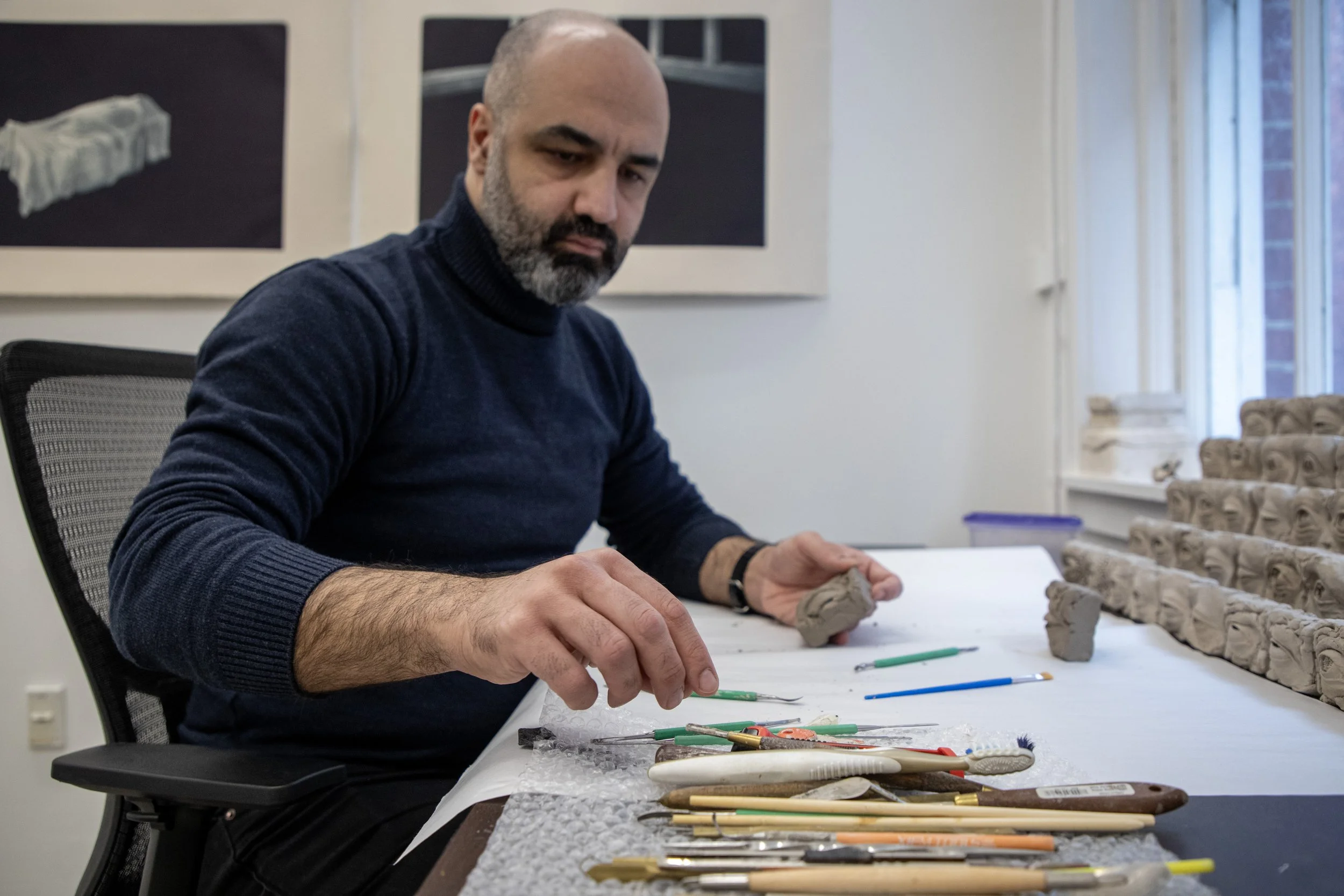
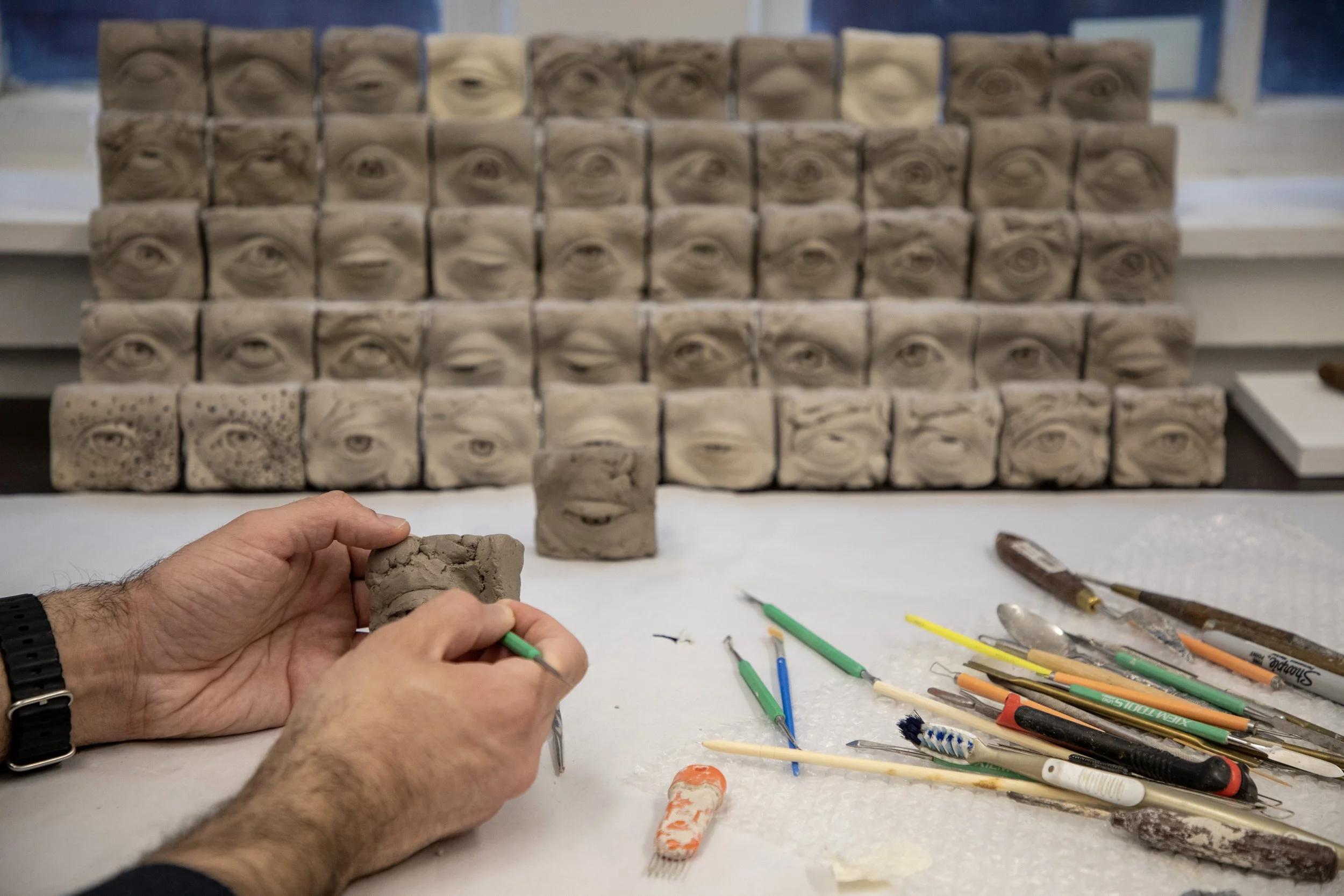
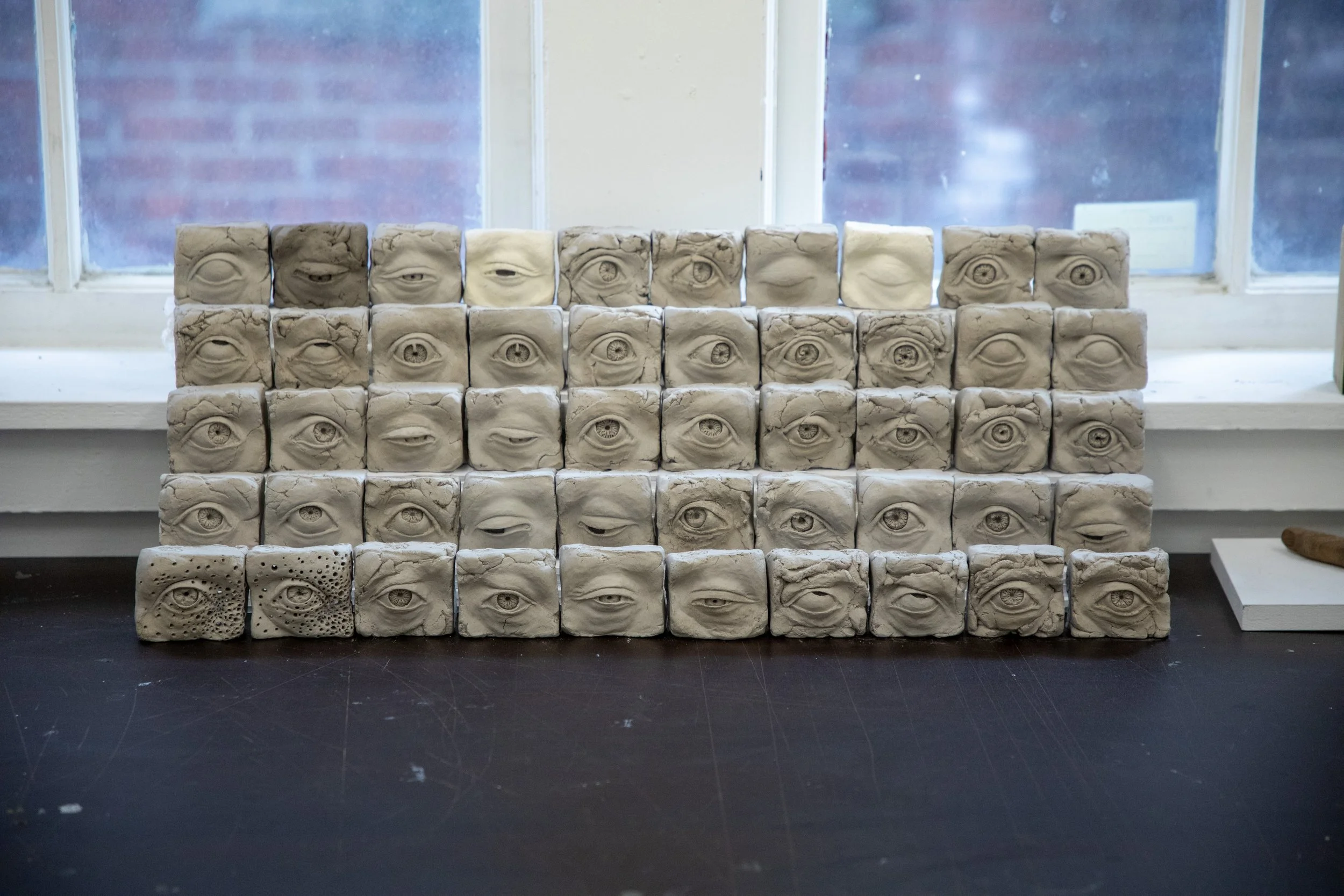
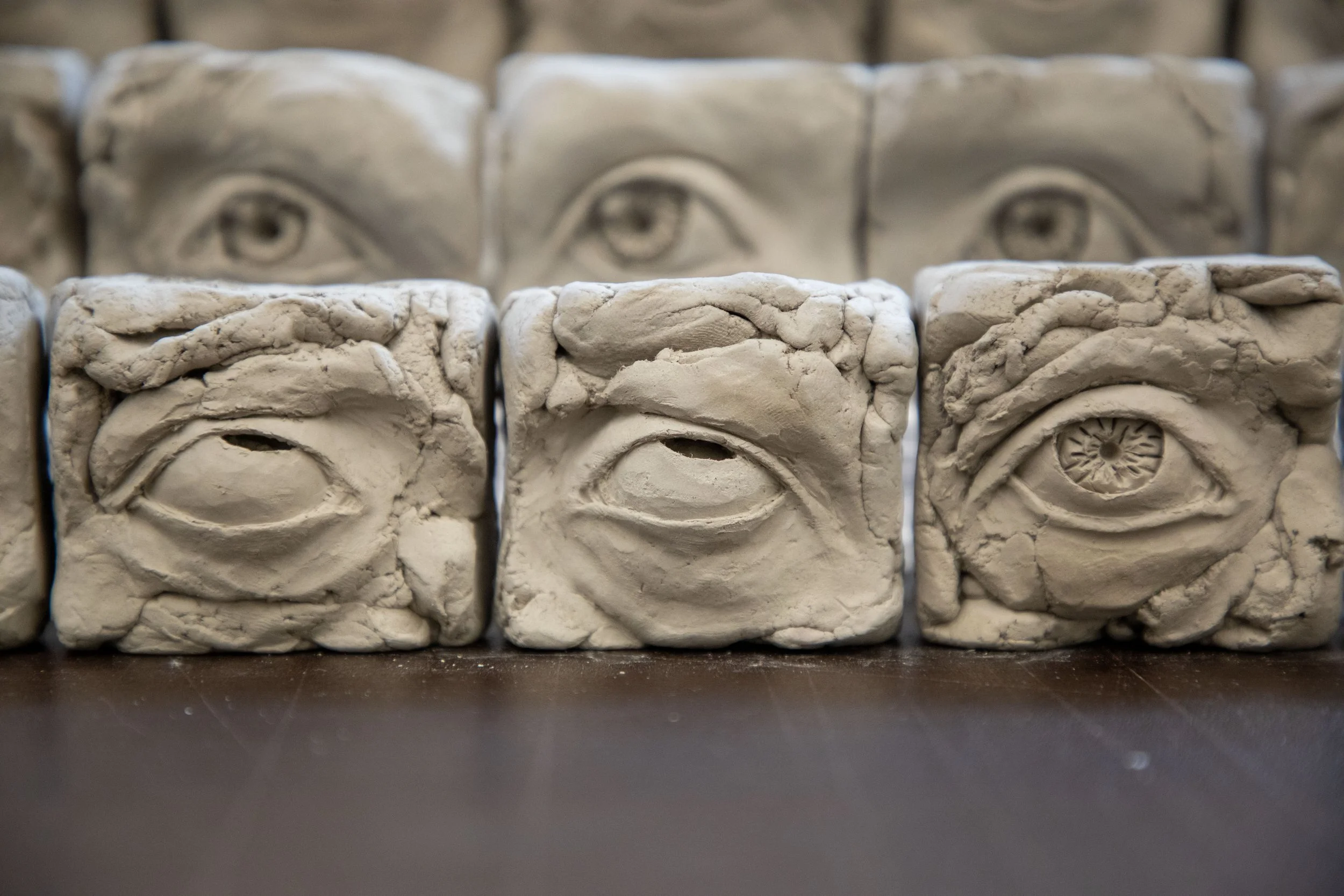
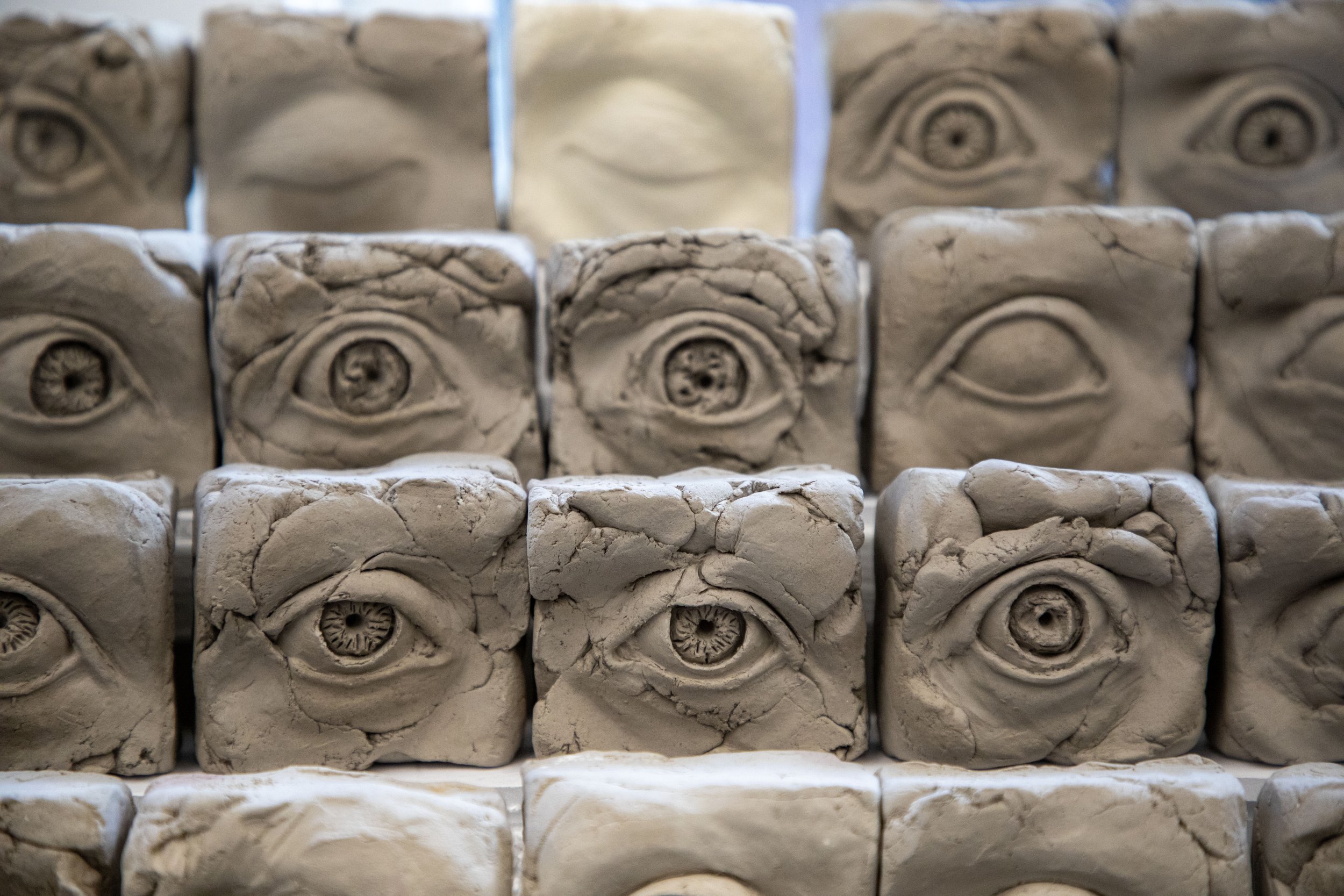
mehdi Darvishi
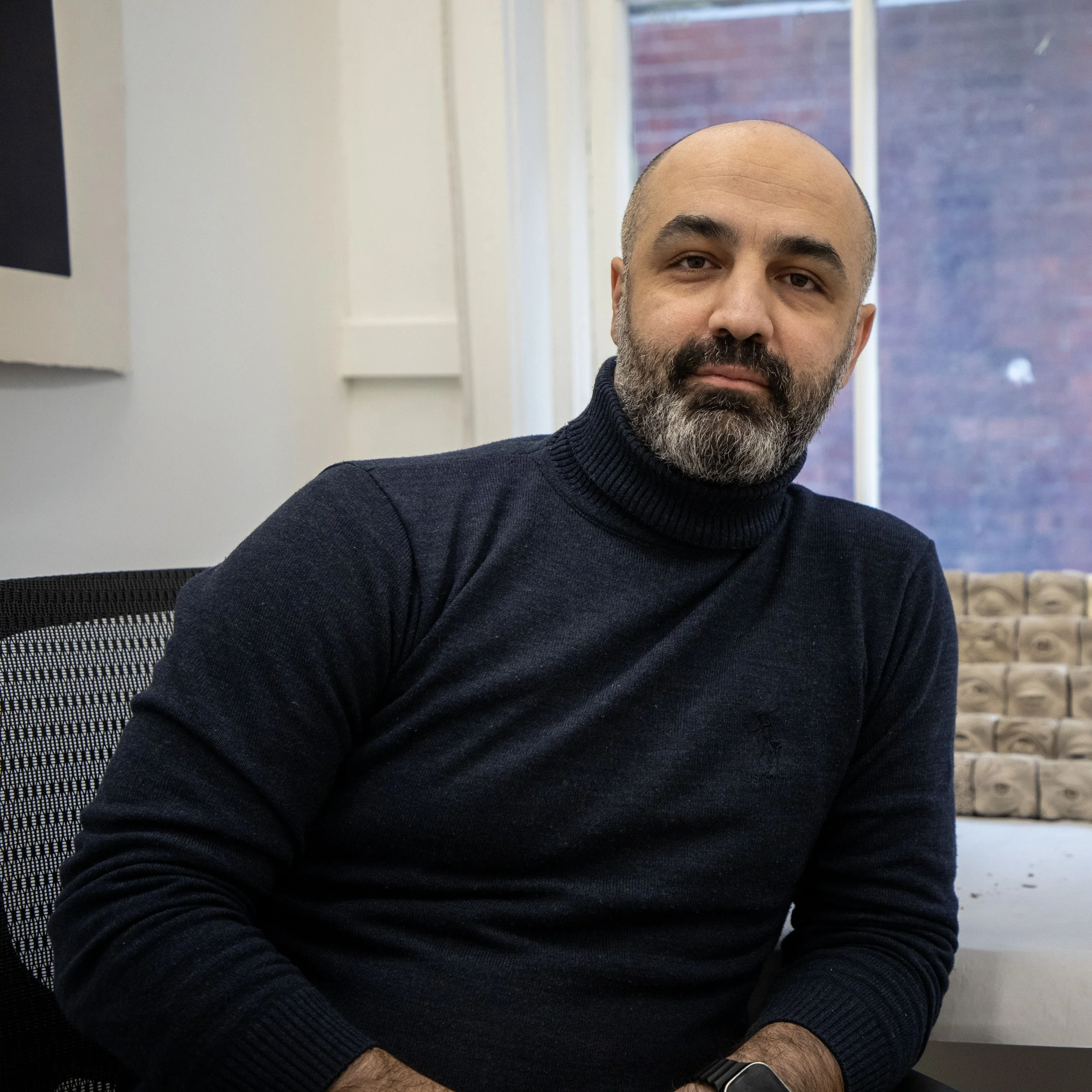
Mehdi Darvishi is a multi-disciplinary artist that his practice spans from traditional printmaking and wooden sculptures to interactive paintings and site-specific installations. He was born in the summer of 1988, coinciding with the Iran – Iraq peace resolution. In his war-stricken hometown, Mehdi grew up unexposed to art galleries and museums. In 2007 he left home to earn a BFA in Painting at the University of Tehran. After receiving his degree in 2011, his interest in printmaking grew into a life's pursuit. He has since exhibited in over 30 countries and has participated in more than three hundred global exhibitions, competitions, residencies, and as a visiting artist. His works have been widely collected by museums such as the China Printmaking Museum, the Ekaterinburg Museum of Fine Art, Jyvaskyla Museum of Fine Arts, the Tehran Museum of Contemporary Art, and the US Library of Congress.
He has served as a visiting artist at several renowned art institutions worldwide, including the New York Academy of Art, the University of British Columbia, the Katowice Academy of Art, and the University of Belgrade. He is currently an Adjunct Assistant Professor at the City University of New York–College of Staten Island.
His accolades include the Grand Prix of the 9th BIECTR, Second Place at the Premio Jesús Núñez, Special Award at the Premio Leonardo Sciascia, the Southern Graphics Conference Fellowship, and the Pritzker Fellowship from the School of the Art Institute of Chicago among other honors. He was also nominated for the prestigious Prix Mario Avati from the Académie des Beaux-Arts in Paris in 2023. He currently lives and works in New York City, where he serves as a Master Printer at MGC Community Print Studio at Powerhouse Arts.
Studio 11
Felipe Shibuya
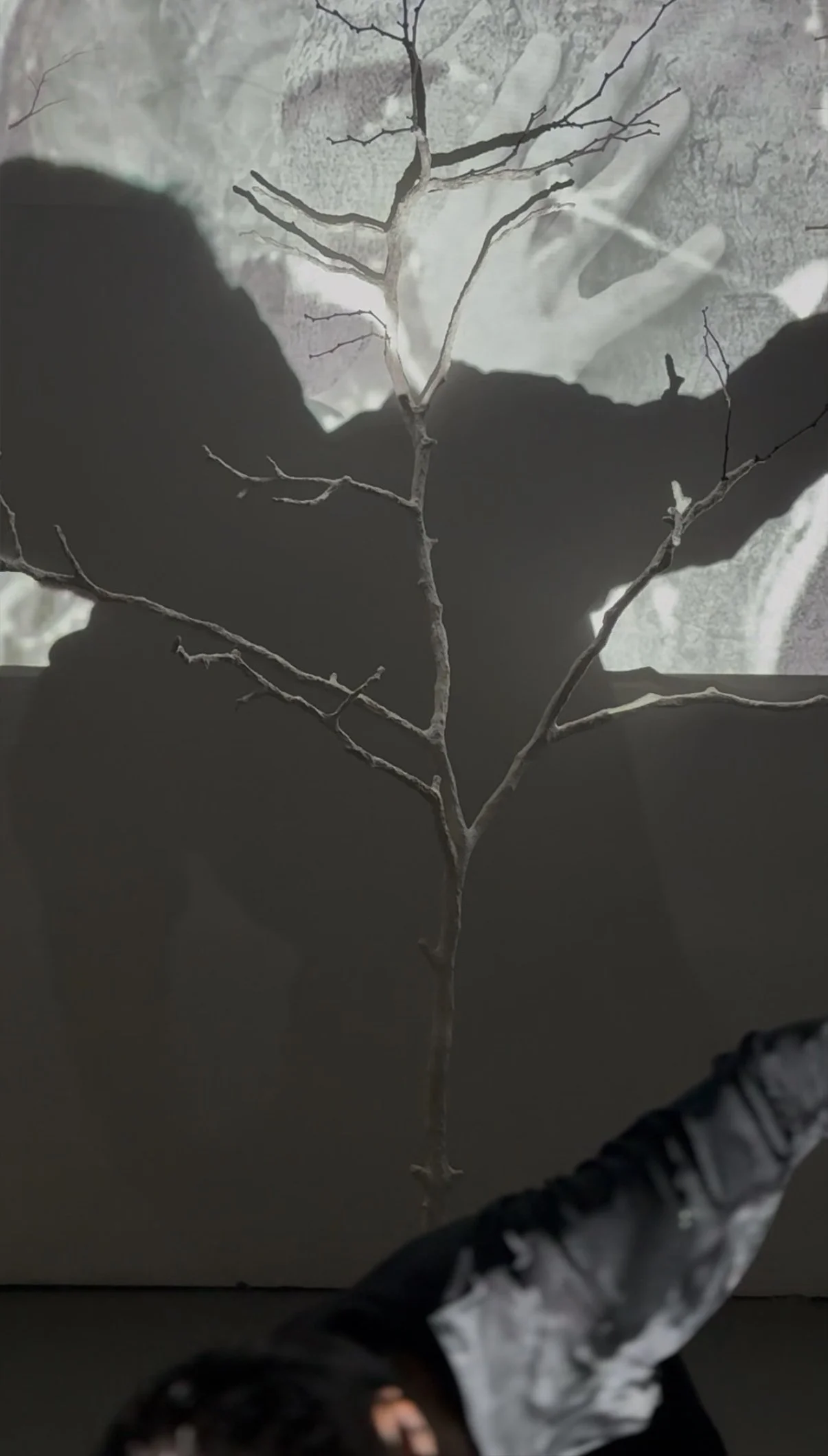
Felipe Shibuya is a Brazilian-American visual artist and ecologist working at the intersection of art and science. Trained in ecology and fine arts, he explores how biological systems, especially microorganisms, can become visible through artistic practice. His work highlights nature’s visual language of color, pattern, growth, and transformation. Combining sculpture, video, photography, bacterial cultures, and biomaterials, he translates scientific inquiry into sensory experience. By cultivating pigment-producing bacteria, he transforms microscopic life into images and installations. Through this research-driven practice, Shibuya fosters ecological awareness and advocates for a more attentive and sustainable relationship with the living world.
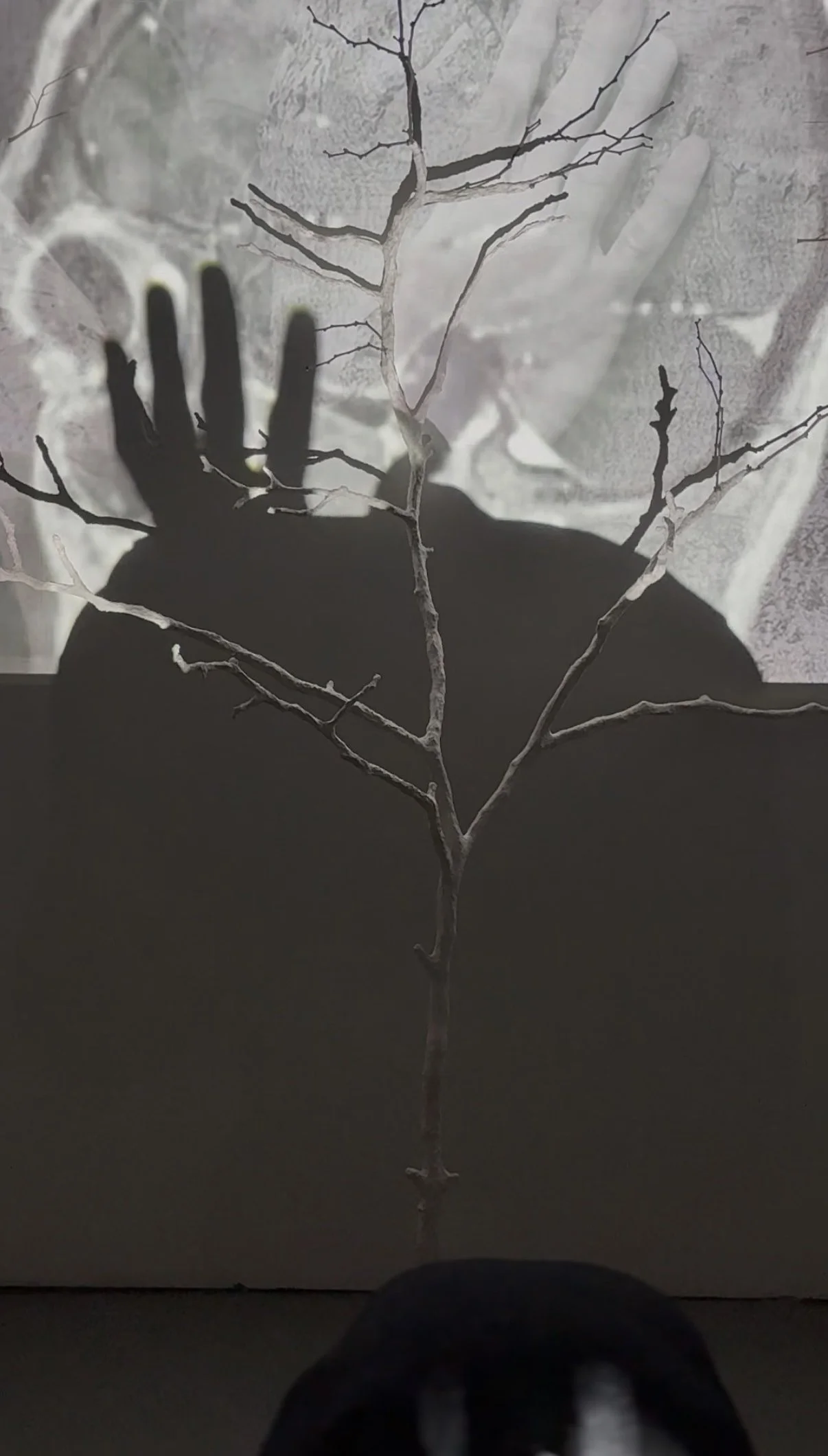
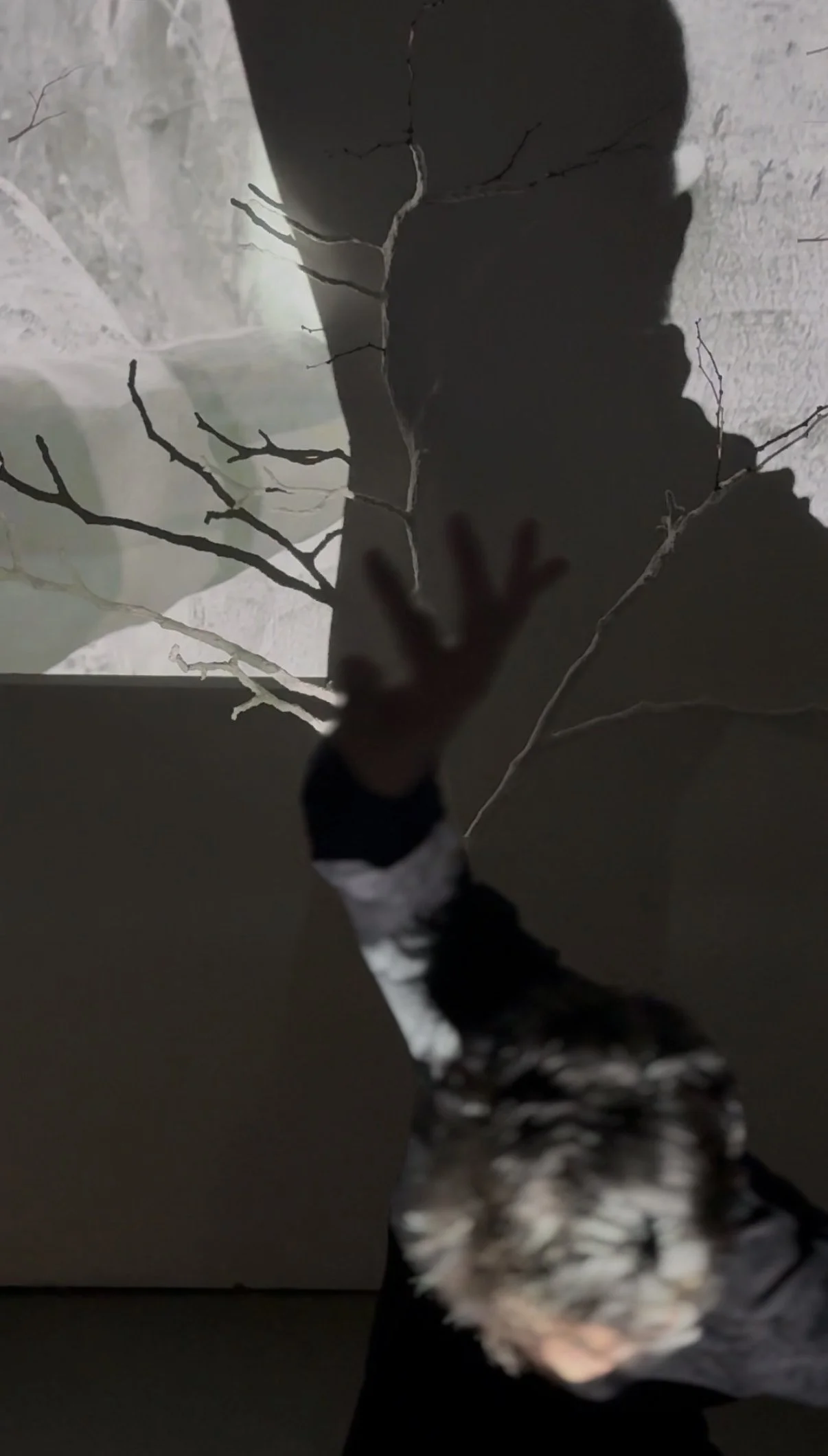
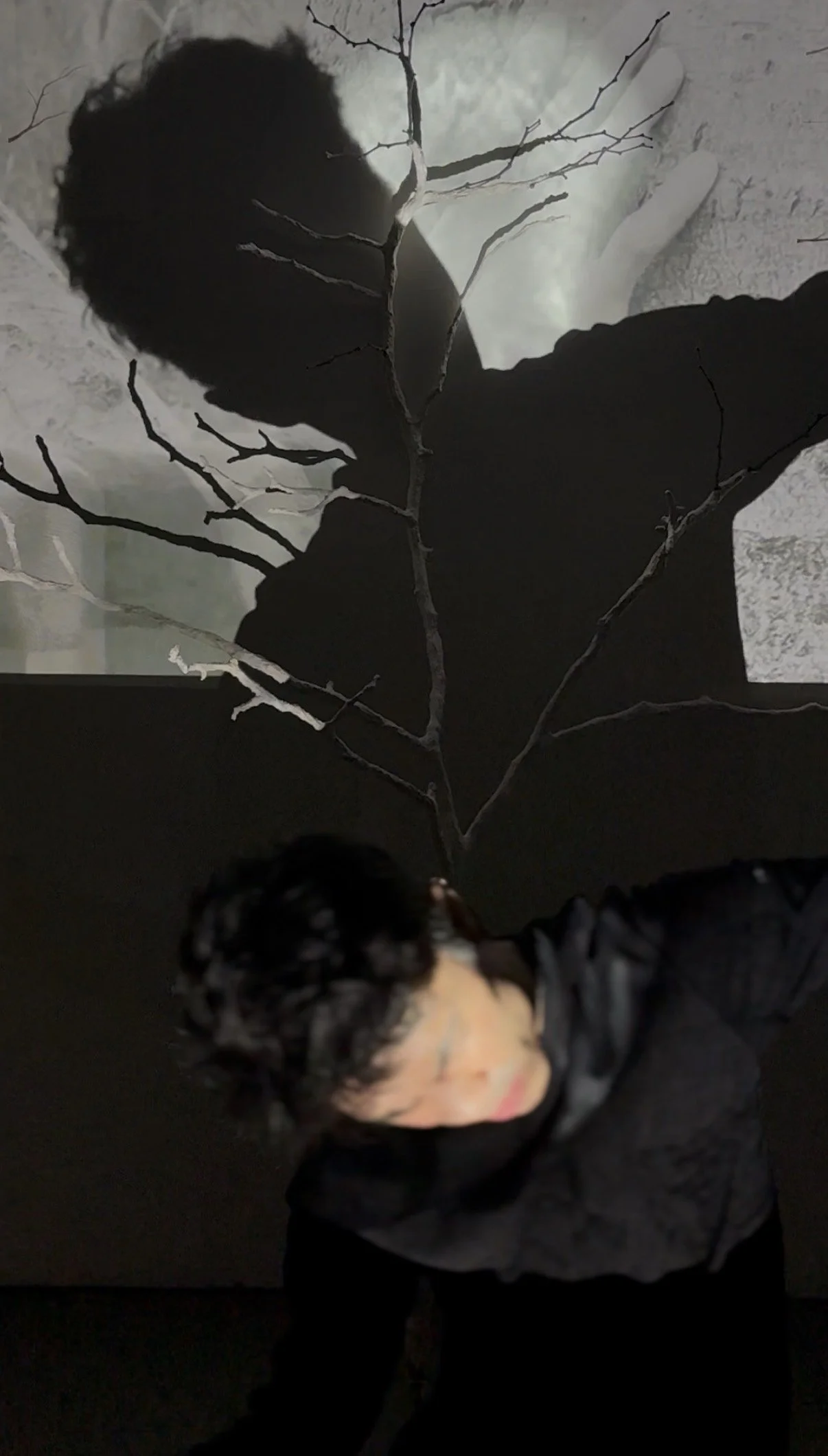
“During their residency at MASS MoCA, Shibuya investigated the structural and symbolic affinities between the human body and trees, with particular attention to dendritic patterns. His research considered how branching architectures generate strength and resilience in trees and how comparable forms shape the human nervous system, especially within the parasympathetic network. From this parallel, he developed an embodied proposition: to become tree-like not only metaphorically but physically, adopting slowness, distributed movement, and attentive presence. The project emerged alongside a personal health challenge that prompted him to examine MRI images of his own body, where he recognized similar branching structures. This convergence opened a reflection on vulnerability, interdependence, and the potential for regeneration in moments of fragility.”
Studio 12
Shrimanti Saha
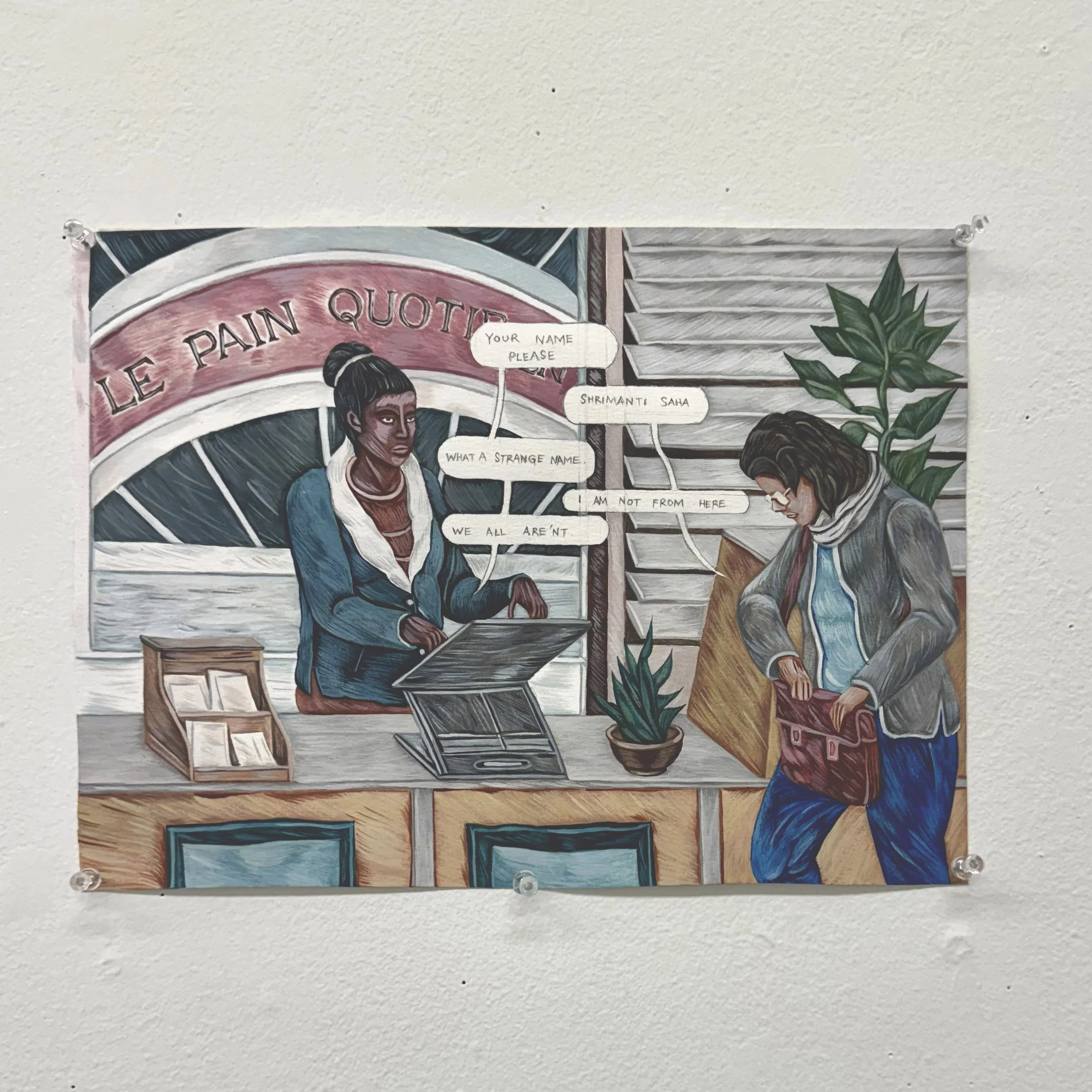
Shrimanti Saha (b.Kolkata, India) is an artist working in the medium of drawing, painting and animation. Saha creates layered story structures, with references from a range of sources like history, literature, mythology, science fiction, comic books, art history, miniature paintings, news reports as well as memory, conversation and personal experiences. In her works, different time periods amalgamate with each other; leading to the creation of a personal mythology or an alternative history; which delves into the themes of identity, gender, ecology, exploitation and control.
Saha has been part of artist residencies at Art Omi, Vermont Studio Center and at Bemis Center for Contemporary art in the US. She had two solo exhibitions in New Delhi and has been part of group exhibitions in India and abroad. Saha has a BVA and MVA in Drawing and Painting from M.S. University, Vadodara, India.
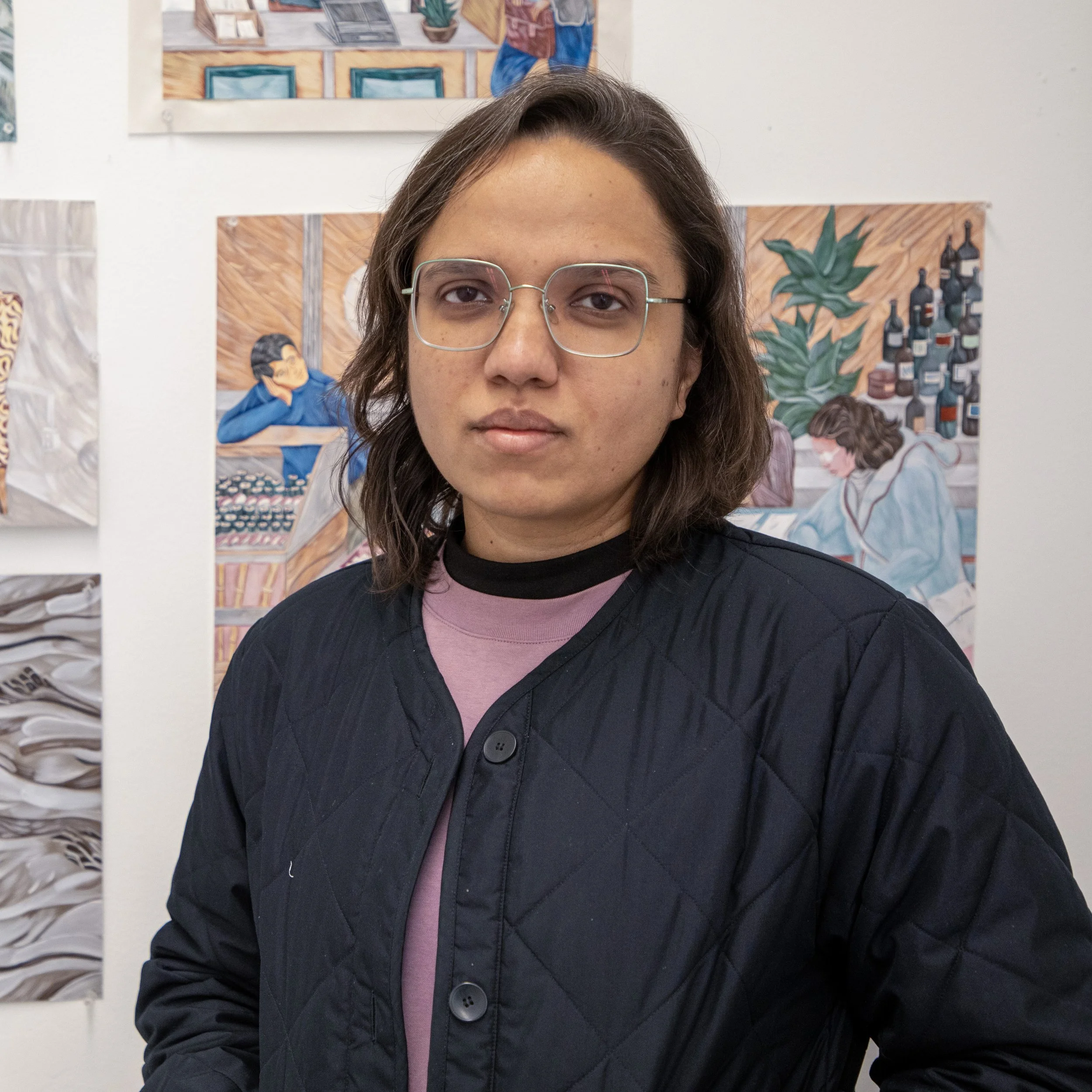
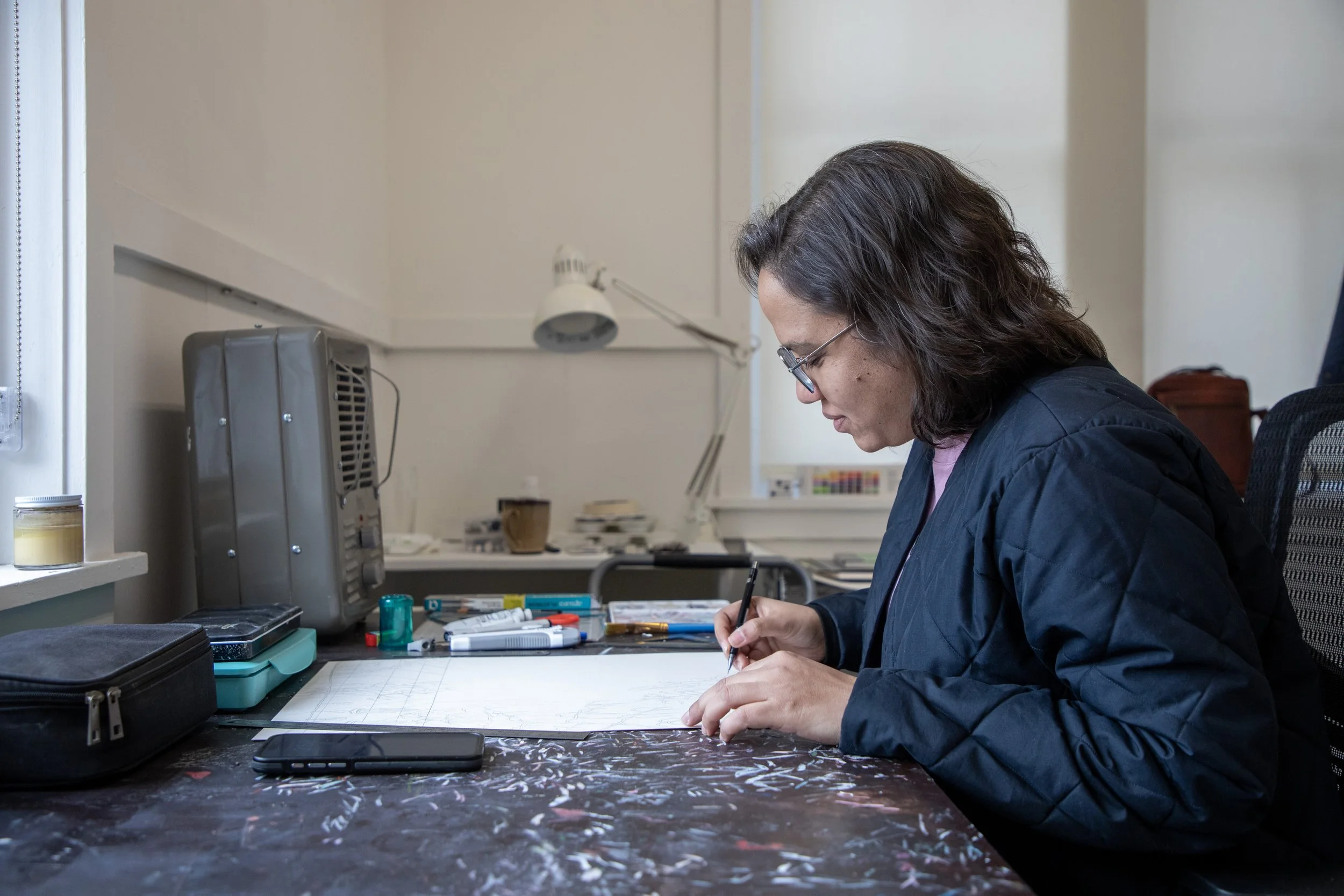
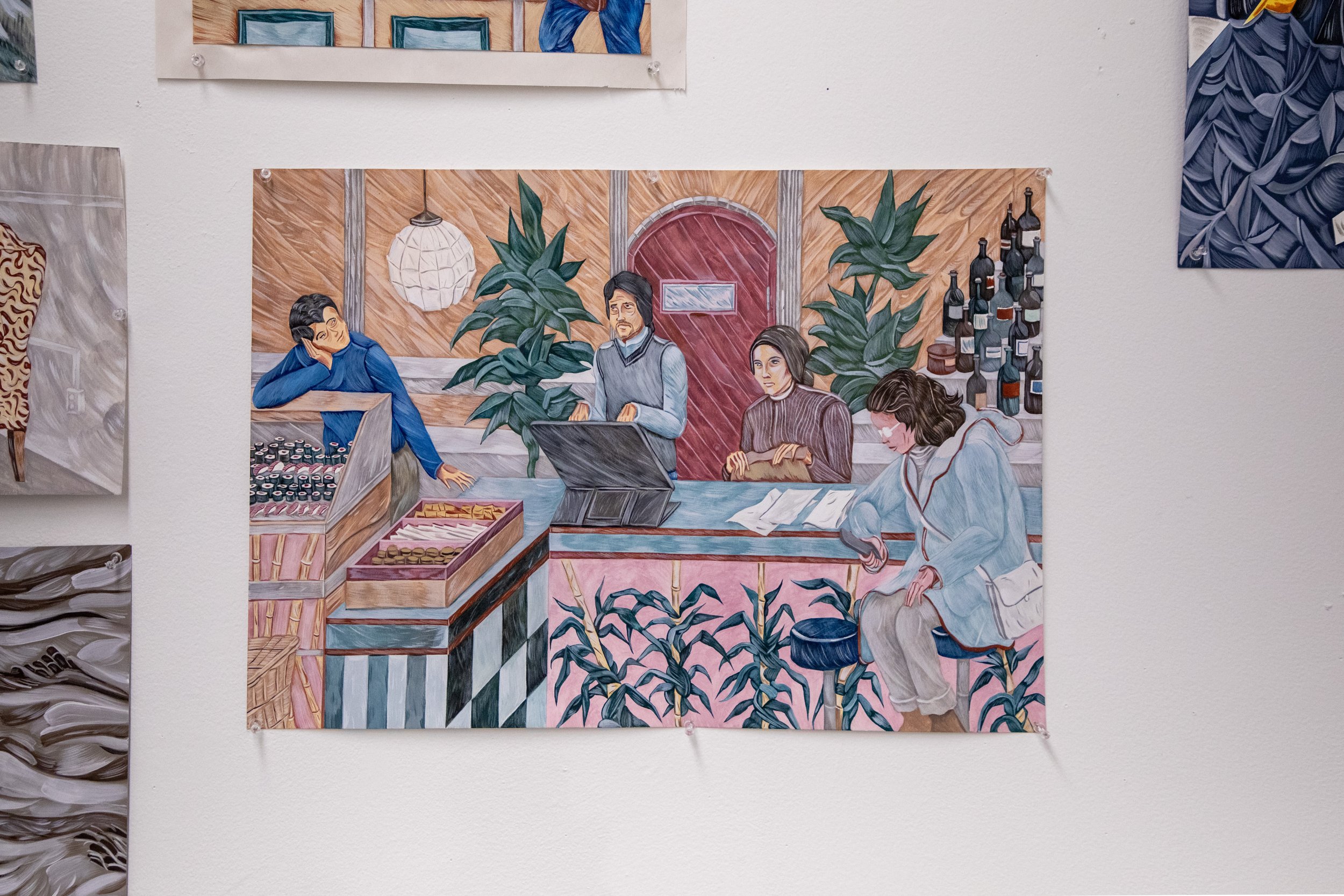
“During my residency at MASS MoCA, I focused on making multiple small-scale detailed works on paper which are fragments or studies for larger paintings. The residency became a space for close observation. I gathered impressions from the landscape, conversations and the experience of living in North Adams. Stepping away from my regular studio rhythm allowed me to experiment, recalibrate and generate new images that will inform my forthcoming bodies of work. I am very grateful for this time and space to reflect and expand my visual vocabulary.”
OPEN STUDIOS
February 5, 2026