Welcome July’s Artists-in-Residence! (Late Session)
Meet this Month’s artists-in-residence!
Residency session: July 16 — 28, 2026
Ry Van Der Hout
toronto, Canada
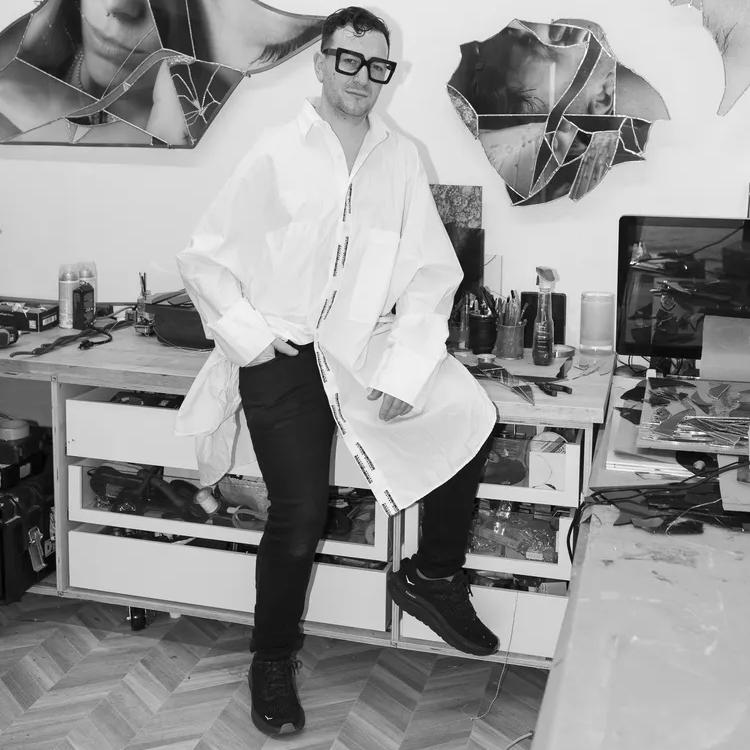
Ry Van Der Hout (b. 1987, Canada) is an interdisciplinary artist whose practice investigates transformation through fragmentation and reflection, using glass and mirrors as both material and metaphor for queer experience and becoming. They create works that challenge how we see ourselves and our environment, inviting viewers to witness how breaking can reveal new possibilities.
Van Der Hout holds an MFA from Parsons at The New School and a BFA in Photography from Metropolitan University. Their work has been featured in Time Out NY, NBC News, E-Flux, Chelsea Times, and CBC. Recent solo exhibitions include "Mending Shards" (United Contemporary, 2024) and "To Reflect Everything" (Toronto Sculpture Garden, 2023). They have created public art for NYC Parks, the City of Toronto, and Nuit Blanche. Van Der Hout is the 2026 recipient of the Barbara Spohr Fellowship at Banff Centre for Arts and Creativity and has been awarded residencies at La Napoule Art Foundation (France) and Mass MoCA. They have been supported by the Ontario Arts Council, Toronto Arts Council, and Canada Council for the Arts, and were awarded the Emerging Artist Award by the Robert McLaughlin Gallery.
Jade Song
Brooklyn, new york
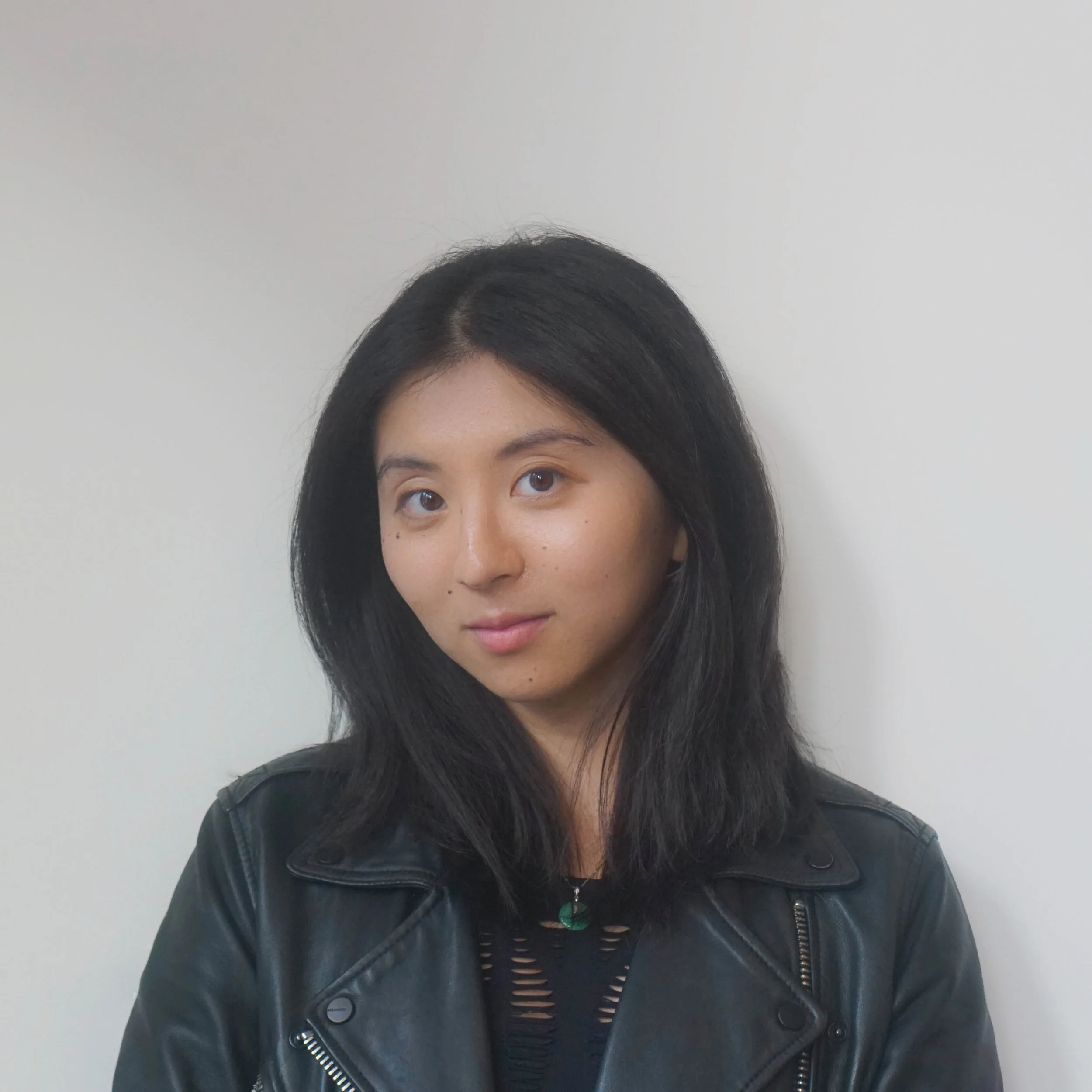
Jade Song is an artist and the author of novels I Love You Don’t Die and Chlorine, which was lauded as “visionary and disturbing,” selected as a New York Times Editor's Choice, won the Alex Award and the Writer's Center First Novel Prize, and translated into five languages. Their next book, Ox Ghost Snake Demon, is forthcoming 2027 from William Morrow.
They have received support and fellowships from the Ucross Foundation, Vermont Studio Center, Jentel, Kimmel Harding Nelson Center for the Arts, MASS MoCA, and the Black List, which selected their adapted screenplay of Chlorine for its annual Writers Lab.
Song's work explores the navigation between the true self and the sociocultural contexts denying that self existence. Influenced by Sinophone literary myths and diasporic community, they create speculative literary fiction prioritizing extremes of emotion over logical reasoning in order to embrace the rawness of human experience.
Song pole dances and lives in Brooklyn with too many books. They are at work on a novel about a lump.
Victor Olaoye
Chicago, Illinois
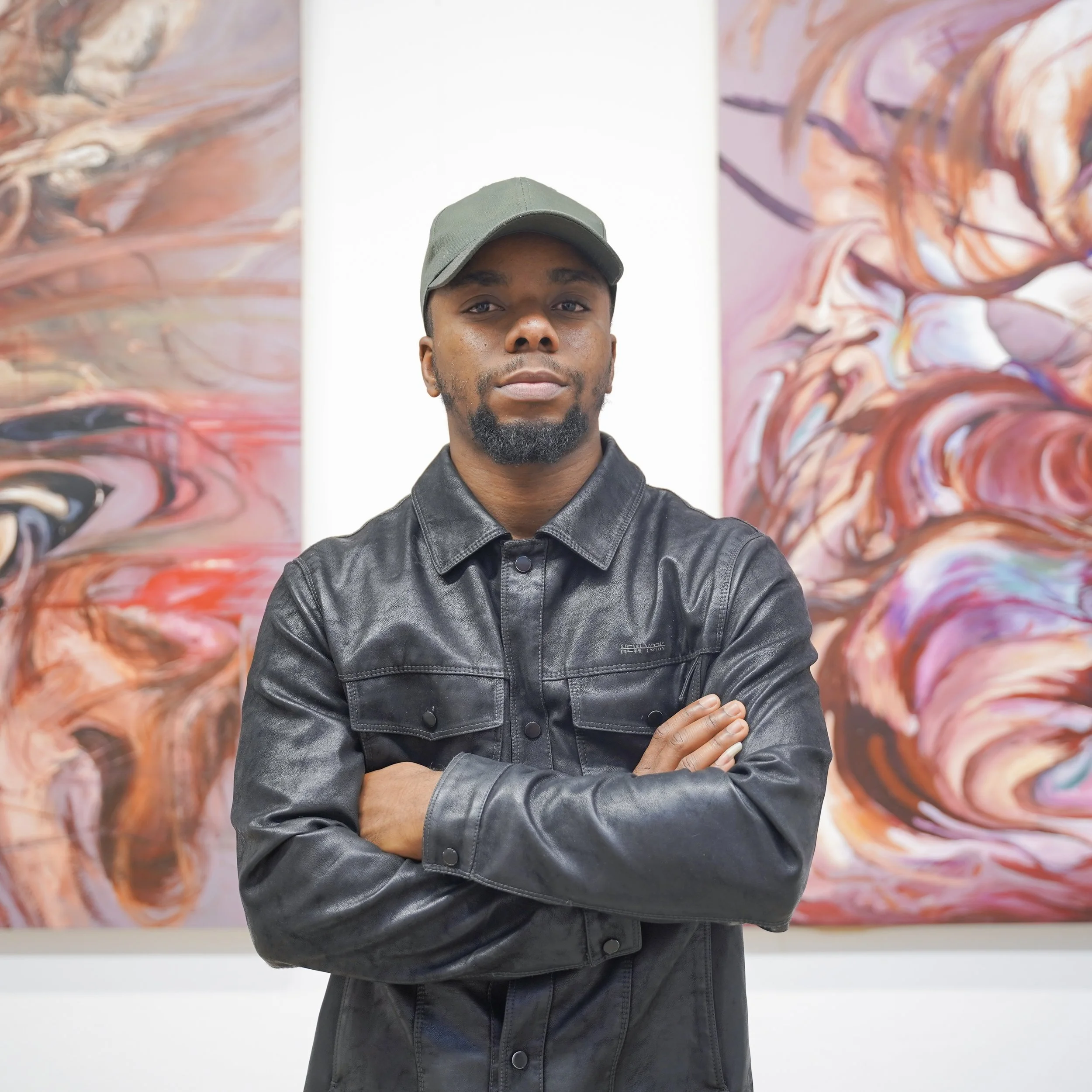
My work investigates transformation as an ongoing, cyclical process where human, botanical, and organic forms merge. Figures fold into vegetal structures, organs dissolve into roots, and growth and decay coexist. Rather than presenting metamorphosis as linear, my work frames it as perpetually in motion, revealing collapse as generative and fragility as a site of possibility.
Growing up tending banana plants and animals in Abeokuta, Nigeria, I became fascinated by cycles of life, decay, and regeneration patterns that now underpin both my material and conceptual practice. I transform banana fiber and jute into layered grounds for paintings, creating tactile surfaces that embody the interplay of resilience and vulnerability. Sweeping gestures, sinewy mark-making, and dense layering echo natural processes blooming, erosion, decomposition while inviting viewers to inhabit a space where abstraction and figuration, beauty and discomfort, intersect.
Bodies and environments in my work are porous, entangled, and hybrid, reflecting ecological and psychological states simultaneously. Limbs, faces, and root-like forms surface and dissolve, destabilizing perception and opening a space for reflection. Organic structures fold, rupture, and regenerate; the chrysalis becomes both wound and promise, a site where collapse and emergence coexist. Decay is not an end state but an active force that seeds new possibilities.
Through layered surfaces and material density, my paintings hold tension between vulnerability and resilience, inviting viewers to reconsider transformation not as a singular event, but as a continuous condition one that binds human experience to broader cycles of life, death, and regeneration.
Kellie Lehr
Madison, Connecticut
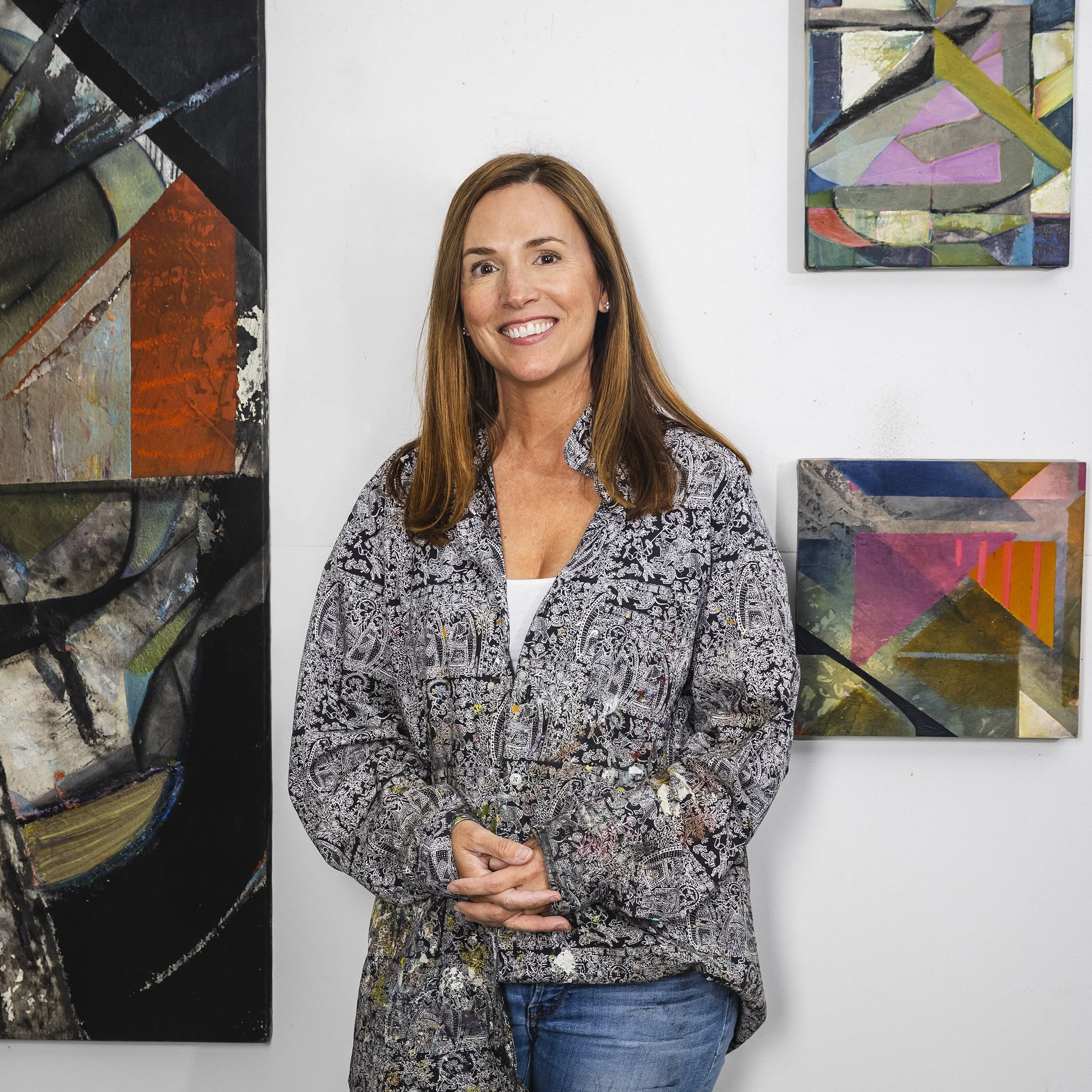
Kellie Lehr is a visual artist working at the intersection of painting and sculpture. Using raw canvas as both surface and structure, she folds, stains, inks, and reframes the material to explore memory, transformation, and material presence. Her practice expands the language of abstract painting through dimensional wall-based works that hold traces of time, gesture, and touch while engaging the body at human scale.
Rooted in process, Lehr approaches canvas as a responsive material — one that can be altered, collapsed, opened, and reconfigured. Folding functions as both a physical action and conceptual framework, allowing interior and exterior surfaces to converge while carrying histories of light, movement, and accumulated gesture. Drawing from legacies of Supports/Surfaces, Color Field painting, textile traditions, and feminist performance, her work investigates the tension between structure and softness, containment and release.
Lehr has exhibited nationally at museums, universities, and galleries including The Painting Center, Manifest Gallery, and Arkansas Museum of Fine Arts. She has been recognized by the National Museum of Women in the Arts.
???
???

???
???
???
???
???
???
???
???
???
???
???
???
???
???
???
???